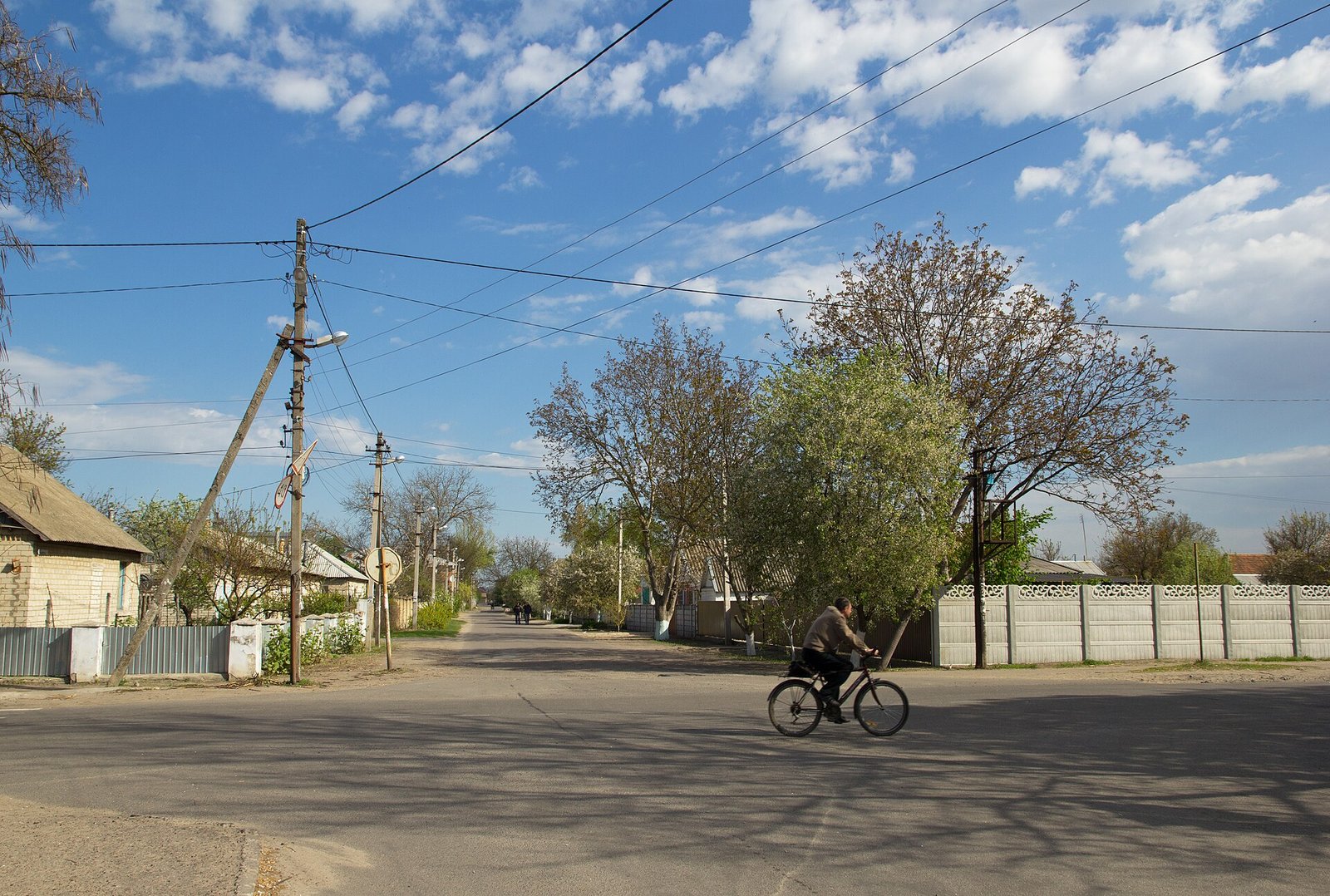
Photo: Dmytro Petishkin / Wikimedia Commons, CC BY 4.0
A limited ceasefire came into force on Tuesday, October 27, around Oleshky, a Russian-occupied town in Ukraine’s Kherson region where residents have been cut off from food, water and power. Both Ukrainian officials and Russia’s defence ministry said the truce was being observed through the day. The White House has credited US First Lady Melania Trump with securing the deal, which is meant to let aid convoys in and civilians out.
Earlier start, wider area
In a post on X, Melania Trump said the ceasefire took effect at 4 am Moscow time (3 am in Ukraine), two days earlier than planned, to protect civilians and speed up the delivery of humanitarian aid. She said the zone covered by the pause had been widened beyond Oleshky to other parts of the Kherson region so that convoys could pass safely.
Russia’s defence ministry said it had stopped firing towards the city of Kherson, which sits across the Dnipro river from Oleshky, and that army engineers were clearing explosives and booby traps from the main access roads. Davyd Arakhamia, who leads President Volodymyr Zelensky’s party in parliament, said the truce would run until 11:59 pm local time on November 1. An evacuation of civilians is planned for Friday.
Ukraine’s human rights commissioner, Dmytro Lubinets, travelled to the area to coordinate the operation. He described it as a humanitarian mission run with Melania Trump’s mediation, in cooperation with Russia’s human rights commissioner, Yana Lantratova.
It is critically important that this mission to rescue our people proceeds successfully and safely.
Kyrylo Budanov, head of the Ukrainian President’s office
Why Oleshky matters
Russian forces seized Oleshky in the first days of the full-scale invasion in February 2022. The town, home to about 24,000 people before the war, is hemmed in by the river on one side and Russian lines on the other. Kyiv believes up to 6,000 people, including around 200 children, remain in the town and nearby villages, with about 1,700 in Oleshky itself. Residents have had no electricity, gas or running water for three years, shops are shut, and some have resorted to cooking garden weeds to survive. The roads out are mined and have faced drone attacks.
Pressure for a pause had been building for weeks. Pope Leo XIV appealed to President Vladimir Putin earlier this month to allow food and medicine in and a safe evacuation out. The Kremlin acknowledged last month that the town faced a critical situation with supplies, but blamed Kyiv.
Doubts and what comes next
Many details of the evacuation, including how residents can register, remain unclear. Some residents fear that roads cleared by Russian forces will lead only into Russia; Zelensky has warned that people leaving by those routes may end up staying there, though he said some would reach Ukrainian-held territory one way or another. Ukraine’s general staff urged people not to share unverified details of convoy routes and timings.
The pause is strictly local. On Monday evening, a Russian attack on Kyiv hit a university and a bridge, killing one person and injuring 14, while a Ukrainian drone strike on Russia’s Bryansk killed one person and injured six. Whether the Oleshky truce holds until Friday’s evacuation will be watched as a test of whether such humanitarian pauses can work elsewhere along the front line.