Photo: Vyacheslav Argenberg / Wikimedia Commons, CC BY 4.0
People in Ladakh will no longer have to cross mountain passes to Jammu or Srinagar to reach a high court. Chief Justice of India Surya Kant on Sunday (October 18) inaugurated the Ladakh Bench of the High Court of Jammu and Kashmir and Ladakh at the High Court complex in Melangthong, Leh, and regular hearings are set to begin there on Wednesday, October 21.
The ceremony was attended by Supreme Court judges including Justices M.M. Sundresh, P.S. Narasimha and Arun Palli, Attorney General R. Venkataramani, Ladakh Lieutenant Governor V.K. Saxena, and High Court Chief Justice Pushpendra Singh Bhati along with other judges of the court.
How the new bench will work
The bench will serve both districts of the Union Territory, Leh and Kargil. On its first working day, a division bench of Chief Justice Bhati and Justice Sanjay Parihar is expected to hear five cases, and Justice Parihar will also sit as a single judge on Thursday and Friday. The High Court has picked out 75 cases to be listed in Leh to begin with. For now, judges will sit on a rotation basis and the bench will function twice a week.
According to an official spokesperson, the Leh bench will run as a fully IT-enabled, paperless court. The CJI also launched an e-filing portal, a document management system for judicial records, an online recruitment portal and a green wall project. The complex has a digitisation centre, a filing counter, a bar room, a waiting area for litigants and a video-conferencing room.
A promise from the Supreme Court
In his address, the CJI said difficult terrain and harsh winters had often made reaching a court harder for Ladakh’s people than paying for the case itself. He said lawyers from the region had to deal with snow, landslides and cancelled flights to get to Jammu.
The high court has today crossed the passes to reach Ladakh, instead of asking the people of Ladakh to cross the passes to reach it.
CJI Surya Kant
He said he had asked the Supreme Court Registry to list all cases from Ladakh on a single day so that litigants and advocates need not make repeated trips, and that these could be heard through video-conferencing once lawyers at the Leh bench have adequate facilities. He also called for more use of technology and legal aid to reach remote villages, and for local youth to be recruited as court staff.
Why it matters
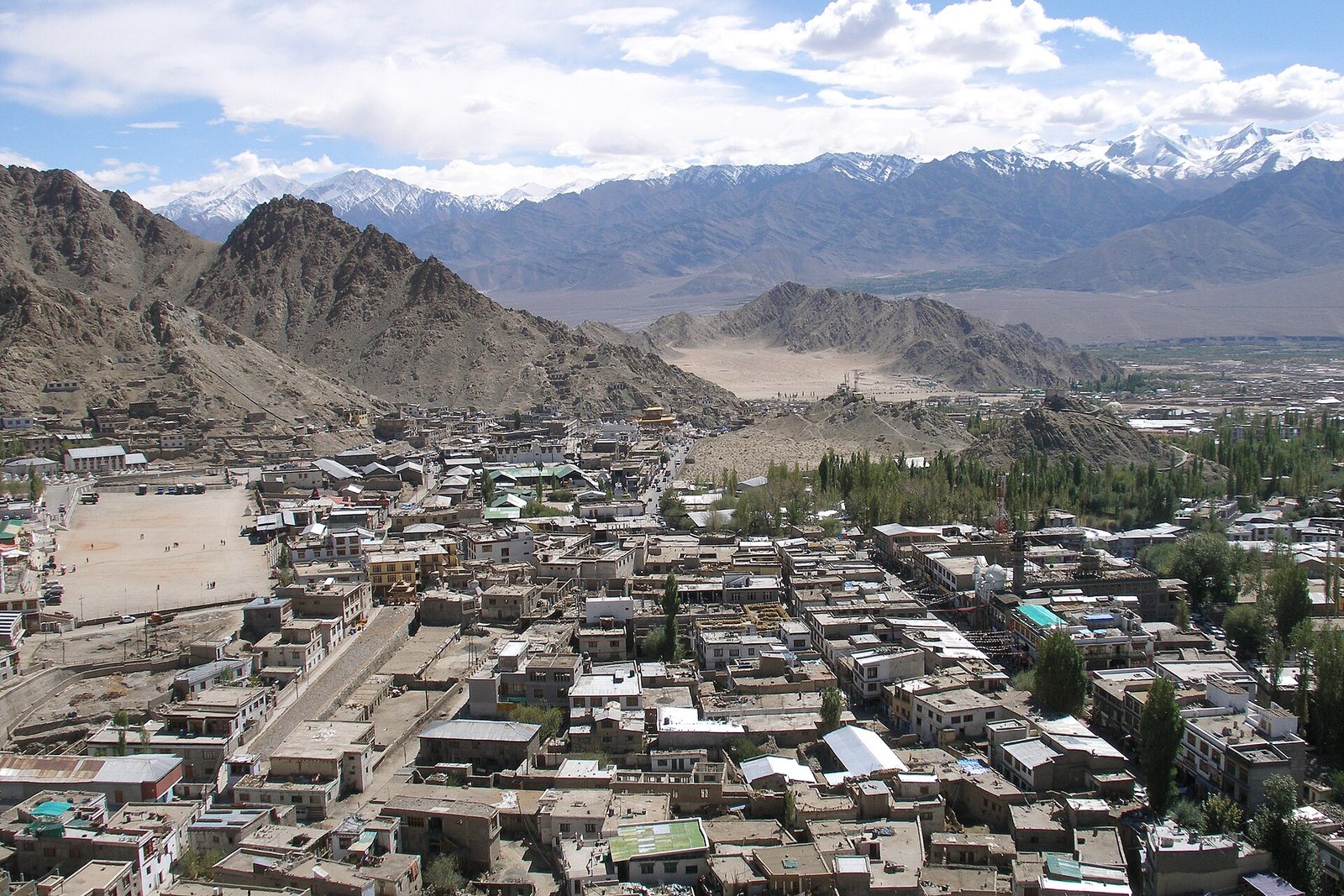
The Jammu and Kashmir High Court was set up on March 26, 1928, and until now it sat only in Jammu and Srinagar. When Ladakh became a separate Union Territory in 2019, the court was renamed to include Ladakh, but its benches stayed far away. The CJI noted that a name on a letterhead did not bring a court to anyone’s doorstep. At roughly 3,500 metres above sea level, he said, no high court in India had ever sat higher.
The Centre approved a Ladakh bench in August this year, and the High Court chose Leh as its seat on October 5. LG Saxena described the day as a landmark that fulfils a long-standing local demand for a court closer to home.