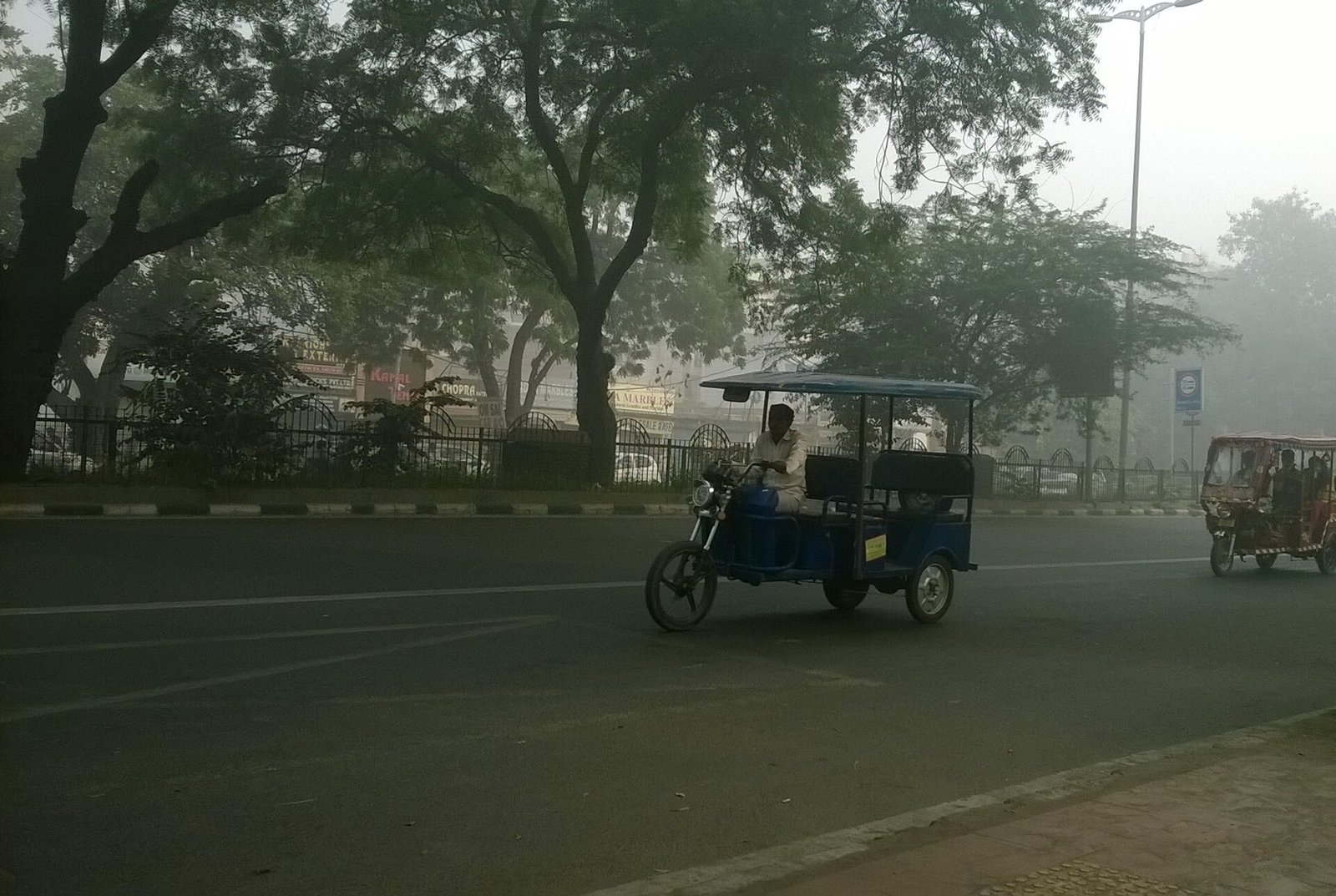
Photo: ArmouredCyborg / Wikimedia Commons, CC BY-SA 4.0
The Delhi government wants to limit the number of e-rickshaws in the capital to 2.5 lakh and bring every one of them under a new digital licensing system. The plan is laid out in the draft Delhi E-Rickshaw (Registration and Operation) Scheme, 2026, which the transport department released for public comment on Sunday, October 18.
The draft says the cap is needed because of serious concerns over traffic congestion, road safety, air and noise pollution, and what it calls the excessive and unregulated growth of e-rickshaws. The limit would work through permits, much like the system Delhi already uses to control the number of autorickshaws. Once 2.5 lakh certificates have been issued, no new ones would be granted unless the government raises the ceiling.
Registration will no longer be enough
Under the proposal, a registered e-rickshaw could ply only if it also holds an E-Rickshaw Compliance Certificate (ECC). The certificate would be linked to the vehicle’s registration, its owner, one authorised driver and documents such as the fitness certificate and insurance. It would be valid for two years and could be suspended or cancelled. Owners of vehicles already on the road would get 90 days from the scheme’s notification to obtain one.
Ownership would also be restricted. An individual owner must live in Delhi and could hold no more than five e-rickshaws, while companies, firms and cooperatives could own up to 100. Any operator with 25 or more vehicles would need an aggregator licence. Drivers would need a valid driving licence and a public service vehicle (PSV) badge, and a single driver could not be attached to more than one certificate.
Limits on passengers, speed and fittings
The draft sets out several rules aimed at the overcrowding commuters see every day:
- No more than four passengers besides the driver, nobody in the seat next to the driver, and no standing passengers.
- A luggage limit of 40 kg.
- A top speed of 25 kmph and motor power capped at 2,000 watts.
- High-security number plates, a yellow reflective strip at the back, and the owner’s name, address and phone number painted on the left side.
- A ban on bull bars and front crash guards, and on music or audio loud enough to distract.
Drivers would also have to help elderly and disabled passengers and report any harassment of women passengers to the police. Batteries would have to use technology notified by the Union road transport ministry, and used batteries could be disposed of only through authorised recyclers.
Tough action against unregistered vehicles
Enforcement under the draft is strict. An e-rickshaw found running without registration after the scheme is notified would be impounded and not released. Such vehicles could be crushed and auctioned, and their batteries would be held back for auction rather than returned.
Why it matters and what happens next
E-rickshaws have become a cheap last-mile option across Delhi, but they have also been linked to traffic violations and accidents, and to dangerous overcrowding, including vehicles packed with seven or eight schoolchildren. Delhi’s 2014 e-rickshaw scheme already contained some passenger-safety rules. The new draft goes further, adding digital certification, vehicle checks and tighter enforcement.
The public and stakeholders can send suggestions within 30 days by email to schemeconsultation2026@gmail.com, or by post to the DTO (Operations), Transport Department, 5/9 Underhill Road, Delhi. The government will then consider the feedback before it finalises and notifies the scheme. The 90-day window for existing owners will begin only after that.