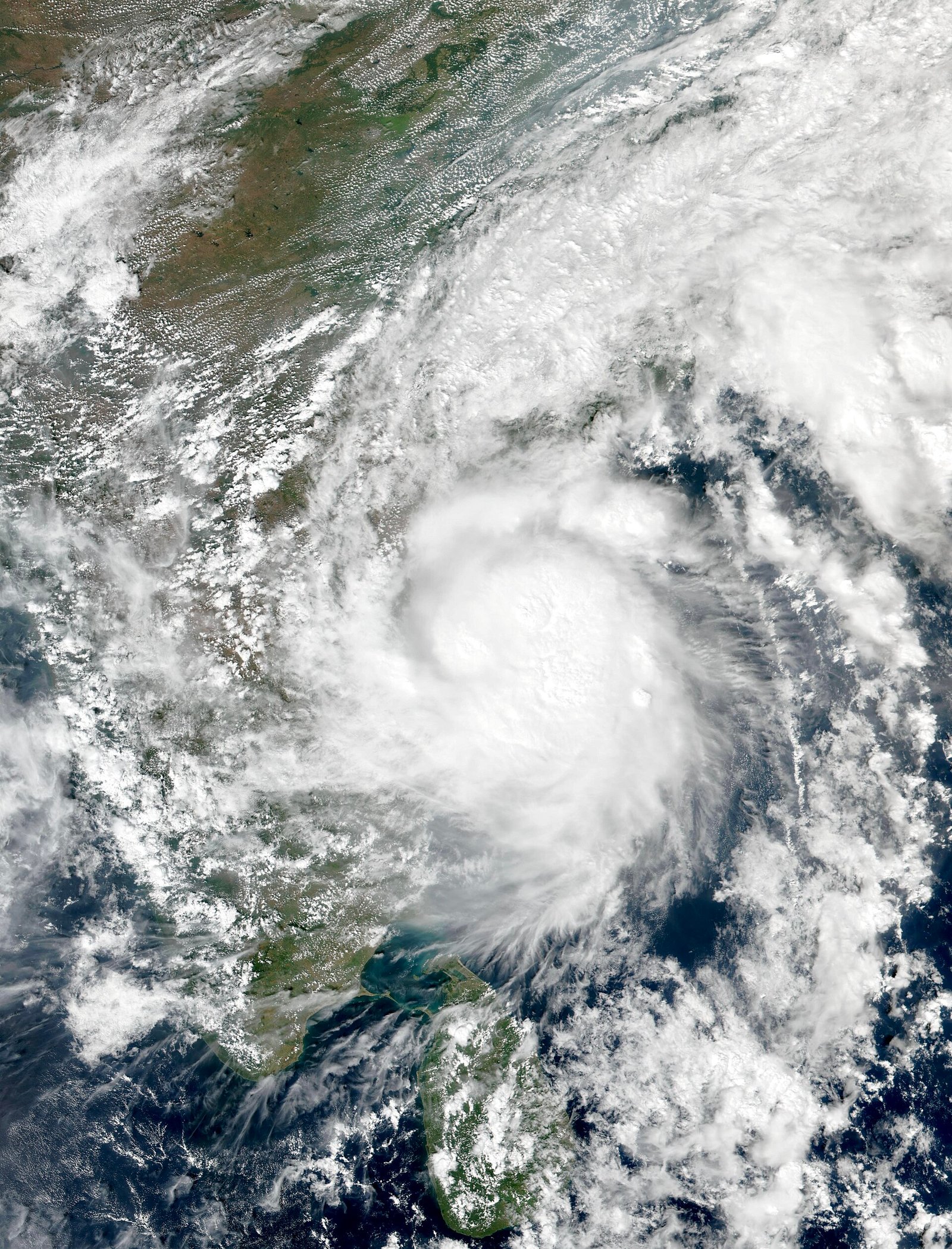
Photo: VIIRS Imagery from NOAA’s Suomi-NPP Satellite / Wikimedia Commons, public domain
Severe Cyclonic Storm Murasu crossed the south Andhra Pradesh coast close to Ongole in the early hours of Tuesday, November 3, lashing Prakasam, Bapatla and Nellore districts with gale-force winds and very heavy rain. The India Meteorological Department (IMD) said the storm moved ashore between Nellore and Narsapur, near Kothapatnam about 20 km from Ongole, between 3.30 am and 5.30 am, with sustained winds of 100 to 110 kmph gusting to 120 kmph.
The landfall process had begun around 1 am, when the storm’s inner rain band in the northern sector reached the coast. Officials expected the system to finish crossing within a couple of hours of daybreak.
Trees down, homes damaged in Prakasam
Hundreds of trees were uprooted across Nellore, Prakasam and Bapatla, and several low-lying areas went under water. In Ongole’s Samatha Nagar, a number of thatched houses collapsed and residents were left stranded until the district administration began evacuating them. Homes were also flooded in Beeramgunta village of Kothapatnam mandal. Inside the Prakasam district collectorate in Ongole, a large tree fell on the statue of freedom fighter Tanguturi Prakasam, known as Andhra Kesari, bringing it down.
Rain arrived late but hard. After a lull through most of Monday, many weather stations in central and south coastal Andhra recorded around 200 mm within six hours as the storm closed in. The downpour sharply cut Prakasam district’s seasonal rainfall shortfall, from a little over 64% on Monday to 58.6% by Tuesday morning.
Chief Minister orders people off the roads
Chief Minister N. Chandrababu Naidu reviewed the situation with district collectors over a 3.30 am teleconference and told officials to keep people from venturing onto roads in affected areas until fallen trees and other obstructions are cleared. After Cyclone Arnab last week, at least five people died after touching live wires that had fallen. Energy officials told the Chief Minister that no electricity poles had come down and power supply had not been disrupted anywhere in the affected zones at that point. Collectors also said arrangements for counting votes in the local body elections were going ahead alongside relief work.
Further north, NTR district collector Lakshmi Sha asked residents to stay indoors and shops to remain closed on Tuesday, and said some families in Mogalrajapuram had been moved to relief camps because of the risk of landslides. Vijayawada’s police commissioner, S.V. Rajasekhar Babu, warned people living on hillocks and along the Krishna river bund to move to safer places. Eluru district shut all schools, colleges and anganwadi centres after a flash flood warning, and schools in Tamil Nadu’s Cuddalore district were also closed.
What happens next
The IMD has warned of a storm surge that could flood low-lying parts of south coastal Andhra Pradesh, with the highest surge expected over Bapatla, Krishna and Prakasam districts, and of heavy spells of rain over the region through the day. The storm is forecast to weaken into a depression as it moves inland, but heavy to very heavy rain is still expected over several parts of the state into Wednesday.
Murasu is the second cyclone to hit Andhra Pradesh in a week, after Arnab struck the coast on October 28 with winds of up to 150 kmph. The state government has opened its Mana Mitra WhatsApp service, on 9552300009, for residents to report fallen trees, waterlogging, power cuts and other emergencies.