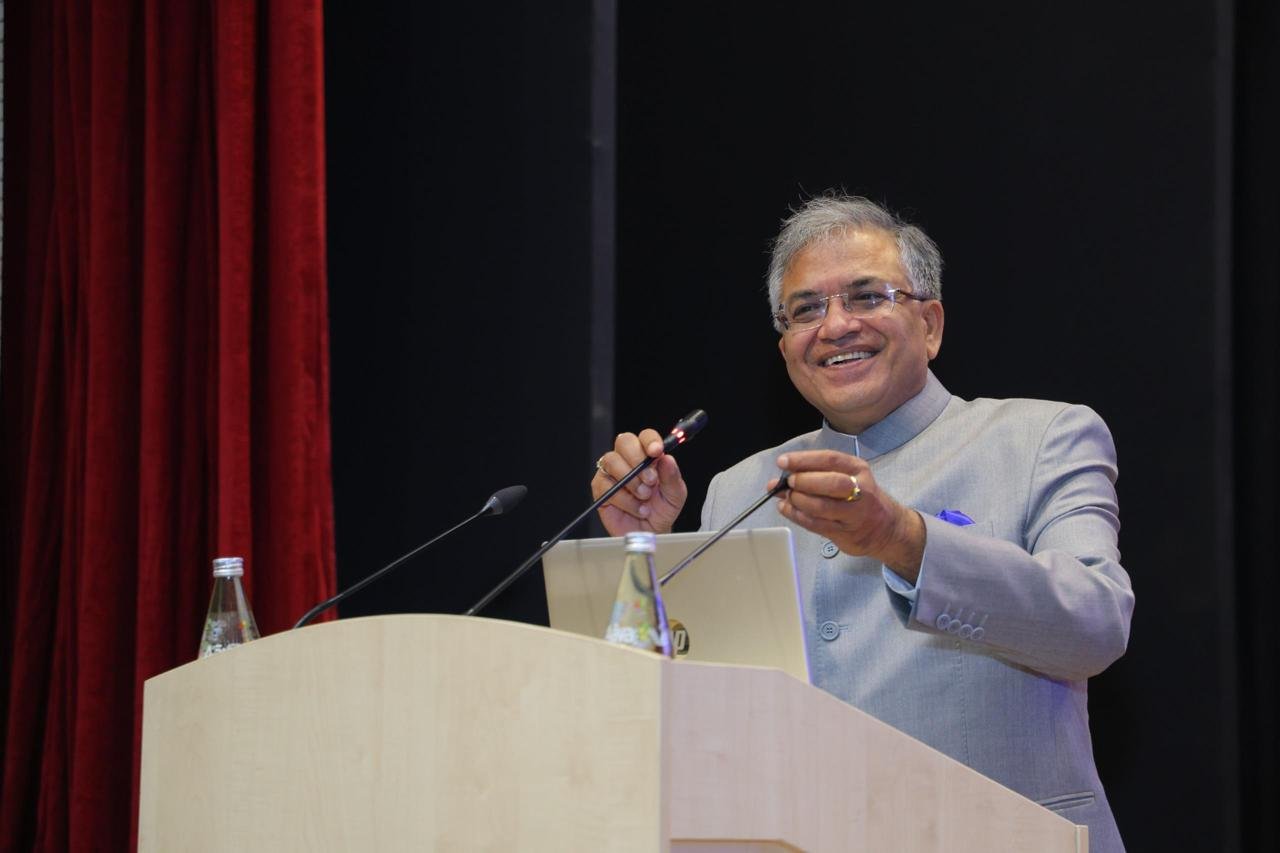
Photo: Sharma Dhawan / Wikimedia Commons, CC0
Kerala’s Home Department has told the state Vigilance and Anti-Corruption Bureau (VACB) to hold a preliminary inquiry into a complaint that Chief Election Commissioner Gyanesh Kumar demanded a ₹2-crore bribe to release payments on a road project when he was the state’s Public Works Department (PWD) Secretary nearly two decades ago. The office of Home Minister Ramesh Chennithala confirmed the step on Wednesday, November 4.
The inquiry is the first stage. Officials said the Vigilance bureau will decide whether to register an FIR only after it has examined the allegations, and the order was issued after the department took legal opinion.
What the contractor alleges
The complaint comes from Sajan, a former material supplier from Kollam district who says he helped oversee work on the upgrade of the MC Road under the Kerala State Transport Project (KSTP). The work was carried out by PATI-BEL, an India-Malaysia joint venture.
In his complaint, filed on October 23, Sajan alleges that cheques for bills of around ₹17 crore, already cleared by engineers, were held back by the PWD Secretary’s office. He says the company’s Malaysian project engineer, Lee See Been, told him that Kumar wanted ₹2 crore to release them, and that PATI-BEL’s management refused to pay. According to the complaint, the delay left local contractors, suppliers and workers unpaid, and Lee diverted money from another company project in Bengaluru to settle part of the dues.
Lee later died by suicide in Malaysia. Sajan claims Lee’s family told company staff that his suicide note mentioned Kumar. That note has never been made public, and the claim has not been tested by any investigating agency.
If the government is ready to order a probe, I am ready to produce evidence including the family members of Lee before the investigators.
Sajan, complainant
He also says the original Vigilance investigation never questioned him or others who had direct knowledge of the alleged demand.
An old case, reopened
The allegations are not new. They were looked into by the Vigilance bureau around 2006, and that inquiry was dropped. Chennithala told the Assembly last month that the bureau had closed it because the charges could not be substantiated. He said Kumar’s name had also come up in a wider inquiry into 76 public works allegedly awarded without tenders between 2003 and 2006, which was likewise wound up, and that in 2012 the bureau told a court that eight cases were a “mistake of fact”, a report the court accepted.
The closure has been questioned ever since, with critics alleging the probe was abandoned under pressure. In October, Congress leader Malayinkeezhu Venugopal petitioned the Home Minister, alleging that Kumar’s name figured in the suicide note and that the 2006 investigation had been compromised. A preliminary look at those allegations was already under way, and Sajan’s complaint will now be examined by the same team.
Why it matters
Kumar heads the Election Commission at a time when it faces sustained protests from the Congress and other Opposition parties over the Special Intensive Revision (SIR) of electoral rolls, including a symbolic ‘impeachment’ staged by INDIA bloc MPs and a rally in Delhi demanding his exit. The BJP has dismissed the Opposition’s campaign against the CEC.
Neither the CEC nor the Election Commission had commented publicly on the Kerala inquiry in the reports available on Wednesday. The next step is the Vigilance bureau’s preliminary report to the Home Department, which will determine whether a formal case is registered against the country’s top election official.