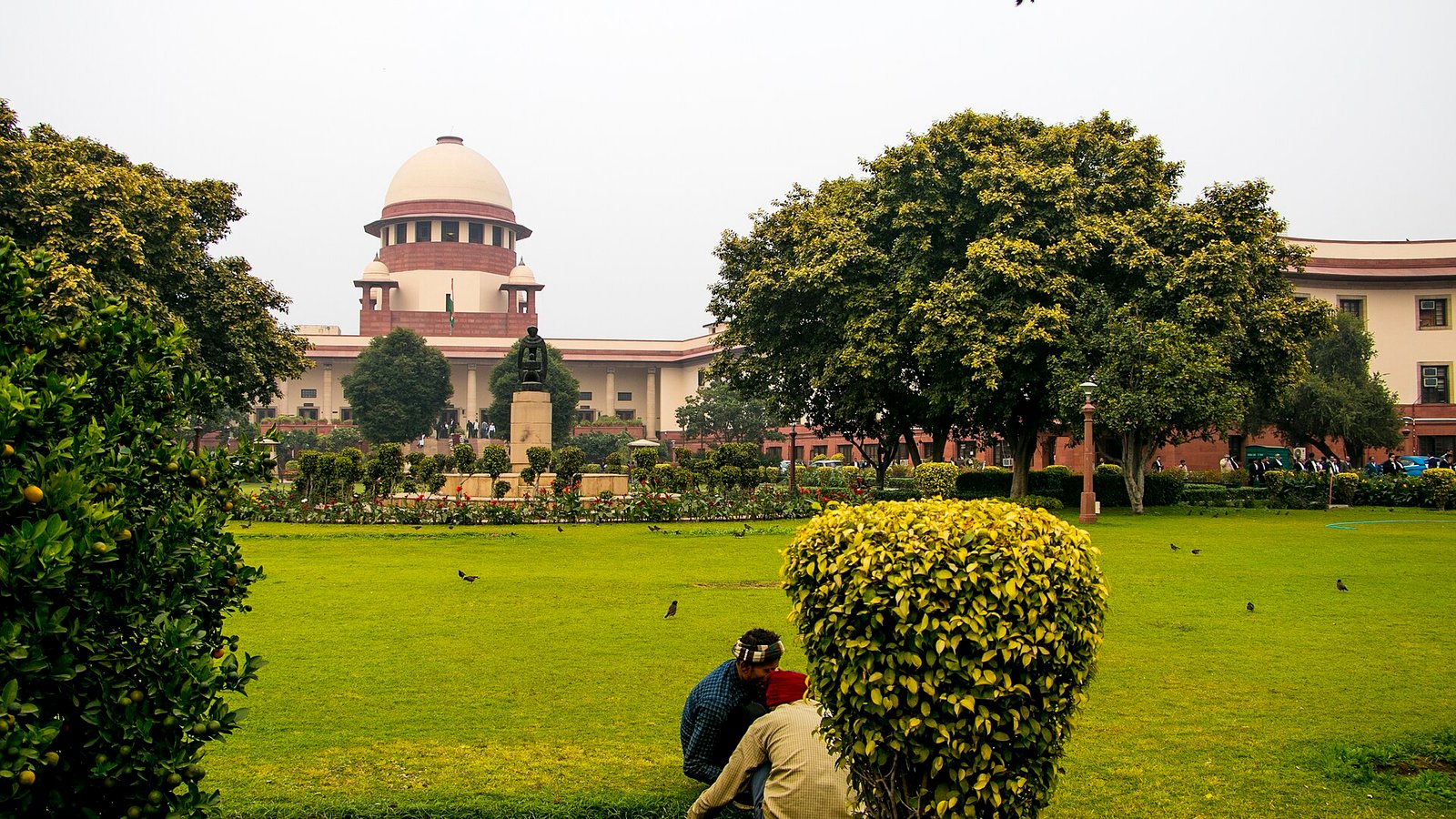
Photo: Subhashish Panigrahi / Wikimedia Commons, CC BY-SA 4.0
The Supreme Court on Monday, October 12, asked the Centre why price controls should stop at cancer drugs, after the government said it would cap trade margins on anti-cancer medicines at 30% of the maximum retail price (MRP). A bench of Justices Vikram Nath and Sandeep Mehta welcomed the step but said it did not go far enough, and gave the government until October 27 to work out how prices of other medicines could be capped.
What the Centre has decided
Solicitor General Tushar Mehta told the bench that the 30% cap will cover both patented and non-patented cancer drugs. An expert committee headed by the Director General of Health Services will identify the medicines to be included, and the National Pharmaceutical Pricing Authority (NPPA) will review its recommendations before notifying the new prices.
In a 551-page affidavit, the government said the move should cut the MRP of anti-cancer drugs by 20% to 70% and save patients around ₹2,500 crore a year. It pointed to a similar step in 2019, when a 30% cap on 42 non-scheduled cancer medicines lowered prices of 526 brands and saved patients about ₹984 crore a year.
The affidavit also acknowledged that hospitals often enjoy margins of 100% to 1,000% or more on consumables, tend to buy products with a high MRP and a low purchase price, and that patients have little bargaining power or information about cheaper substitutes.
‘Just the tip of the iceberg’
The bench said the decision had come only after its sharp remarks at earlier hearings and was “just the tip of the iceberg”. It asked why other medicines and medical devices could not be held to the 16% retailer margin used to fix ceiling prices under the Drugs (Prices Control) Order, 2013.
Justice Mehta cited several examples: an India-made cardiac stent with a price to retailer of about ₹5,000 sold for around ₹25,000; a saline drip line priced at ₹11 sold for about ₹270; and the antibiotic azithromycin, with an MRP of ₹78.29 against a price to stockist of ₹28.5. The Solicitor General pointed out that cardiac stents are already under a price cap.
Give me just one justification in favour of patients. Why can’t you control the entire range of drugs?
The Supreme Court bench, to the Centre
The government’s caution
Additional Solicitor General Aishwarya Bhati warned against a uniform cap. Low-value medicines often need higher margins to be worth stocking, she said, especially in rural areas, and too much intervention could hurt availability in a market she described as competitive and among the cheapest in the world. “There has to be a balance in pricing,” she said.
The bench was not persuaded, saying that making sure price-controlled medicines reach patients is the government’s job, and that the real dispute is over which drugs belong on the controlled list. It added that its proceedings were only meant to “strengthen the hands” of the government.
Under the current rules, ceiling prices have been fixed for 935 formulations. Makers of other medicines can set their own launch price, with the NPPA limiting increases to 10% a year. The court was hearing petitions by advocate Kishan Chand Jain and paediatric surgeon Sanjay Kulshrestha seeking tighter enforcement of price controls.