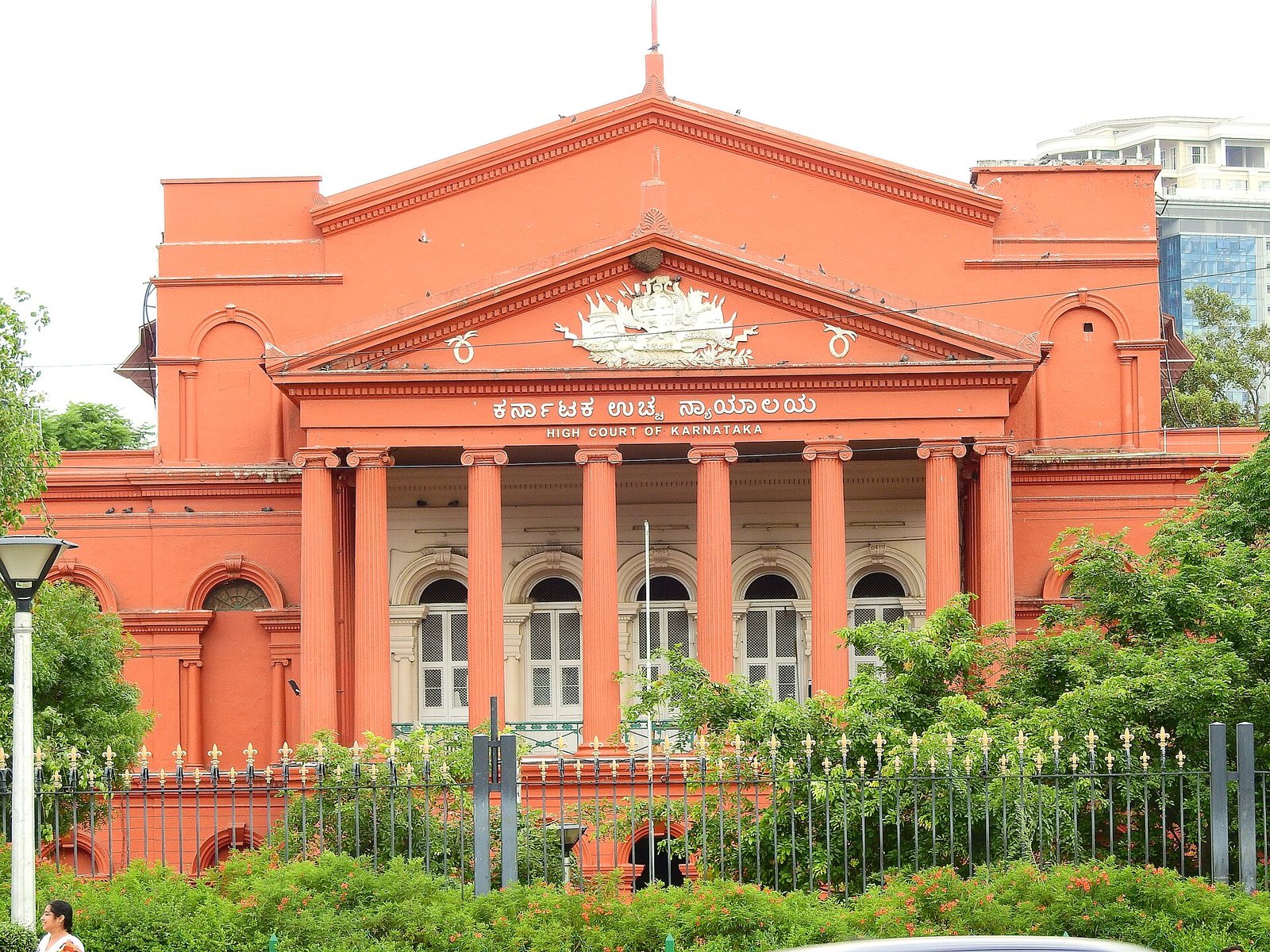
Photo: Rehman Abubakr / Wikimedia Commons, CC BY-SA 4.0
The Karnataka High Court on Monday, October 12, struck down the state’s 2022 law that raised reservation for Scheduled Castes (SCs) and Scheduled Tribes (STs), ruling that the increase was unconstitutional because it pushed total reservation in the state to 56%, beyond the 50% ceiling set by the Supreme Court.
A Division Bench of Chief Justice Vibhu Bakhru and Justice K.S. Hemalekha declared Sections 3 and 4 of the Karnataka Scheduled Castes and Scheduled Tribes (Reservation of Seats in Educational Institutions and of Appointments or Posts in the Services under the State) Act, 2022, invalid. Section 3, which covers admissions, was struck down to the extent it took aggregate reservation past 50%, as a violation of Articles 14 and 15. Section 4, covering government jobs, was struck down for violating Articles 14 and 16.
What the law did
The Act, brought in by the previous BJP government led by Basavaraj Bommai and applied retrospectively from November 1, 2022, raised the SC quota from 15% to 17% and the ST quota from 3% to 7%. Reservation for Other Backward Classes stayed at 32%, so the combined share rose from 50% to 56%.
The ruling came on a batch of petitions, including a public interest litigation by social worker Mahendra Kumar Mitra and a challenge by civil engineering graduates to recruitment in the Bruhat Bengaluru Mahanagara Palike based on the higher quota.
Why the court said the cap holds
In its 170-page judgment, the Bench held that the 50% limit, laid down in the 1992 Indra Sawhney case, is not merely a rule of prudence but a binding constitutional principle that balances equality of opportunity with affirmative action.
The state had argued that more than 90% of Karnataka’s population belongs to SC, ST and OBC communities and that reservation should reflect that share. The court rejected this, saying accepting the argument “would be destructive of the principle of equality”. It said the state’s view that a group was under-represented allowed it to provide reservation within the 50% limit, not beyond it, and that a belief that a quota “ought to be a few percentage points higher” was not the kind of extraordinary situation that could justify an exception.
The Bench also rejected the claim that the 10% quota for Economically Weaker Sections had done away with the ceiling, saying that quota is carved out of the general pool and does not let the state expand reservation for backward classes.
Separately, the court held that the state was bound to consult the National Commission for Scheduled Castes and the National Commission for Scheduled Tribes before the decision. It noted the government wrote to the commissions nearly three years after passing the Act, and said consultation “must precede the decision”.
Political reaction
Congress leader Siddaramaiah called the verdict a serious setback to the aspirations of historically marginalised communities. “We respect the judiciary,” he wrote on X, but he argued that the judgment raised basic questions about the BJP’s approach, asking why the party had announced the higher quotas ahead of the 2023 Assembly elections without first making sure they would stand up legally.