Photo: Federalreserve / Wikimedia Commons, public domain
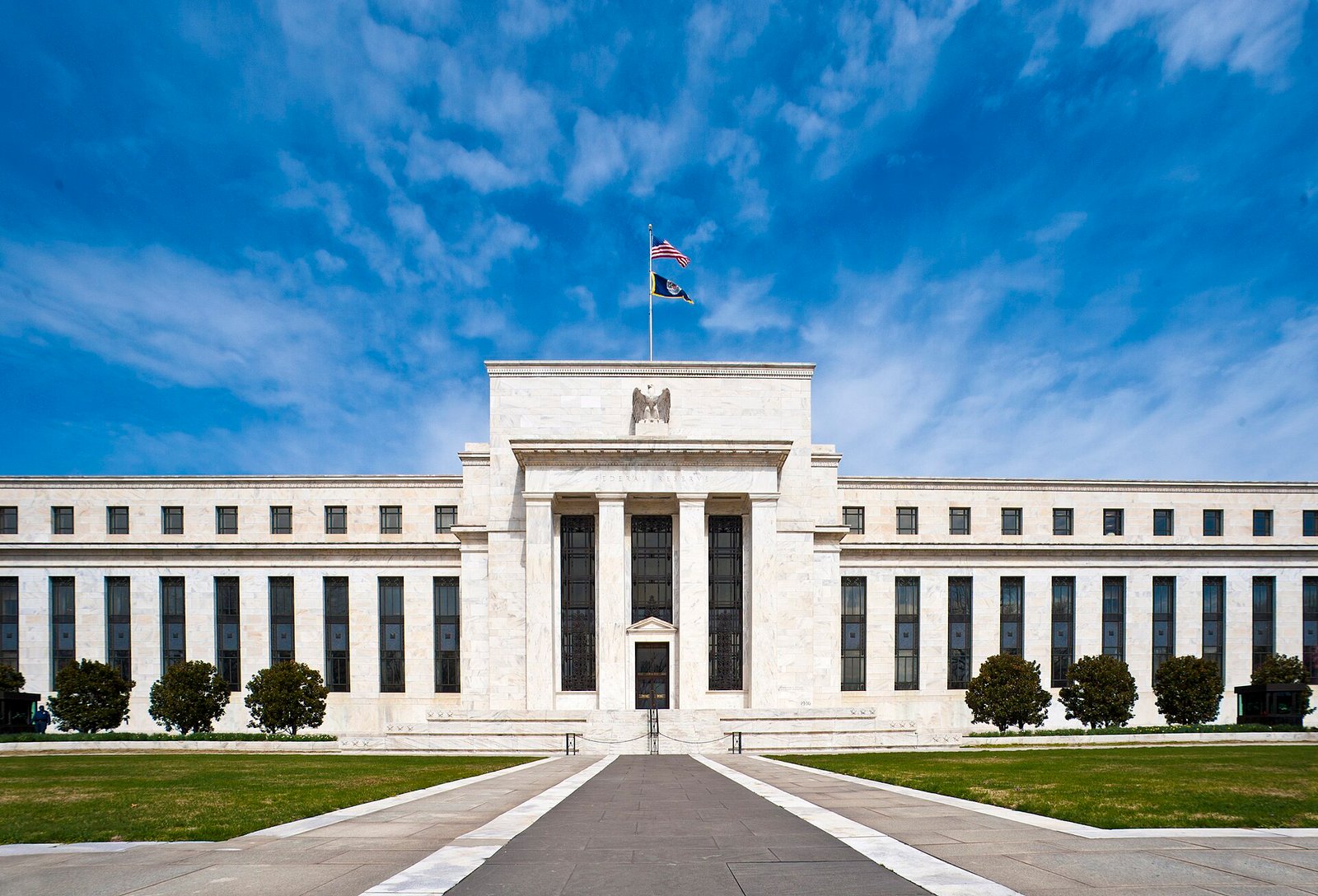
The US Federal Reserve kept its benchmark interest rate unchanged on Wednesday, October 28, leaving the federal funds target range at 3.75-4% in its last policy decision before the country’s November 3 midterm elections. The pause was widely expected, but the vote was split: the Federal Open Market Committee backed the hold 10-2, with the two dissenters pushing for an immediate quarter-point increase.
A split vote on the committee
The dissenting votes came from Fed Governor Lisa Cook and Cleveland Fed President Beth Hammack, who both wanted rates raised by 0.25 percentage points straight away. The rest of the committee chose to wait, saying in its statement that it needed more data before deciding its next move.
The accumulation of more information will help the Committee determine the policy stance appropriate to ensure a timely return of inflation to the Committee’s 2 percent goal.
Federal Open Market Committee statement
The central bank sounded more upbeat about growth than at its previous meeting six weeks ago, describing economic activity as expanding at a “strong pace”. It said consumer spending had held up despite uncertainty linked partly to geopolitical developments, that productivity growth was strong and business investment robust, and that job gains had kept pace with the workforce while unemployment had barely moved. At the same time, it said plainly that inflation remains elevated.
Why the Fed is under pressure
The hold comes a month after the Fed raised rates in September, its first increase since July 2023. US consumer prices rose 3.7% in the year to September, up from 3.4% in August, with energy costs behind much of the jump. Inflation has now stayed above the Fed’s 2% target for more than five years.
Energy prices have surged since the US war with Iran began in late February, and wide-ranging tariffs and heavy spending on artificial intelligence data centres have added to price pressures, according to economists and news agency reports. The cost of living has been a central issue in the midterm campaign, in which Democrats are trying to win control of both houses of Congress from President Donald Trump’s Republicans.
The Fed is also working under unusual political pressure. Mr Trump, who has repeatedly demanded lower rates, criticised September’s hike and has said US rates should be 1% or less. The White House has also renewed efforts to remove Governor Cook, one of Wednesday’s dissenters, despite an earlier Supreme Court ruling against an attempt to fire her. The Fed is now led by Kevin Warsh, who succeeded Jerome Powell as chair.
What happens next
Attention now turns to Thursday’s Personal Consumption Expenditures price index, the inflation measure the Fed relies on most closely. The committee’s next and final meeting of the year is scheduled for December 8-9, and current market forecasts point to a quarter-point rise then.
Some analysts have questioned the pause. A Brookings Institution economist said before the meeting that if there was a case for raising rates in September, there was an equally strong case for doing so now, given that the job market has been broadly stable. The Fed’s moves matter well beyond the US, because higher American rates tend to strengthen the dollar and influence borrowing costs and investment flows in emerging economies such as India.
Other central banks are also tightening. On the same day, the Bank of Canada raised its key rate to 2.5%, its first increase since July 2023.