Photo: The White House / Wikimedia Commons, public domain
US President Donald Trump has put on hold the tariffs and most of the sanctions in a new American law aimed at Russia and the countries that buy its oil and gas, removing, at least for now, the threat of a 100% duty on goods from major buyers such as India and China. The waivers were set out in an executive order released by the White House early on Saturday, India time, just a day before the law’s tariff on fresh Russian energy purchases could have started to apply.
What the order does
The order implements the Lindsey O. Graham Sanctioning Russia and Iran Act, which Mr Trump signed on September 18. On paper, it spells out the law’s penalties: a 500% increase in duty on goods from Russia, a 100% increase on goods from the five largest importers of Russian crude and natural gas if they knowingly make new purchases on or after October 18, 2026, and another 100% on the five biggest facilitators of Russian oil sanctions evasion.
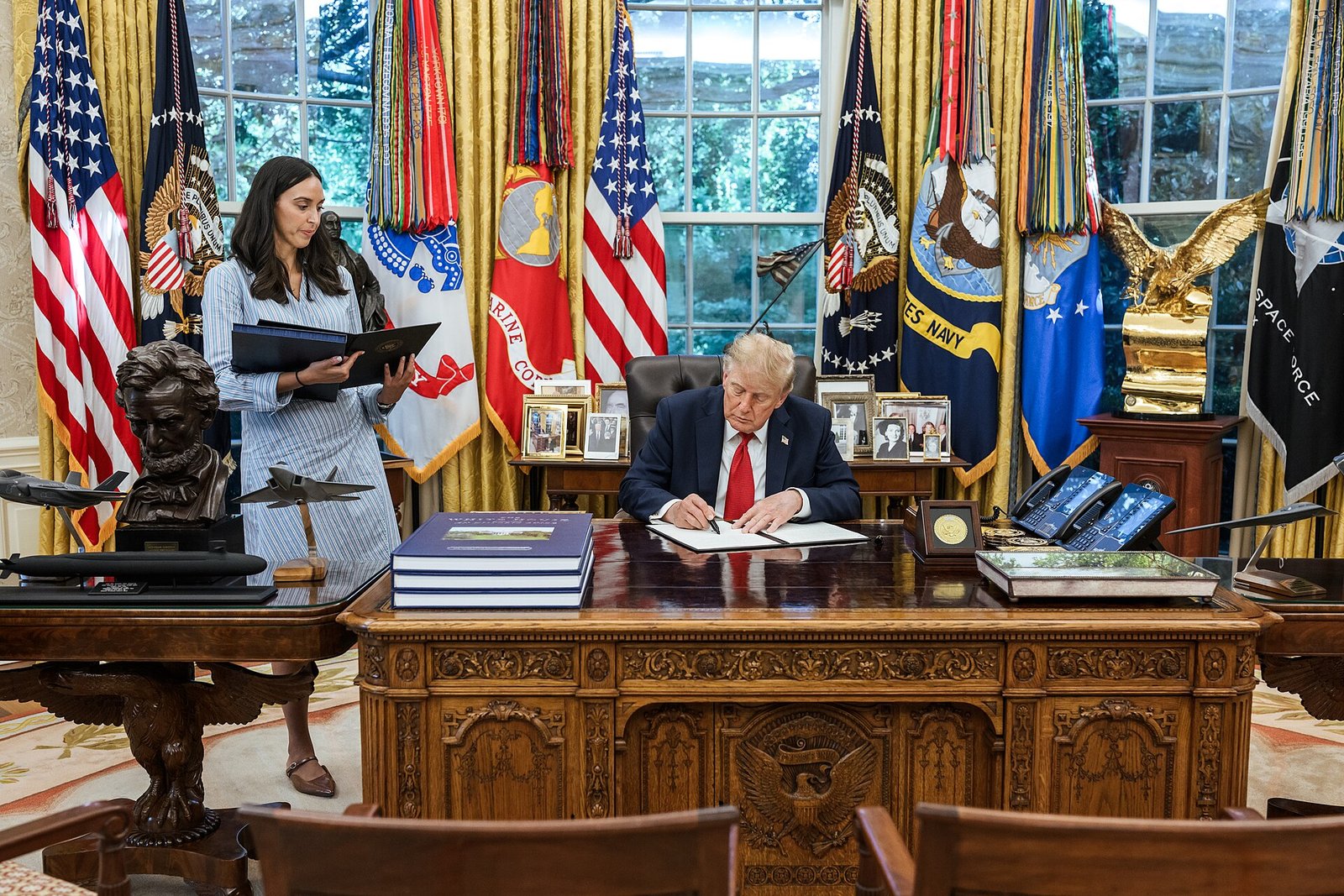
In the same document, Mr Trump then waives all of those duties, along with sanctions and restrictions under a long list of the Act’s sections. He used a provision that lets the President suspend the law’s measures if he certifies to Congress that doing so is in the national interest and sends a report explaining why. The order says that certification has been submitted.
The waivers stay in force until the President, or the Secretary of State where authorised, decides further action is needed. The order also makes clear that sanctions already imposed on Russia under earlier executive orders are not affected.
Why it matters for India
The law does not name any country. It asks the US Trade Representative to identify the five largest buyers of Russian crude and gas over the previous 12 months, with the list reviewed every 180 days. By current import volumes, that group includes India and China, which is why the Act was widely seen as a direct risk to Indian exports to the US. Washington had repeatedly used tariff threats to push New Delhi to cut its reliance on Russian energy.
Under the law, a waiver is only a pause. To lift the penalties on a country for good, the President must certify that it has stopped buying Russian energy and has given reliable assurances that it will not resume.
Diesel prices and the midterms
The move follows Mr Trump’s announcement, after a call with Russian President Vladimir Putin, that Moscow would immediately supply more than 300,000 tonnes of diesel, with more shipments from November. US diesel prices hit a record $6.52 a gallon in September and were still around $6.28 on Friday, a growing political worry ahead of the November 3 midterm elections. Some lawmakers have argued that easing curbs on Russian oil hands Moscow extra revenue while its war in Ukraine goes on.
The legislation began in April 2025 as a proposal by Senators Lindsey Graham and Richard Blumenthal for tariffs as high as 500% on buyers of Russian energy. It was later scaled back to a 100% ceiling for the five largest purchasers, and now carries the name of Mr Graham, who died in July.
What happens next
The order tells the Trade Representative, working with the State, Treasury and Energy departments, to keep tracking countries’ purchases of Russian crude and gas and any help with sanctions evasion, and to report regularly to the President, including on whether the waivers should change. The tariff threat can be revived if the White House decides the picture has shifted.