Photo: Bertrand SOUBEYRAND / Wikimedia Commons, CC BY-SA 4.0
A day of nationwide protests in France on Saturday, October 17, ended with buildings on fire, shops looted and about 400 people in custody, as students angry about the state of their schools were joined by trade unions and activists from the old “yellow vest” movement. Interior Minister Laurent Nuñez said about 5.5 lakh (550,000) people took part, and that 60 police and gendarmerie personnel were injured, two of whom were taken to hospital unconscious.
Fires from Paris to Limoges
Most of the main march in Paris was peaceful, but small groups of masked protesters threw fireworks and paving stones at riot police around the Place de la République. Officers answered with tear gas and water cannon. Cars and a kiosk were set alight, several shops were ransacked, and many metro stations near the Champs-Elysées, the presidential palace and parliament were shut at police request. Rallies near key government buildings had been banned in advance.
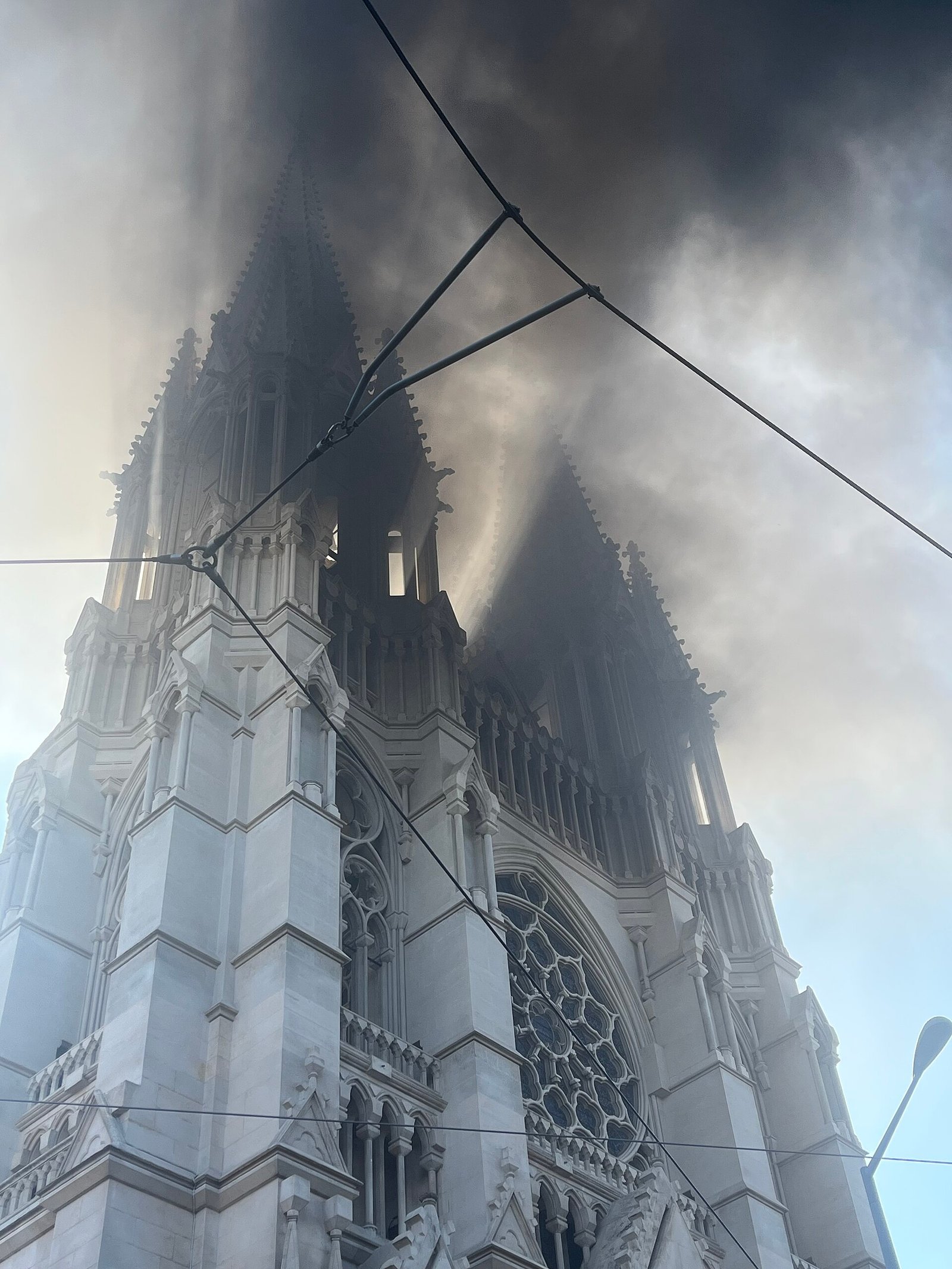
The worst damage was outside the capital. In Lyon, the city’s tourist office, housed in a 19th-century building, was gutted by fire; Mayor Grégory Doucet called it “a tragedy” for the city, and local police said hostile groups kept firefighters from reaching the blaze safely. In Limoges, a fire at the town hall brought down parts of the roof, while in Lille protesters forced their way into the town hall and an Apple store was stripped. The mayor of Saint-Étienne, Régis Juanico, said a young man had lost his hand to a grenade.
The interior ministry described “targeted acts of violence” by hooded individuals in Paris, Marseille, Rennes, Toulouse and Angers, including attacks on symbols of state power and on media offices. Nuñez said most of those arrested were adults with no link to the student movement.
Government blames the far left
Those who have broken, attacked the prefectures as well as businesses, looted even our town halls, will be prosecuted and punished.
Emmanuel Macron, President of France
Prime Minister Sébastien Lecornu said officers had faced “violence of extreme intensity” and accused some groups of using the protests as a warm-up for next year’s presidential election. Jean-Luc Mélenchon, leader of the hard-left La France Insoumise, who has backed the students, condemned the looting and arson but accused the police of turning on demonstrators, remarks Lecornu called “dangerous and cynical”. The far-right leader Marine Le Pen said the protesters’ legitimate demands had been “held hostage by the far left”.
How the protests grew
The movement began about three weeks ago in France’s lycées, the secondary schools for 15 to 18-year-olds, where pupils have complained about teacher shortages, frequent absences and crumbling buildings. It has grown quickly: the interior ministry counted 71,500 marchers on October 8, while unions put turnout at around 4.8 lakh on October 13. Saturday’s protests, on the first day of the half-term break, also drew people angry about the recent jump in fuel, energy and food prices. Education Minister Édouard Geffray had promised 3,000 extra supply teachers, but that has not calmed the streets.
What comes next
The unrest adds to pressure on Macron, who leaves office next year. Polls suggest the April presidential election could come down to Le Pen and Mélenchon, and both camps are now trading blame over Saturday’s violence. The government has said those behind the arson and looting will be prosecuted, while the students’ core complaints about staffing and school buildings remain unresolved.