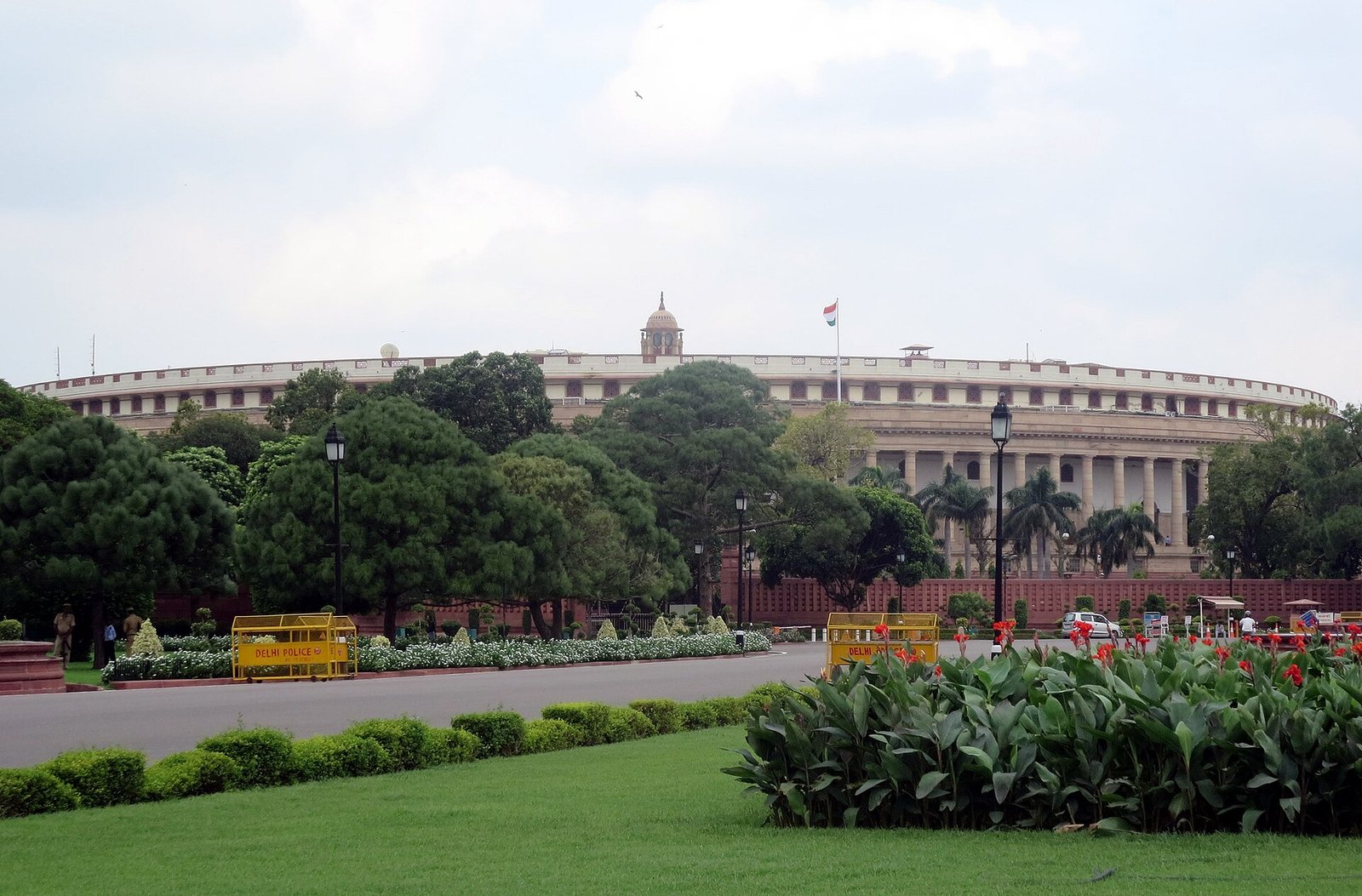
Photo: Nikhilb239 / Wikimedia Commons, CC BY-SA 4.0
The Centre has rejected the Congress demand for an all-party meeting on delimitation, with Parliamentary Affairs Minister Kiren Rijiju telling party president Mallikarjun Kharge on Monday (October 19) that the government already tried to hold talks with the Congress and, when it got no dates, went ahead and consulted other Opposition parties instead. The reply has added to speculation in political circles that Parliament could be called back for a short sitting to take up the Delimitation Amendment Bill.
What Rijiju wrote
Responding to Mr. Kharge’s October 16 letter to Prime Minister Narendra Modi, Mr. Rijiju said he had written to the Congress chief on March 16, March 26 and April 12 this year, discussed the issue with him in person, and also met Lok Sabha Leader of Opposition Rahul Gandhi during the Monsoon Session to seek support for the Bill.
According to the letter, the government then held consultations with representatives of the DMK, the Samajwadi Party, the YSRCP, the NCP, the Shiv Sena (UBT), the AIMIM and the BJD to build a wider consensus. Mr. Rijiju said it was unclear why the demand for consultation kept being repeated.
What is now required is constructive cooperation from the opposition parties, rather than a repetition of the same demand without due regard to the consultations already undertaken.
Kiren Rijiju, Parliamentary Affairs Minister
He closed by saying he hoped the Congress would play a constructive role and not obstruct important legislation in future.
The row over an unprorogued Parliament
Mr. Kharge had also called it “unprecedented” that both Houses had not been prorogued 64 days after the Monsoon Session was adjourned sine die on August 13. A sine die adjournment suspends sittings without fixing a date to meet again, while the formal end of a session needs a prorogation order from the President. The Congress leader argued that keeping the Houses open in this way leaves room for a sudden recall of Parliament.
Mr. Rijiju replied that no constitutional provision sets a deadline for prorogation, and that a delay does not by itself amount to any impropriety. He listed earlier gaps of 76 days in 1987, 54 days in 1989, 49 days each in 2006 and 2013, and 41 days in 1963. He also pointed to 2008, when the Lok Sabha sat on July 21 and 22 for a confidence vote, stayed unprorogued, and met again on October 17.
Why the numbers matter
The fight goes back to April. Mr. Kharge says he first sought an all-party meeting on April 11, but the Bills were made public late on April 14 and a special session was called on April 16. The Constitution amendment on delimitation then fell short of the required two-thirds majority in the Lok Sabha on April 17. He has since written to the Prime Minister on July 16, August 27 and now October 16.
A constitutional amendment needs a two-thirds majority in both Houses, which in the Lok Sabha means 362 votes in favour. Government sources have indicated that the Bill will be brought back only once that support is assured in both Houses, which is why the outreach to parties such as the DMK is being watched closely.
What happens next
The government has not announced a date for any special session. Mr. Kharge has asked the Prime Minister to place the new proposals before all parties before they are finalised, and warned him not to “bulldoze” a far-reaching constitutional amendment through Parliament again. With the Houses still unprorogued, the Opposition’s worry is that Parliament could be recalled at short notice to take up the Bill.