Photo: Prime Minister's Office / PMO via Wikimedia Commons, reproduced with credit
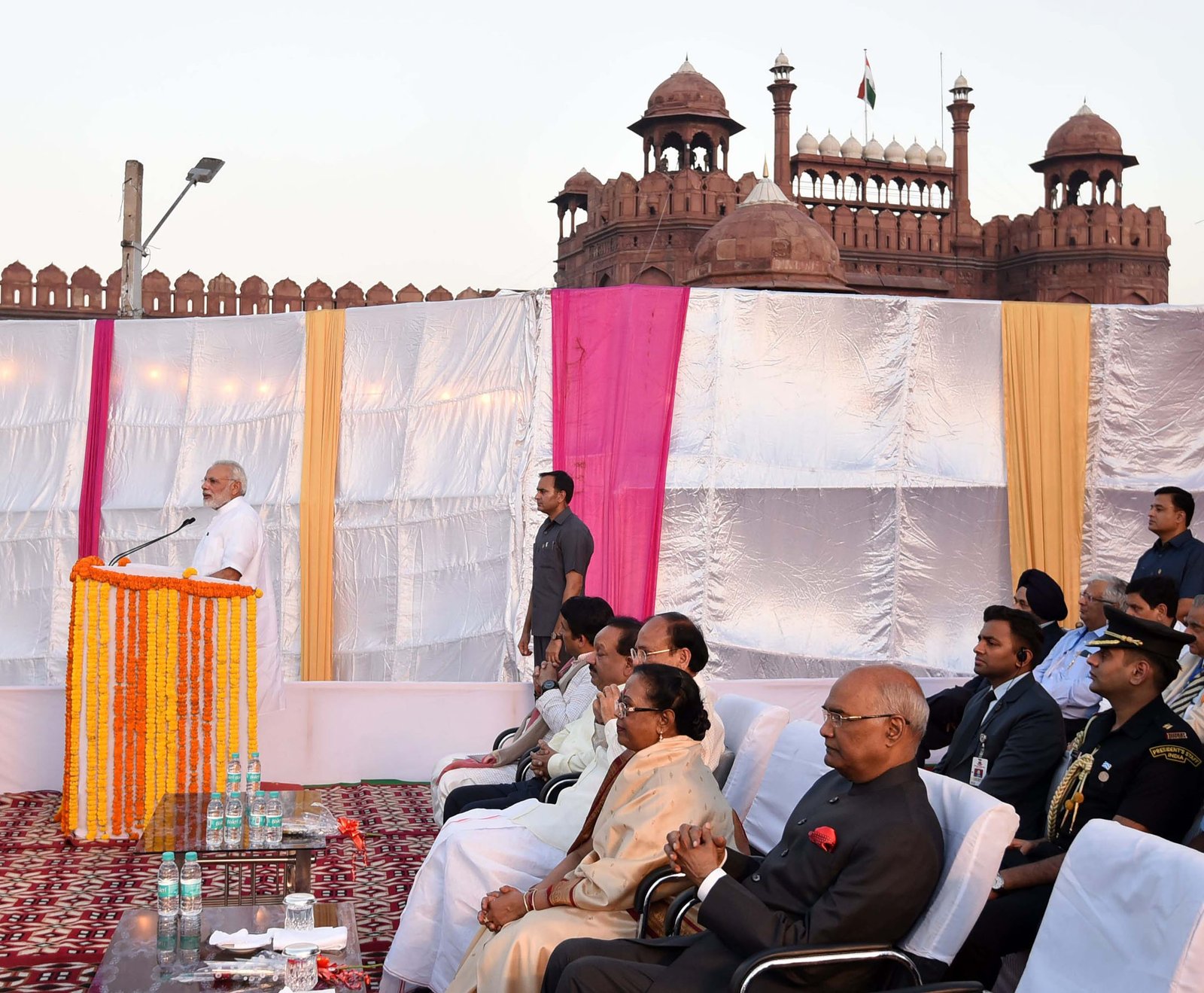
Prime Minister Narendra Modi used his Vijayadashami address in Delhi on Tuesday (October 20) to name what he called three enemies of the country, and urged every political party and national institution to set aside differences and stand together against them. He spoke at the Ramlila celebrations at the DDA Utsav Ground in IP Extension, where he also took part in the traditional burning of the Ravana effigy.
The ‘three enemies’
Towards the end of his speech, Mr. Modi listed the forces he said the country must recognise and defeat: those that attack the honour and dignity of the nation, people who divide society, and a mindset that harbours hatred towards Indian culture. He asked people to renew their resolve on Dussehra, identify these “enemies of Mother India” and take a ‘Nation First’ pledge.
Quoting the Vedic verse “Samano mantrah samitih samani”, he said the country’s thoughts and councils should be united, and that all institutions and all political parties should stand together in the national interest. The Prime Minister did not name any group, organisation or party in his remarks.
No matter how powerful the enemy may be, when we stand with truth and humanity, victory ultimately belongs to us.
Narendra Modi, Prime Minister, according to the official text of the speech
Ram Rajya, self-reliance and heritage
Much of the address drew on the life of Lord Ram. Mr. Modi described Ram Rajya as a system with no discrimination, where everyone gets justice and equal opportunity, and where power exists to serve people rather than to rule them. He said governance should follow a ‘Citizen First’ approach and put the poor and the deprived ahead of everything else.
He cited Lord Ram’s march to Lanka as a lesson in self-reliance, saying that in a crisis the country must not wait for others but trust its own strength and resources. He tied this to the government’s goals of a developed and self-reliant India.
On heritage, the Prime Minister said more than 650 ancient idols had been brought back to India over the past 12 years, that several Indian sites had been added to the UNESCO World Heritage List in recent years, and that Diwali was placed on UNESCO’s list of the intangible cultural heritage of humanity last year.
A politically charged Dussehra
The speech came on a day when festival platforms across the country carried sharp political messages. In Mumbai, Shiv Sena (UBT) chief Uddhav Thackeray told his party’s 60th Dussehra rally at Shivaji Park that the Opposition was working for a “regime change” at the Centre, and described young protesters on the streets as revolutionaries rather than Naxalites.
In Delhi, a 30-foot cockroach effigy was burnt alongside Ravana at a Ramlila in Pitampura whose organising committee is headed by BJP MLA Ashok Goel. Delhi AAP chief Saurabh Bharadwaj sought an FIR against the organisers and Minister Kapil Mishra, alleging the move hurt religious sentiments, while Cockroach Janta Party founder Abhijeet Dipke thanked the organisers for the “free publicity”.
Closing message
Mr. Modi ended by recalling the vision of ‘Ram se Rashtra’ (from Ram to the nation) and ‘Dev se Desh’ (from the divine to the country) that he set out at the consecration of the Ayodhya Ram temple, and said he was confident it would be fulfilled. The Prime Minister’s Office later released the full text of the address, and he shared photographs from the celebrations on social media, saying the event in Delhi had left him moved.