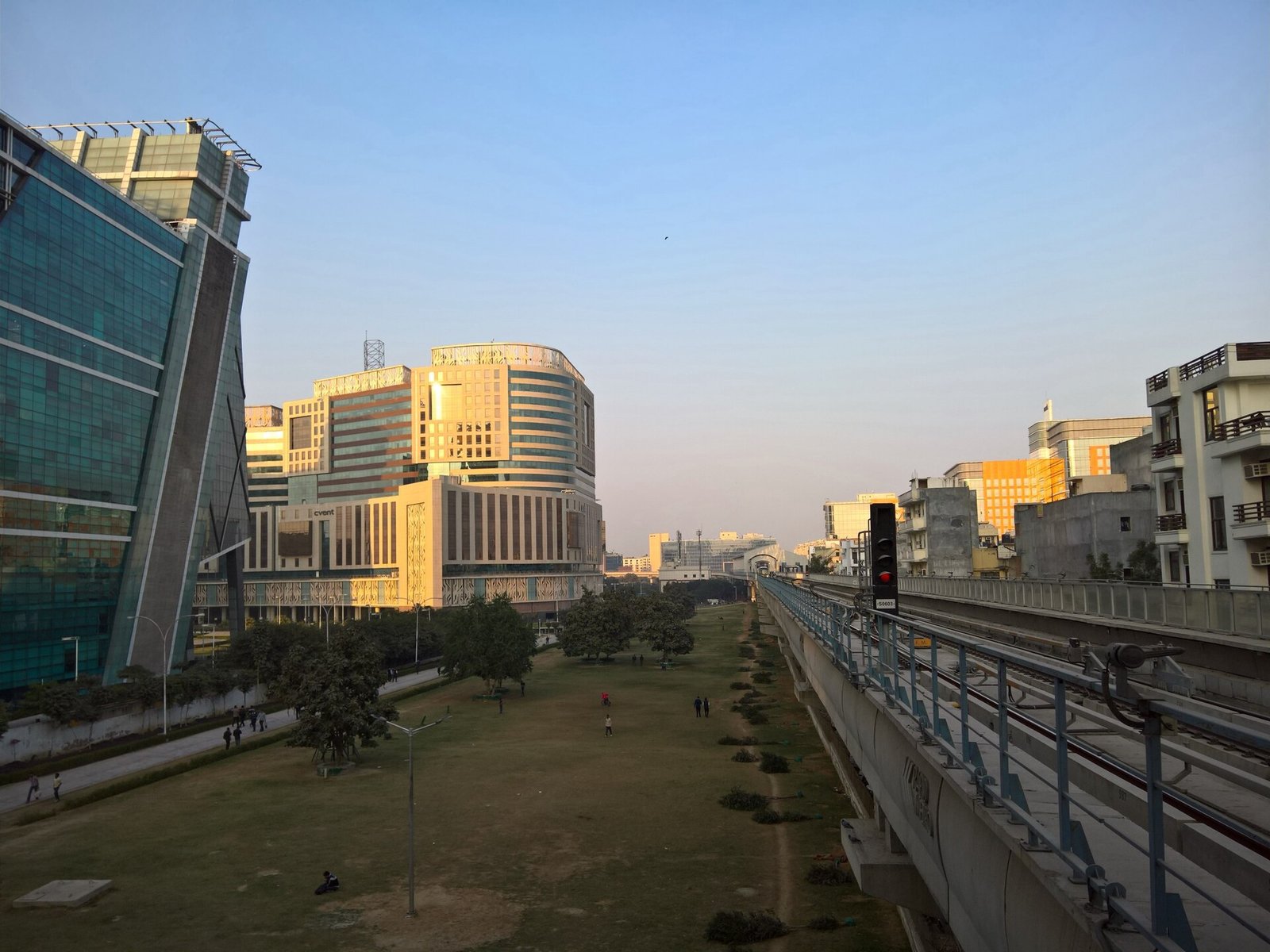
Photo: Slyronit / Wikimedia Commons, CC BY-SA 4.0
Households and businesses in Gurugram and Nuh could eventually choose who supplies their electricity after the Haryana Electricity Regulatory Commission (HERC) on Monday, October 19, granted a private company, Eleven Power Private Limited, a 25-year licence to distribute power in the two districts alongside the state-owned Dakshin Haryana Bijli Vitran Nigam (DHBVN). The same day, Energy Minister Anil Vij said the state government would challenge the order before the Appellate Tribunal for Electricity (APTEL).
What the order allows
The licence, issued under the Electricity Act, 2003, does not replace DHBVN. Instead, it lets a second distributor build its own network in the same area, which makes Gurugram and Nuh the first districts in Haryana where consumers may get a choice of supplier. The two-member bench of Chairman Mukesh Garg and Member Shiv Kumar pointed to long delays in giving new connections as a key reason. According to the order, DHBVN had 1,08,590 applications for new meters and load increases pending as of October 2025.
Eleven Power has committed ₹4,716.73 crore over five years, from 2026-27 to 2030-31, most of it (₹4,650.37 crore) for underground cables and substations, officials said. The company says it wants to source 80 per cent of its power from renewable energy and expects to begin supply in 2027-28. The commission noted that ₹304.37 crore has been set aside for Nuh from the very first phase.
Nobody has to switch right away. The company must get a consumer migration protocol approved within 60 days, and people can move only once its network reaches their area and under rules set by the commission.
Government, unions and opposition push back
We opposed this licence tooth and nail during the hearings. The HERC order is unacceptable and we will challenge it before APTEL. We do not want parallel licences.
Anil Vij, Haryana Energy Minister
During the hearings, the state’s power utilities argued that Gurugram brings in a large share of their revenue, and that losing commercial customers could weaken the cross-subsidy that keeps farm power cheap. They also alleged the new entrant would pick only wealthy urban pockets. The commission ruled that a lack of prior distribution experience was no legal bar, since the firm’s consortium partners have expertise in running high-voltage networks.
Employee groups have called the order backdoor privatisation. Subhash Lamba, national vice-president of the Electricity Employees Federation of India, said unions already had approval for a strike on December 1-3 and might now begin protesting as early as October 22. Former minister and INLD leader Sampat Singh, who objected during the hearings, described the move as “privatisation of profits and socialisation of losses”. Leader of the Opposition Bhupinder Singh Hooda had raised similar concerns in the Assembly’s monsoon session.
Why residents are hopeful
Industry bodies, including the Gurgaon Industrial Association, and several housing societies backed the licence during the hearings, citing frequent summer power cuts and the high cost of running diesel generators. A residents’ association along the Dwarka Expressway said it hopes for service comparable to Delhi, where private companies distribute power.
What happens next
The state’s appeal before APTEL will decide whether the licence survives. If it does, the next steps are the migration protocol due within 60 days and a network rollout that the company expects to start supplying power in 2027-28. Until then, DHBVN continues to supply all consumers in both districts.