Photo: Chabe01 / Wikimedia Commons, CC BY-SA 4.0
French police arrested close to 1,000 people on Saturday, October 24, after a second straight weekend of nationwide protests over the cost of living ended in clashes in Paris and several other cities. Interior Minister Laurent Nuñez said the number of arrests was expected to rise.
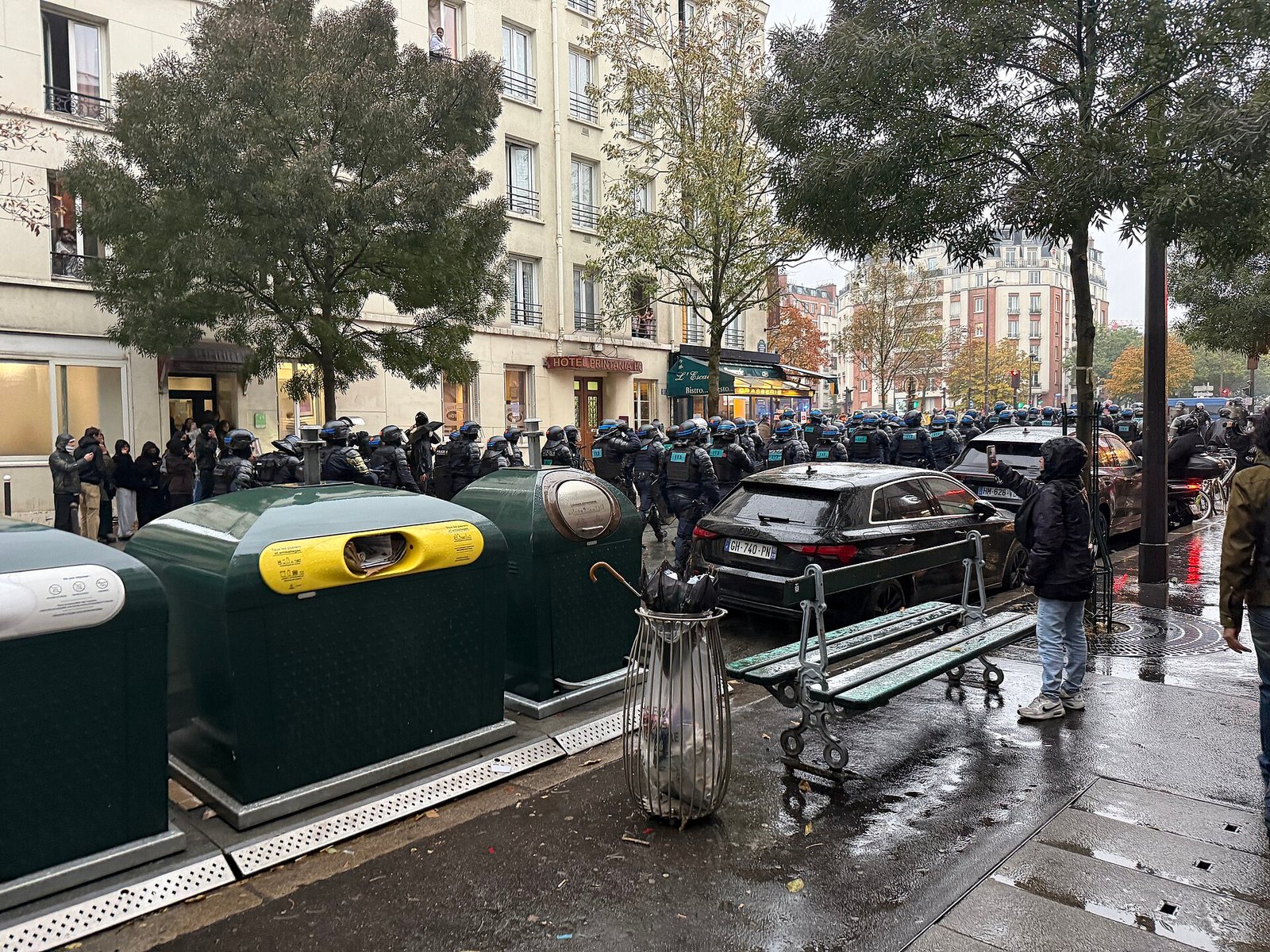
The marches themselves were largely peaceful. Trouble broke out as crowds were breaking up, with riot police using tear gas, water cannon and baton charges against groups of mostly young, masked protesters.
Turnout and the security operation
The interior ministry put nationwide turnout at about 4,10,000, while the CGT union estimated nearly 8,00,000. In Paris, estimates ranged from 1,10,000 to 2,50,000. Around 70,000 police officers were deployed across the country.
The government had tightened the rules after the previous weekend. President Emmanuel Macron decreed that only marches organised by recognised trade unions would be allowed, and police were told to keep demonstrators out of city centres, where shops are concentrated. Partial curfews were imposed in parts of Paris and some other cities. The main Paris march was moved at the last minute to a route on the capital’s southeastern edge, from Porte d’Italie towards Porte de Vincennes. Many shops boarded up their windows, and the Louvre and Musée d’Orsay stayed shut for the day.
Where the clashes broke out
In Paris, Nuñez blamed about 500 people he described as rioters at the back of the march, who put up barricades, threw objects at officers and smashed windows at a car dealership. In Marseille, bins were set on fire and streets were blocked with metal sheets. Police used tear gas in Lyon, protesters pulled boards off a building in Bordeaux to build a barricade, and in Nantes thousands pushed through police lines to reach the city centre. Police also reported looting in Marseille and Grenoble.
Two people were seriously injured, one in Toulouse and one in Clermont-Ferrand, the minister said. In Cannes and Montpellier, authorities said far-right activists clashed with far-left militants, which they called an unprecedented development.
Neither the President, nor the weather will stop me from demonstrating.
Delphine, a protester in Lille
Why it matters
The protests began over rising fuel prices and the cost of living and grew after weeks of student demonstrations over school conditions. Inflation in France, especially for fuel, has climbed since the Middle East war began in February. The previous weekend’s unrest led to more than 2,500 arrests, damage to over 2,000 businesses and about 1,000 injured police officers, and hundreds of people have since been jailed after fast-track hearings.
Nuñez said this weekend went better, with more officers on the streets, quicker responses and better protection for shops. Critics, though, accuse the government of cracking down on the right to protest.
The unrest comes six months before the election to choose Macron’s successor. Far-right leader Marine Le Pen, who leads in opinion polls, launched her campaign in Orléans on Saturday, where around 13,000 people joined a peaceful counter-rally.
What happens next
The Yellow Vests movement has called for more demonstrations on October 31 to defend the freedom to protest, and far-left candidate Jean-Luc Mélenchon said the protests would happen every week. Protests over similar issues also took place elsewhere in Europe on Saturday: police fired tear gas at anti-government protesters in Albania’s capital Tirana, clashes were reported in Brussels, and hundreds of soldiers joined police in Milan to stop crowds from gathering.