Photo: CIAT / Wikimedia Commons, CC BY-SA 2.0
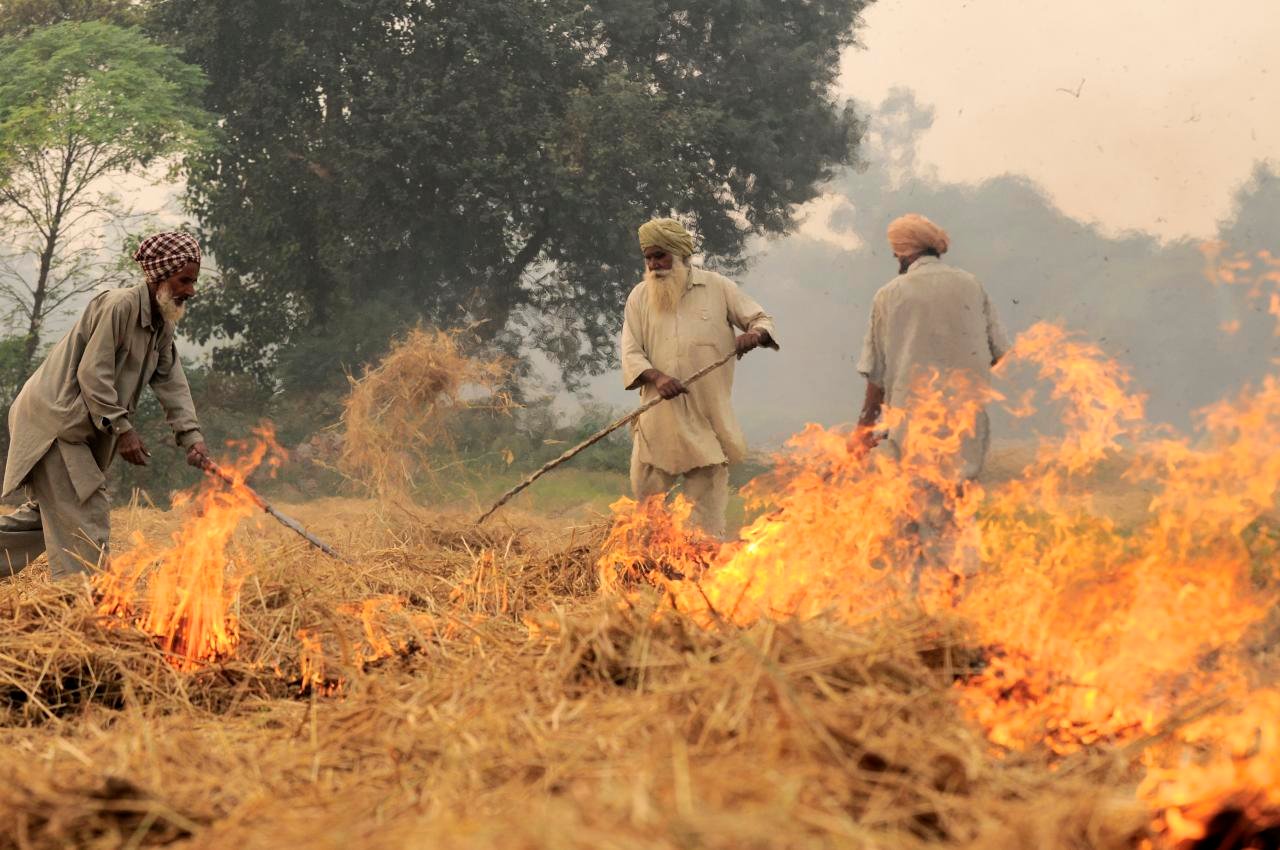
The Commission for Air Quality Management (CAQM) is preparing to fly drones over farm-fire hotspots in Punjab this winter, aiming to catch stubble burning that happens in the evening, after the satellites used to count fires have already passed overhead. A team led by CAQM member (technical) S.D. Attri reviewed the plan during visits to Amritsar and Tarn Taran districts on October 9 and 10.
Why drones, and why the evening
Farm fires are usually tracked with polar-orbiting satellites, which pass over the region between roughly 10.30 am and 1.30 pm. Studies from earlier seasons have suggested that some farmers set residue alight later in the day to stay out of that window, which means the official fire count may understate how much burning actually takes place.
To close that gap, CAQM issued its first detailed standard operating procedure for drone-based monitoring of crop-residue burning in July, covering Punjab, Haryana, Uttar Pradesh and Rajasthan. It recommends flying drones between 3 pm and 9 pm. Officials said around 80 to 90 drones are planned for hotspot villages in Punjab this winter, and their performance will decide whether more are needed. A similar review is planned for Haryana.
Deployment is still incomplete. A senior CAQM official said permissions were awaited for some villages near the Pakistan border, while in districts such as Patiala drone work had not started because burning had not yet begun there.
What the review in Amritsar covered
At a meeting in Amritsar on Saturday with the deputy commissioners and other officials of both districts, the commission looked at harvesting and procurement, the supply of crop residue management (CRM) machines, surveillance arrangements and enforcement. According to CAQM, balers are collecting paddy straw in both districts, and Amritsar has linked farmers and aggregators with industries that burn straw bales in their boilers. Amritsar has also set up a control room and help desk to connect farmers with machinery, and district helplines have been circulated so that residents can report fires.
Tarn Taran told the commission it had largely met its targets on procurement and availability of CRM machines, and highlighted field patrols by nodal and cluster officers.
Why it matters for Delhi
Smoke from paddy stubble burning in Punjab and Haryana is a major contributor to the toxic air that settles over Delhi and the National Capital Region every October and November. The commission described ending stubble burning as a high priority, and has sent flying squads to 18 Punjab districts, including Sangrur, Bathinda, Ludhiana, Patiala and Firozpur, for the period from October 1 to November 30.
What happens next
CAQM has asked district, nodal and cluster officers to keep up surveillance and enforcement without a break through the harvest, especially in hotspot villages, and to strengthen the supply chain that turns straw into fuel. The coming weeks will show whether evening drone patrols change the picture on the ground, and in Delhi’s air.