Photo: NASA image using data provided courtesy of the University of Maryland’s Globa… / Wikimedia Commons, public domain
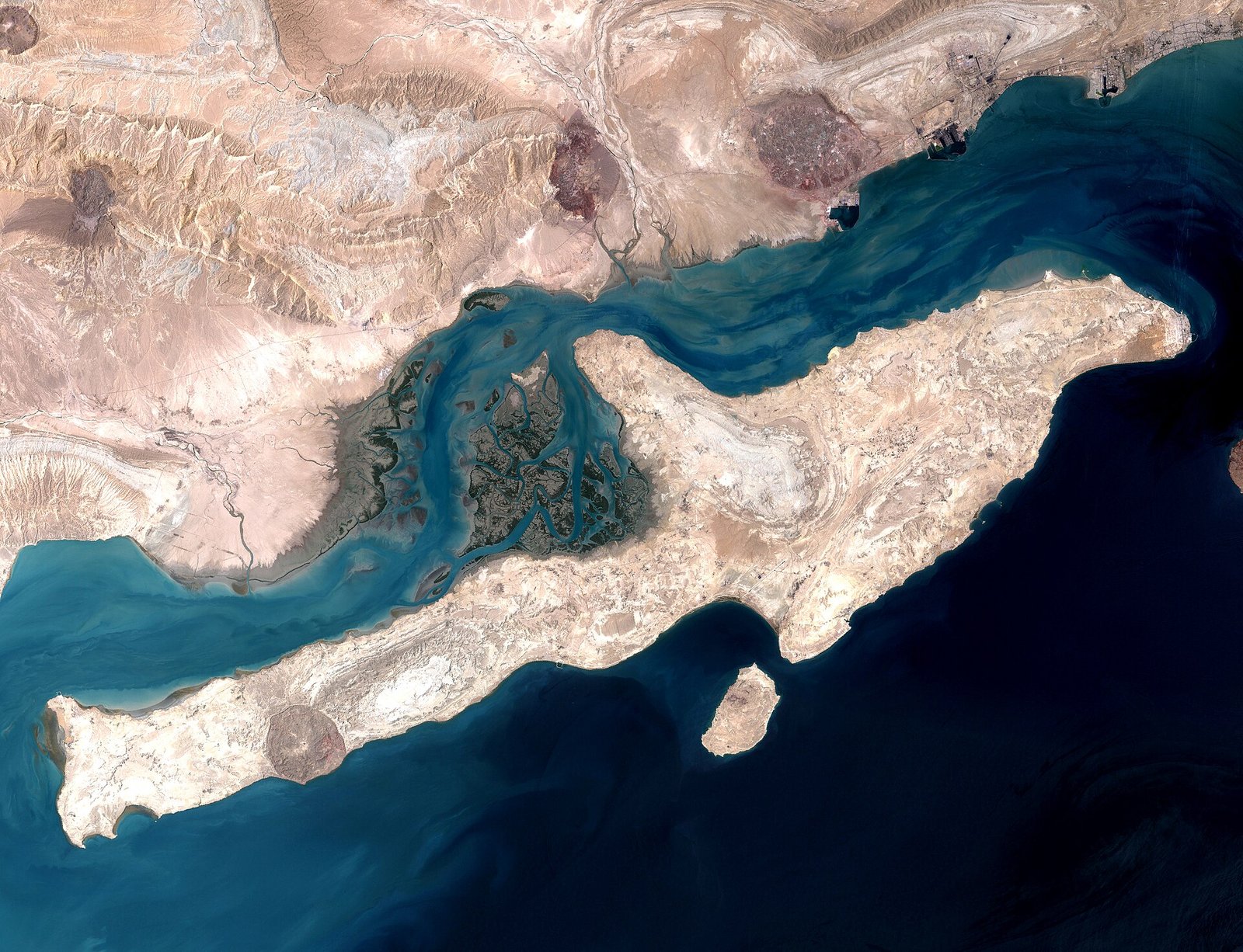
The United States carried out strikes on Iran’s Qeshm Island in the Strait of Hormuz late on Monday, US officials told American media, hours before the country votes in its midterm elections. On the same day, an Indian-flagged cargo vessel was hit by an unidentified aerial object off Oman, killing one of its 14 Indian crew members.
What happened on Qeshm
Iran’s state news agency IRNA reported several explosions on the island in quick succession, with witnesses saying they saw two aircraft overhead. The semi-official Fars agency said blasts were also heard from the sea near the port city of Bandar Lengeh.
US officials described the action as limited and defensive. One official said the targets were Iranians who had used surface-to-air missiles against US assets, and others said the aim was to curb Iran’s ability to attack commercial shipping in the strait. According to several US reports, the strikes followed the Islamic Revolutionary Guard Corps (IRGC) firing at a US aircraft, and one official said they did not signal a wider campaign. Earlier on Monday, the IRGC claimed it had captured two US reconnaissance drones south of Qeshm and destroyed an MQ-9 drone east of the strait. There was no immediate official comment from Tehran or US Central Command.
Indian sailor dies off Oman
Shipping minister Sarbananda Sonowal said the MSV Al Jusufi was struck while sailing near the Omani coast on November 2. Thirteen crew members were evacuated and rescued by the Omani Coast Guard, but one seafarer, Gandhar Nahim Ajij from Gujarat, died of his injuries. The minister said India’s embassy in Oman is working with local authorities to help the survivors and to bring them and the sailor’s body home. It was not stated who was behind the attack.
The Ministry of External Affairs said last month that 22 Indians, including 14 seafarers, had been killed in the West Asia conflict, and India has repeatedly called for the safety of crews in the region.
Talk of a deal continues
The strikes came as Washington signalled optimism about diplomacy. President Donald Trump, who had said the US would not strike Iran before the midterms, said in a speech in Washington that a deal was “coming together very nicely” and suggested the conflict was barely a war any more. Vice President JD Vance said he and the President felt “pretty good” about the chances of a negotiated settlement.
Iran’s foreign ministry spokesman Esmaeil Baghaei said Tehran’s plan to reopen the strait could begin within two days if the US lifts its naval blockade of Iranian ports and ends hostilities. Qatari mediators held two rounds of talks with Iranian officials last week, and more are planned. Israeli Prime Minister Benjamin Netanyahu, meanwhile, has pressed Trump for fresh strikes after the US vote, according to regional officials cited by international agencies.
Why it matters
The war, which began when the US and Israel attacked Iran on February 28, has pushed up fuel prices and become a political weight for Republicans as they try to keep control of Congress. Brent crude fell more than 7% on Monday on hopes of a deal, then edged up to about $105 a barrel after reports of the strikes. Before the war, the Strait of Hormuz carried roughly a fifth of the world’s oil and gas, making every flare-up there a direct concern for India, both for its energy supplies and for the Indian crews who sail those waters.