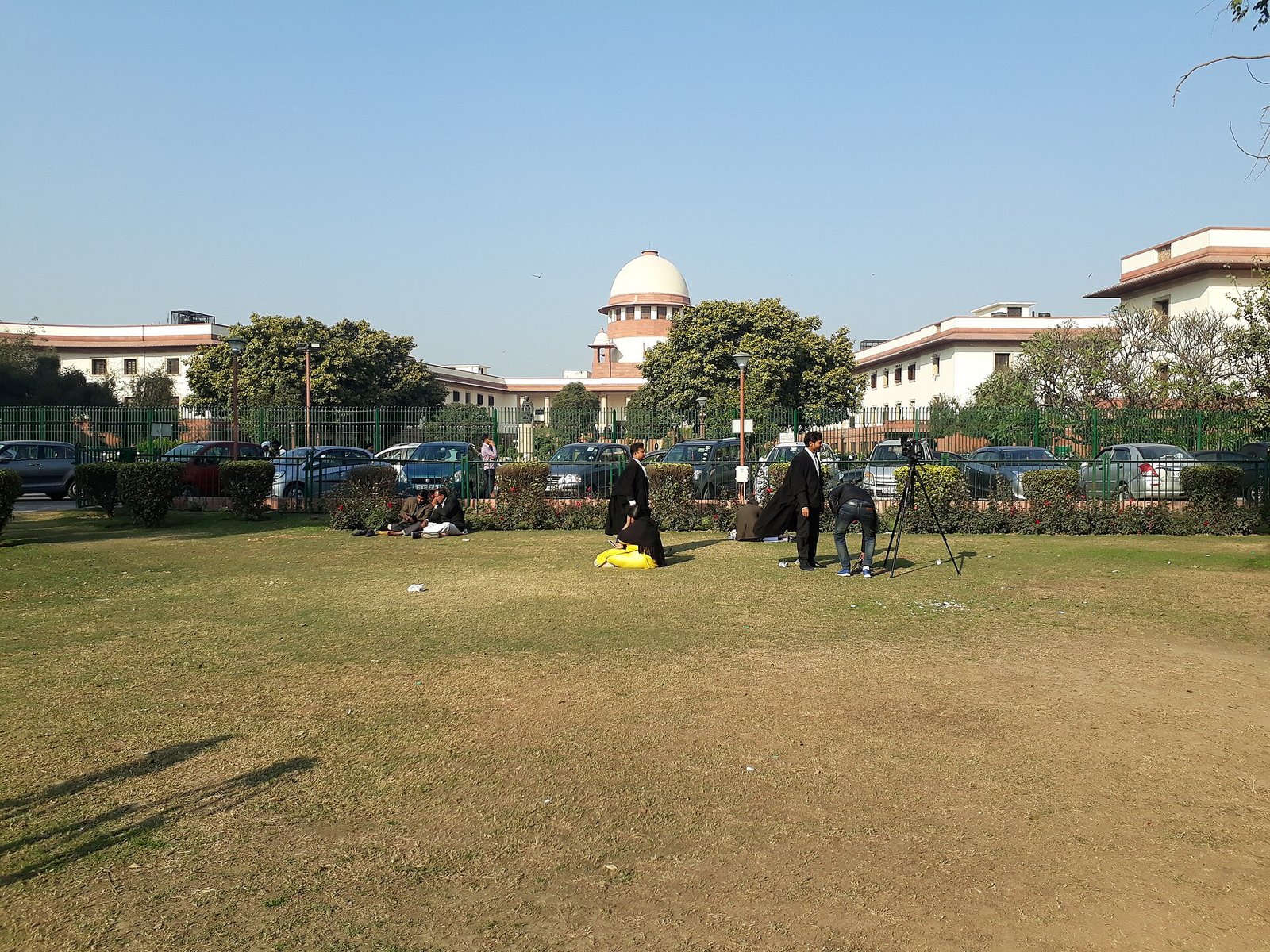
Photo: Pinakpani / Wikimedia Commons, CC BY-SA 4.0
The Supreme Court on Wednesday, October 28, pressed the Election Commission to find a way to contact the roughly 47 lakh Delhi electors whose names are missing from the draft voter list prepared under the Special Intensive Revision (SIR), and questioned why people who were already on the 2026 roll are being told to apply all over again as first-time voters.
The problem with Form 6
A bench of Chief Justice Surya Kant and Justices Joymalya Bagchi and V Mohana focused on Form 6, the application meant for people enrolling for the first time, which requires them to declare that they have never been on a roll before. Electors left out of the draft list are currently being directed to use it, rather than Form 8, which covers a change of address.
Justice Bagchi called this a “structural incongruity”. He noted that Delhi had about 1.45 crore voters before the revision, that enumeration forms were handed out from around June 30, and that about 47 lakh people did not respond. Those electors were then classified as absent, shifted, dead or duplicate, he said, with no category for people who simply never received a form or were out of the city for a few weeks.
Right to vote is a vital right… will that be a ground to forfeit the right forever?
Justice Joymalya Bagchi
Advocate Prashant Bhushan, for the petitioners, said about 43 lakh of the omitted electors had been marked as permanently shifted or absent, and argued that many of them never got an enumeration form. He said they were being pushed into making a false declaration that they had not voted before.
What the court suggested
The Chief Justice said migration within a big city like Delhi is common and asked the commission why it was not reaching out to voters instead of putting the burden on them. The bench suggested that the commission publish lists of electors it could not contact, with their earlier polling details, and ask them to approach their booth-level officer. It also said the commission should keep accepting Forms 6 and 8, make clear there is no cut-off for approaching officials at this stage, and consider a separate category, with a declaration, for those who could not respond.
The Chief Justice also remarked that there was no need to rush the process, since Delhi is not heading to the polls anytime soon.
The commission’s response
Senior advocate D S Naidu, appearing for the Election Commission, said being left out of the draft roll is not a final deletion and eligible people can still seek inclusion. He said the commission would examine the bench’s concerns, consider accepting late enumeration forms and extend the October 30 deadline if needed. He added that the commission was willing to provide a form for these electors that would not be called Form 6.
What happens next
The case, filed by activists Anjali Bhardwaj and Amrita Johri, seeks public disclosure of the electors served notices during the Delhi revision, along with the reasons for each notice. The court will take it up again after two weeks. A lawyer for Delhi Congress chief Devender Yadav also told reporters outside the court that a separate petition on Form 6 was filed on Wednesday.
The stakes are high: nearly one in three voters on Delhi’s pre-revision roll is missing from the draft list, and any change the commission makes here could shape how the SIR is handled elsewhere.