Photo: Ramesh NG / Wikimedia Commons, CC BY-SA 2.0
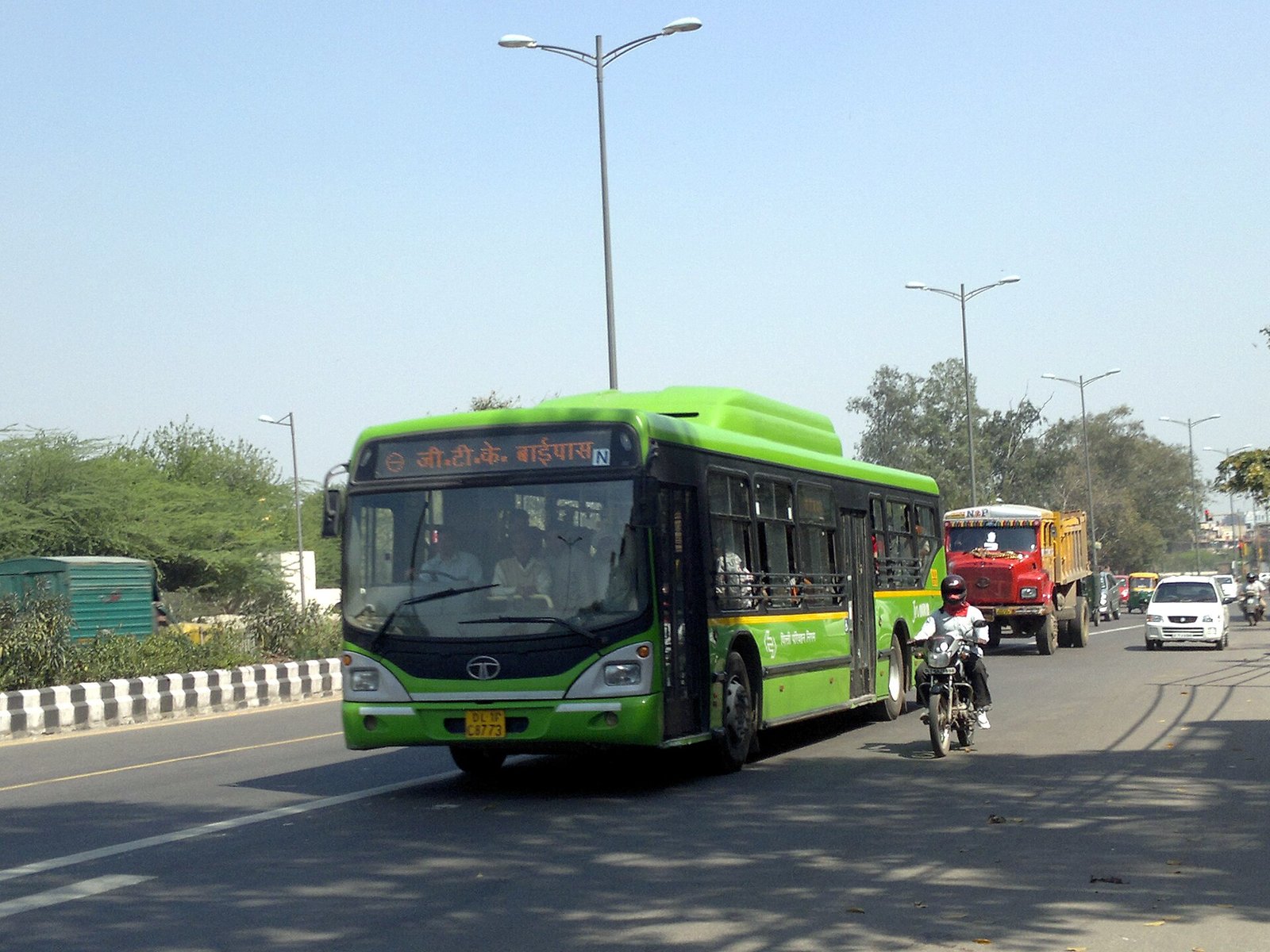
The Delhi government has deployed 2,947 marshals on Delhi Transport Corporation (DTC) buses and is running 56 special buses for women, Chief Minister Rekha Gupta said on Saturday, as she set out the measures her government is taking to make public spaces safer for women and children.
What changes for commuters
Of the 56 special buses, 15 run in the evening shift, and armed women police personnel are deployed on them after 5 pm, the chief minister said in a statement.
Every bus has been connected to the Bus Management System, which allows a control centre to monitor panic alarms, live CCTV feeds and GPS locations round the clock. The idea is that if a passenger presses a panic button, staff can see what is happening on the bus and where it is in real time.
The evening deployment of armed women police is aimed at women commuters who travel after dark.
Beyond the buses
Gupta said the Department of Women and Child Development would soon add accommodation for working women in Vishwas Nagar and Rohini. She also listed steps aimed at children, including Child Welfare Committees and Juvenile Justice Boards working as statutory bodies, and Sub-Divisional Magistrates acting as Child Marriage Prohibition Officers.
Around 1.5 lakh CCTV cameras are installed in schools, she said, and self-defence training is being given in 1,397 schools under the Rani Lakshmibai Self-Defence Training Programme.
Streetlights and cameras
On the roads, the Public Works Department has installed 96,000 streetlights, including 45,000 high-pressure sodium vapour lights and 51,000 LED lights, according to the chief minister. A total of 2,53,983 CCTV cameras under the department are operational.
“The Delhi government is strengthening systems to ensure that women receive prompt assistance during a crisis,” Gupta said, adding that the aim was also to give every child a safe environment in which to learn.
Where to get help
Residents can report problems with roads and streetlights through the toll-free number 1908 and the PWD Seva Portal. The Women’s Helpline 181 remains available for women in distress, as part of what the government described as a multi-layered safety network that includes DTC services and child protection measures.