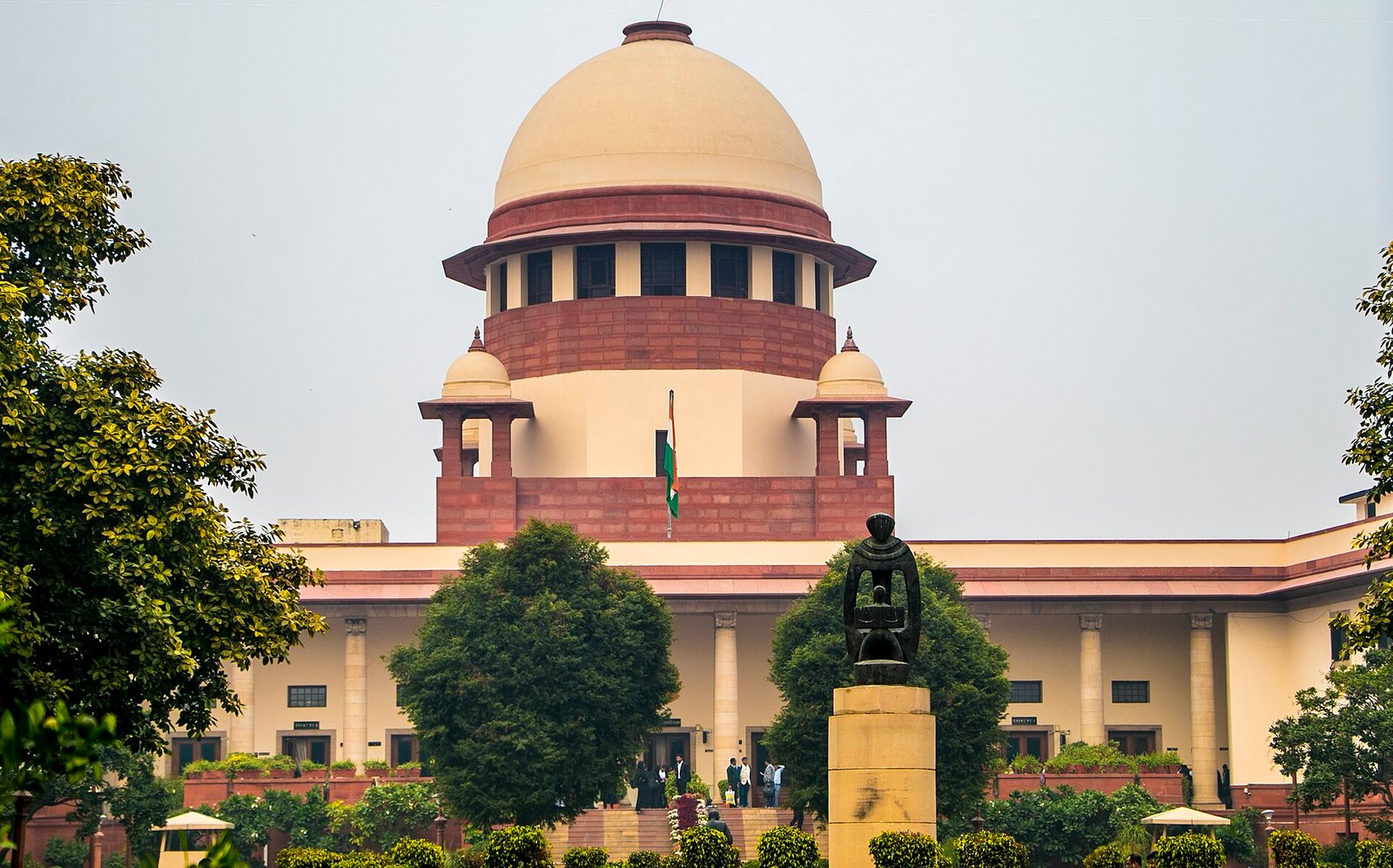
Photo: Subhashish Panigrahi / Wikimedia Commons, CC BY-SA 4.0
The Supreme Court has held that fees for professional courses in self-financing colleges must be notified for the entire programme before a student is admitted, and that mid-course increases are allowed only in exceptional circumstances such as an unforeseen rise in expenditure.
A bench of Justices P.S. Narasimha and Alok Aradhe delivered the ruling in appeals arising from a dispute over a fee revision at Dr. B.C. Roy Engineering College in West Bengal. The court upheld High Court directions that protected students already on the rolls from a midstream hike, while setting out a broader principle of fee certainty for engineering, medicine, pharmacy and similar programmes.
What the bench said
The judges stressed that for most households, fees for a professional course are a substantial share of income and savings, often met through education loans, and that students must not be forced to pay more than what was prescribed at admission.
A student entering a four-or five-year professional programme should ordinarily know, at the very threshold, the financial liability that they or their family is undertaking.
Supreme Court bench of Justices P.S. Narasimha and Alok Aradhe
The court noted that fees in professional courses are reported to be far higher than in general courses, and said states and regulators must create certainty about that financial obligation. Adverse mid-course changes, it said, can affect families and the quality of professionals being trained.
Citing earlier Supreme Court rulings, AICTE regulations and the National Education Policy 2020, the bench held that authorities must notify the fee payable for the full course before admission. Variation during the course is permissible only in exceptional instances, such as an unforeseen increase in expenditure, extraordinary economic conditions or statutory changes that could not reasonably have been anticipated.
The West Bengal college dispute
Students joined the college’s four-year B.Tech programmes for the 2023–27 batch in September 2023. On October 16, 2023, the West Bengal government raised the annual tuition fee ceiling for self-financing professional colleges. The college revised its fees in December 2023 and applied the increase from the second semester in January 2024.
Semester tuition rose from ₹44,000 to ₹60,500 for certain branches and from ₹40,000 to ₹55,000 for others. The college also introduced a development fee. Students challenged the hike. A Calcutta High Court division bench later held that the revised structure could not be applied to those already admitted before the state notification, and directed refunds or adjustments of excess amounts collected.
The Supreme Court quashed the midstream hike for that cohort—reported as a 37% increase—and upheld the High Court’s protective directions for already admitted students. It disagreed with parts of the High Court’s reasoning based on retrospectivity, equity and estoppel, and partly allowed the appeals on that limited point.
Why it matters
Private self-financing colleges play a large role in professional education. The ruling balances students’ need for predictable costs against institutions’ need for resources. Fee fixation committees, the court said, must function as continuing institutions that assess foreseeable cost increases over a full course and recommend fees before admissions begin—not years after students have enrolled.
The judgment does not freeze fees forever. It leaves room for a narrowly defined adjustment mechanism when costs jump for reasons that could not have been planned for. But such revisions, the bench underlined, must remain the exception and cannot replace timely planning by regulators and colleges.
What happens next
States, fee fixation committees and professional regulators will need to align notification calendars so that full-course fee schedules are in place before counselling and admission. Colleges that have relied on midstream revisions after government ceiling changes may face closer scrutiny when students challenge those increases.