Photo: Subhashish Panigrahi / Wikimedia Commons, CC BY-SA 4.0
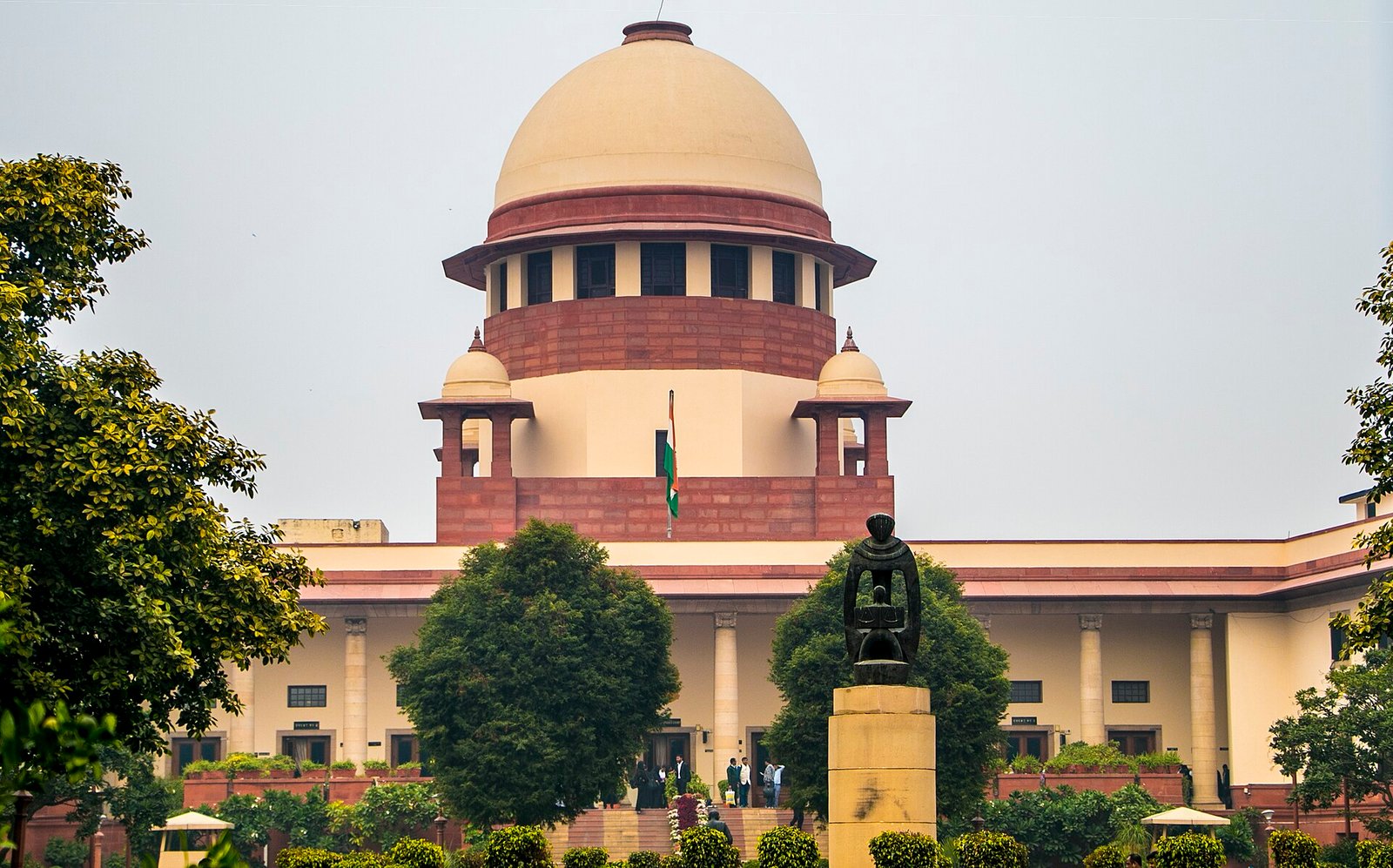
Leader of the Opposition in the Lok Sabha Rahul Gandhi and leaders of several Opposition parties marched through central Delhi to the Supreme Court on Monday, October 12, and filed a petition asking the court to suspend the Election Commission’s Special Intensive Revision (SIR) of electoral rolls and order a full disclosure of how the exercise was decided and run.
The revision has so far removed about 13 crore names from voter lists across the country. Opposition parties allege it is skewed in favour of the ruling BJP, a charge the Election Commission and the BJP deny.
What the petition asks for
Filed through senior advocate A.M. Singhvi, the plea names the Election Commission of India and its three commissioners as respondents. It seeks the complete record of files, agendas, minutes, notings and objections kept by Election Commissioners Sukhbir Singh Sandhu and Vivek Joshi on the SIR, so the court can examine whether Chief Election Commissioner Gyanesh Kumar acted arbitrarily or on his own. The main demands include:
- An interim order suspending the SIR until the court decides the case.
- A committee headed by a retired Supreme Court judge to audit the deletions and changes made during the revision, and to review policies and technical design relating to electronic voting machines.
- Booth-wise publication of every deleted voter’s name, with the reason and a breakdown by gender and age, plus a working system to restore eligible voters.
- Access logs of the ECINET and ERONET systems, the full file on the June 24, 2025 decision to launch the SIR, and an explanation for a declaration added to the online Form 6 from July 2026.
- Permission for eligible people in Punjab and other poll-bound states to apply for inclusion up to the last date allowed by law.
Apart from Mr Gandhi and Congress president Mallikarjun Kharge, the petitioners include Akhilesh Yadav, Tejashwi Prasad Yadav, Sanjay Raut, Supriya Sule, Saugata Roy, M.A. Baby, D. Raja, Mahua Majhi and E.T. Mohammed Basheer.
The right to vote belongs to every eligible citizen irrespective of political affiliation, and its protection is a constitutional imperative that transcends party politics.
The Opposition leaders’ petition
A march under heavy security
The leaders set off by bus from the Constitution Club towards Barakhamba Road, with Priyanka Gandhi Vadra, student leader Neha Bora and thousands of supporters joining along the route. At Mandi House, Mr Gandhi climbed onto the roof of the bus to wave to the crowd. Police barricades stopped the procession on Bhagwan Das Road, but Mr Gandhi and the other petitioners went into the Supreme Court Registry to verify their papers. Roads were closed and access to some metro stations was restricted as security forces were deployed in large numbers.
Speaking to supporters in the evening, Mr Gandhi said there were “no parallel protests” and that the parties were standing together. BJP president Nitin Nabin accused the Opposition and the Cockroach Janta Party (CJP) protest group of trying to destabilise India “at the behest of foreign forces”, without naming them.
What happens next
Chief Justice Surya Kant had declined to meet Mr Gandhi and Mr Kharge, noting that petitions on the same issues are listed for hearing on Tuesday, October 13. In his reply, quoted in the petition, he assured them that any petition they filed would be “heard at the earliest possible opportunity, in accordance with law”.
Monday’s march came after a weekend in which thousands of protesters, and several journalists, were detained in Delhi during CJP demonstrations demanding the CEC’s resignation, and after the authorities withdrew Jantar Mantar’s status as a designated protest site.