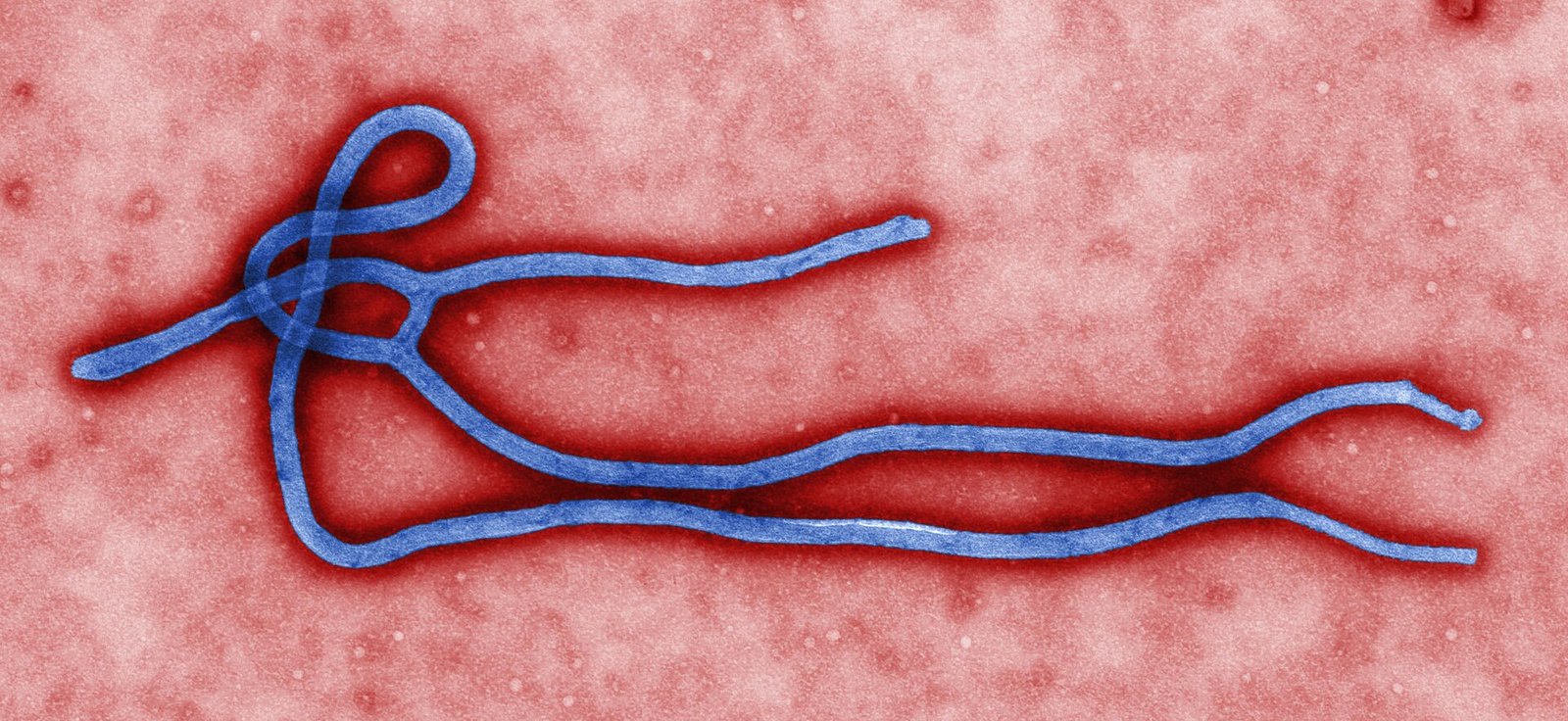
Photo: CDC/Cynthia Goldsmith / Wikimedia Commons, public domain
The woman being treated for Ebola in Nigeria’s capital, Abuja, is the wife of a Swiss diplomat posted there, Switzerland’s foreign ministry confirmed on Friday (October 23). The 42-year-old, who was born in Uganda and lives in Abuja, tested positive on October 20, making her Nigeria’s first confirmed Ebola patient in more than ten years.
According to the Swiss ministry, she spent about a week at a private clinic in Abuja with symptoms before the diagnosis. Swiss officials believe she picked up the virus during a trip to Uganda roughly two weeks earlier, though health authorities have not yet confirmed where she was infected.
Husband isolated, embassy stays open
Her husband, who travelled with her, is in isolation but has shown no symptoms, the ministry said. The other 25 people working at the Swiss embassy, eight Swiss nationals and 17 local staff, are reported to be in good health. After consultations with Nigeria’s health ministry and the World Health Organization (WHO), they were not asked to isolate, and the embassy remains open with health measures in place. Swiss officials said they were looking into whether the patient could be flown back to Switzerland.
The WHO says the patient is being treated in isolation and is showing signs of improvement. Nigerian authorities first identified 44 people who may have come into contact with her and are now tracing more.
Conflicting accounts of her travel
The couple returned to Abuja on October 3 after about two and a half weeks in Uganda, and she fell ill around four days later. Switzerland says the pair did not go to the Democratic Republic of Congo (DRC), where the current outbreak began. That contradicts earlier statements from Ugandan health officials, who said she had travelled to eastern DRC on business.
Uganda’s government maintains it has no confirmed active Ebola cases and that passing through the country does not show she was infected there. The WHO, the Africa Centres for Disease Control and Prevention (Africa CDC) and Nigeria’s health ministry say they have not received verified information that she visited the DRC.
The source of exposure is still not known. The travel history of the patient is still being pieced together.
Dr Patrick Otim, WHO emergency response official
A possible airport link with Kenya
Investigators are also checking whether she crossed paths with a Kenyan man who passed through Uganda’s Entebbe airport on the same day. He had travelled from the DRC, reached Nairobi on October 3 and died shortly afterwards, becoming Kenya’s first recorded Ebola death. An Africa CDC official called contact between the two “one of the possible scenarios” but stressed that no link has been established. Nigeria’s disease control agency is running genomic sequencing, which could show whether the cases are connected.
Kenya has now confirmed nine infections, all linked to its first patient, and officials there say there is no evidence of wider community spread.
Why it matters
The outbreak, which has killed about 4,600 people in the DRC, has now reached Africa’s most populous country. Nigeria’s case involves the Bundibugyo species of the virus, a rare form for which there is no approved vaccine or specific treatment, although supportive care improves survival. WHO officials warn that the long, porous DRC-Uganda border, crossed daily by thousands of people, is hard to screen, and the WHO’s Africa director has urged countries in the region to step up surveillance and protect frontline health workers.
Ebola spreads through direct contact with the blood or body fluids of an infected person, or with contaminated objects, and is not airborne. People are not considered infectious before they show symptoms.