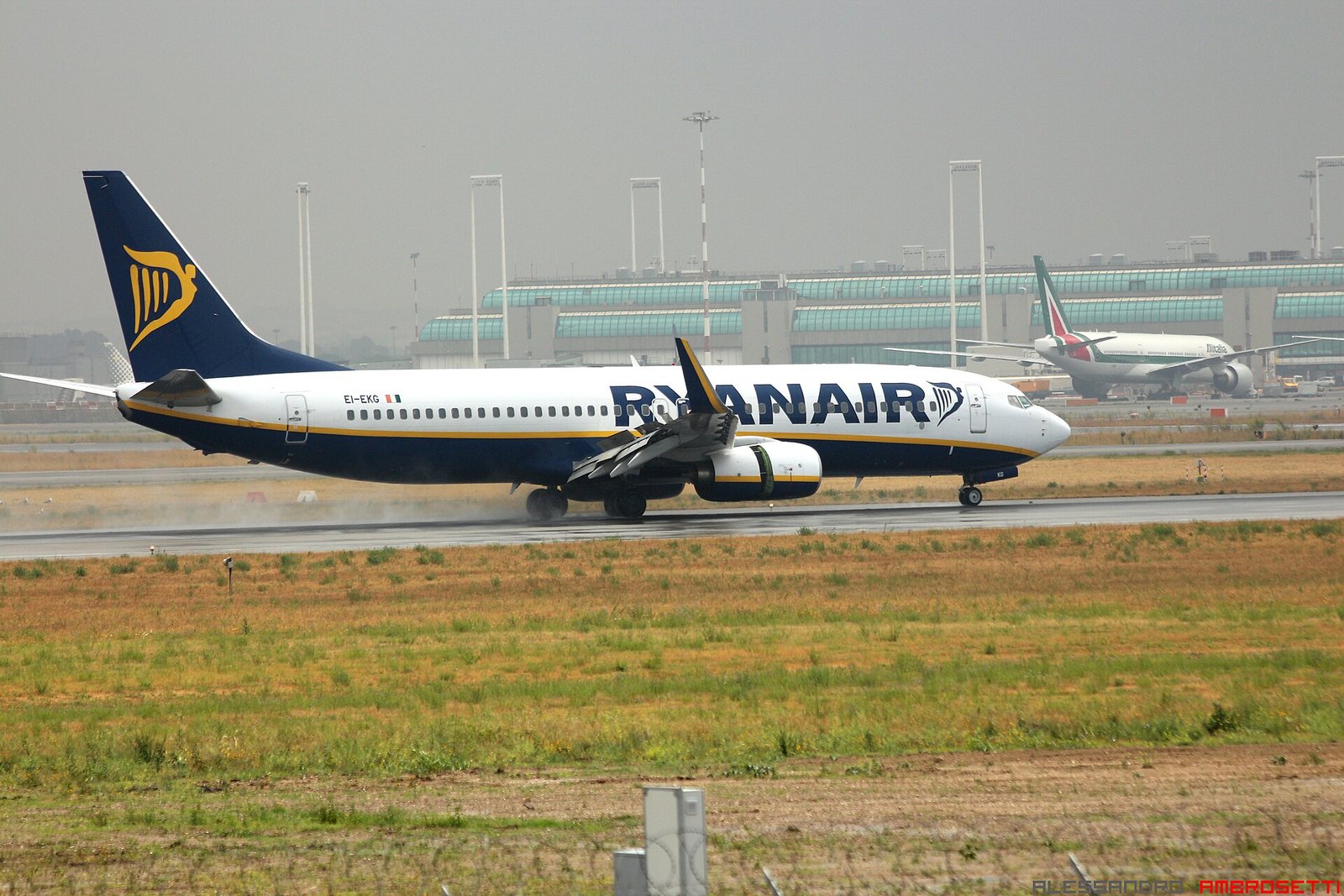
Photo: Alessandro Ambrosetti from Rome, Italy / Wikimedia Commons, CC BY 2.0
A string of bomb threats against passenger flights disrupted air travel across Europe on Tuesday, November 3. Seven aircraft bound for Italy, Poland, Spain and Bulgaria were searched after landing, one was diverted to a different airport and another was escorted by military jets. Every threat turned out to be false, and nobody was hurt.
Where the threats struck
In Rome, two Ryanair flights, one from Lisbon and one from Dublin, were checked at Fiumicino airport after anonymous warnings, including an email claiming a bomb was on board. The Italian Air Force said it sent two Eurofighters to intercept and escort the Dublin flight until it landed. Bomb disposal teams screened passengers, crew and luggage and found nothing.
In Poland, a LOT Polish Airlines flight from London Heathrow to Warsaw was sent to the smaller Modlin airport instead of Chopin, and Modlin was briefly closed. LOT said nothing was found on the plane. A Scandinavian Airlines flight from Copenhagen landed normally at Chopin after a similar warning; the airline said the case had been passed to Polish police.
In southern Spain, a Ryanair flight from Manchester with 121 people on board was searched at Murcia airport. The Spanish government’s delegate in the region said no explosives were found. In Bulgaria, two planes arriving in Sofia from Bergamo and Dublin were inspected by counter-terrorism officers without being diverted. Bulgarian border police said a single email had warned of a device on the Bergamo flight and a similar threat to the Dublin one.
A pattern, not a one-off
The scares came a day after a Wizz Air flight from London Luton was diverted to Budapest following a mid-air bomb threat. Hungary’s defence minister said a Gripen fighter escorted that plane, and the airline later said checks found nothing. In Greece, the coast guard was also investigating a threat against an Israeli-run cruise ship, the Crown Iris, at the port of Syros, and evacuated the vessel as a precaution.
malicious hoax threats
UK government statement on Tuesday’s incidents
Officially there is no confirmed link between the incidents, but authorities in several countries are expected to work together to judge whether the threats were coordinated. Bulgarian officials said they were still trying to identify who sent the email. Aviation security analysts said hoax threats on this scale are unusual, and offered possible explanations ranging from copycat callers to a single person or group, or a deliberate disruption campaign by a state or its supporters.
Why it matters and what comes next
Even a hoax forces crews to treat a threat as genuine until it is ruled out, which means diversions, runway closures, evacuations and in some cases fighter scrambles, all of which ripple through busy schedules. European governments have already been warning of so-called hybrid attacks, such as drone incursions near airports, and investigators will now try to trace the emails and calls behind Tuesday’s alerts. The UK government said its aviation security has well-tested processes for handling both real and hoax threats.