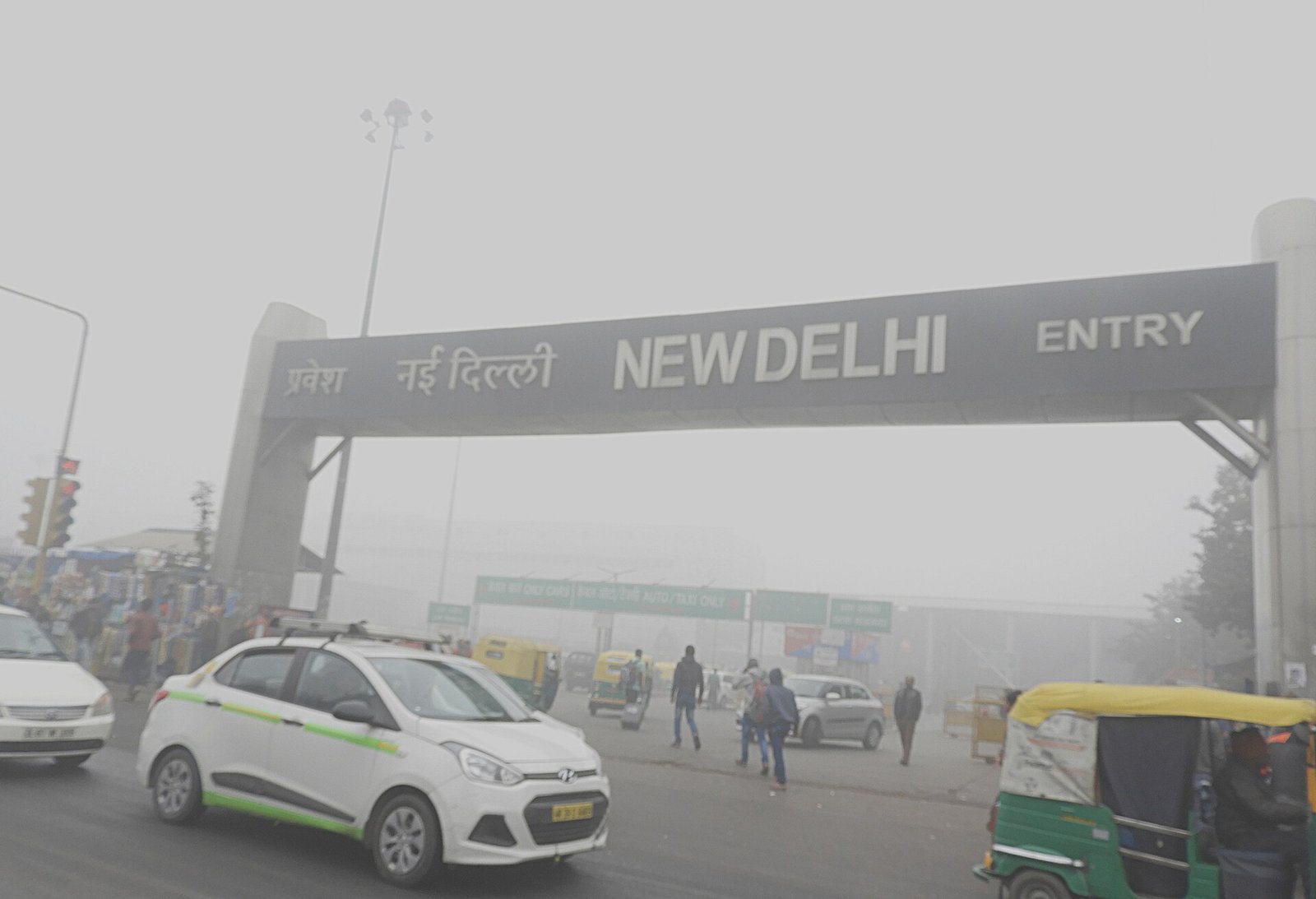
Photo: Sumita Roy Dutta / Wikimedia Commons, CC BY-SA 4.0
The first set of winter anti-pollution curbs came back into force across Delhi-NCR on Wednesday, October 21, after the capital’s air slipped into the ‘poor’ category for the first time this season. The Commission for Air Quality Management (CAQM) invoked Stage I of the Graded Response Action Plan (GRAP) with immediate effect, a day after Dussehra.
A sharp jump in a single day
According to the commission’s order, Delhi’s Air Quality Index stood at 179, in the ‘moderate’ band, on October 20. By 2 pm on Wednesday it had climbed to 244. The GRAP sub-committee took the decision after reviewing current pollution levels and weather forecasts, and noted that projections from the India Meteorological Department (IMD) and the Indian Institute of Tropical Meteorology indicate the air is likely to stay ‘poor’ over the coming days.
Readings had already turned bad in the morning, with the AQI at 227 shortly after 7 am and 233 at 9 am, according to official data. The city last saw ‘poor’ air on July 12 and 13. Nights are also getting cooler: Safdarjung recorded a minimum of 18 degrees Celsius, slightly below the seasonal average.
What is restricted under Stage I
Stage I targets the everyday sources of dust and smoke. Agencies across the NCR have been told to implement and monitor the measures so that the AQI does not slip further. The main steps include:
- Coal and firewood can no longer be used in tandoors at hotels, restaurants and open eateries, which must switch to electricity, gas or other clean fuels.
- Diesel generator sets are restricted, except for emergency and essential services.
- Dust control is mandatory at construction and demolition sites, and projects larger than 500 square metres need an approved dust management plan.
- Open burning of garbage and leaves is banned.
- Visibly polluting vehicles can be fined, and traffic police will be posted at busy intersections to keep traffic moving.
- The existing ban on diesel vehicles older than 10 years and petrol vehicles older than 15 years continues in Delhi.
Residents can report violations through the Green Delhi and SAMEER apps or by dialling 311.
Government points to road dust drive
Delhi Environment Minister Manjinder Singh Sirsa said stricter dust-mitigation steps had been ordered with the notification, including instructions for mechanical road sweepers to cover all roads from Wednesday. He blamed the previous government for years of inaction and said Delhi had recorded 214 days of ‘good’ or ‘moderate’ air so far this year, which he called the best figure in 12 years if the Covid-affected year is excluded.
The GRAP-I notification has been issued today. Under GRAP-I, stricter measures have been implemented for all dust-mitigation parameters.
Manjinder Singh Sirsa, Delhi Environment Minister
What comes next
GRAP tightens in stages as pollution worsens. Stage II applies when the AQI enters the ‘very poor’ range of 301 to 400, Stage III kicks in between 401 and 450, and Stage IV, the strictest, above 450. With Diwali approaching, low wind speeds and falling temperatures, concern is growing that the air could get worse before it improves.
The Stage I curbs also come just ahead of the Delhi government’s own winter action plan, which runs from November 1 to February 28. It includes a ban on the entry of vehicles registered outside Delhi that do not meet BS-VI standards, the ‘No PUC, No Fuel’ rule at petrol pumps, and tighter checks on construction activity and road dust.