Photo: U.S. Department of State / Wikimedia Commons, public domain
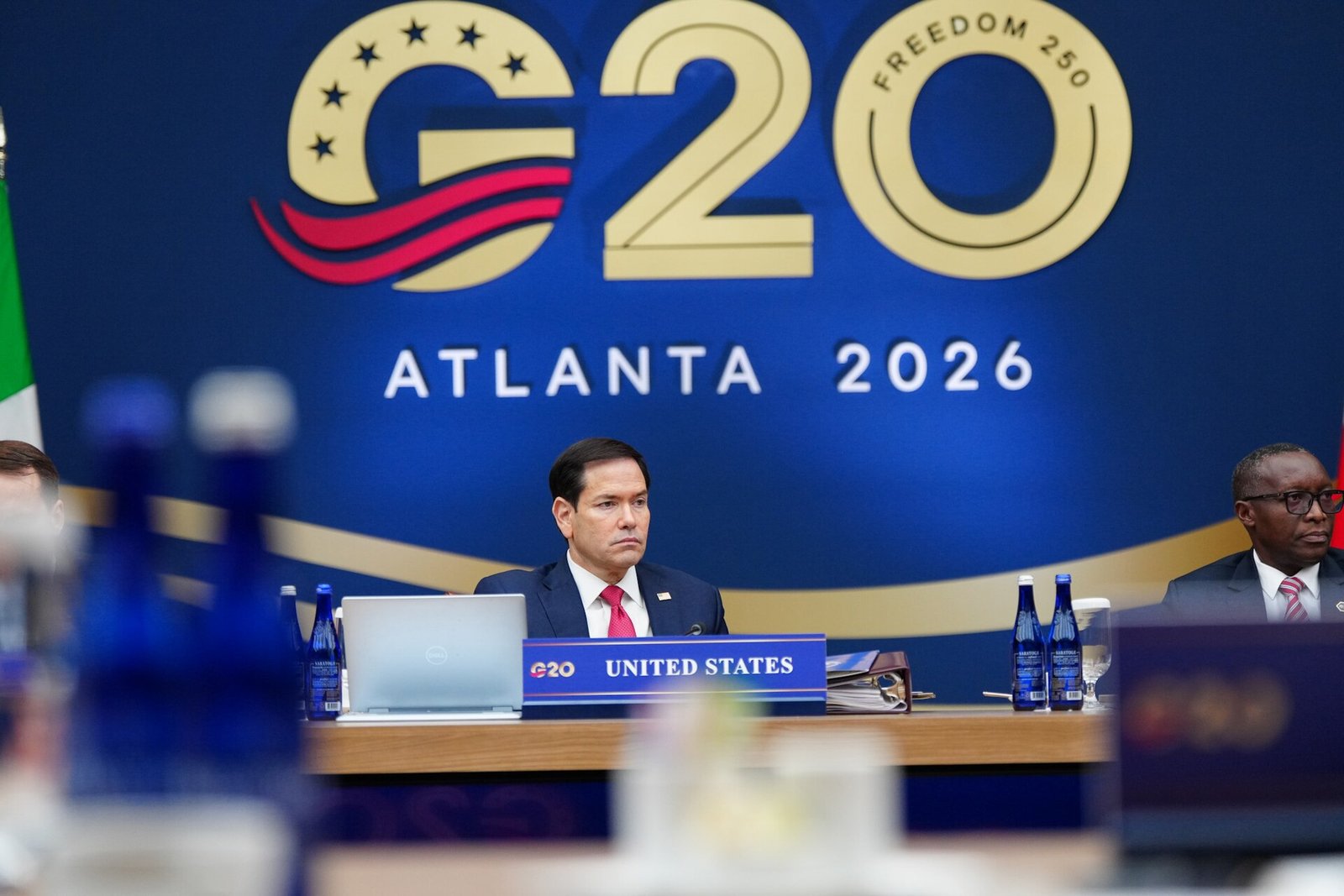
Foreign ministers of the Group of 20 were set to close their two-day meeting in Atlanta on Saturday, October 31, without agreeing on a joint communique, as deep splits over Russia’s war in Ukraine, the US-Israeli conflict with Iran and trade tensions kept them apart. Diplomats who attended said US Secretary of State Marco Rubio, the host, would instead issue a chairman’s statement summing up the discussions.
A cancelled photo and an uneasy table
The divisions were on show even before the talks began. On Friday, Rubio dropped the traditional family photograph of ministers after several European delegations objected to standing alongside Russian Foreign Minister Sergey Lavrov and threatened to stay away or walk out. Two US officials said Rubio felt the dispute would distract from the meeting.
Opening the session, Rubio called for unity and said the world faced linked economic and geopolitical crises that were disrupting energy and food supplies, trade and freedom of navigation. “We are in a critical moment,” he said, describing it as “a moment of choosing” for the world.
Poland’s Foreign Minister Radosław Sikorski, attending a G20 meeting as a guest for the first time, said the outcome was no surprise. “We have wars going on, and we have participants in those wars around the table, so it’s very difficult to agree on a common line,” he told reporters. Lavrov, for his part, said Russia saw no point in Poland’s presence and that Moscow would not accept Ukraine becoming a “military threat” to Russia’s security interests. Germany’s Johann Wadephul said there could be “no normality with Russia”.
Other sticking points included the Trump administration’s decision not to invite G20 member South Africa. Separately, the State Department announced on Friday that it had approved a proposed $2.1 billion sale of Patriot air defence interceptors to Ukraine.
What India said
External Affairs Minister S Jaishankar told the first plenary that “military solutions will not work and diplomacy must be given a chance”. He called for freedom of navigation to be protected and for attacks on seafarers to stop under international maritime law, saying the Global South was bearing an outsized share of the fallout through the cost and availability of fuel, food and fertilisers. At least 22 Indians, including 14 seafarers, have died since the West Asia war began in February.
In the second session on energy, Jaishankar said the world faced an energy crisis driven not by a lack of production but by disruption, unaffordable costs and problems of access. He said India needed reliable and predictable LPG supplies for clean cooking, and noted that India had proposed a G20 initiative on recycling critical minerals.
Why it matters and what comes next
The Atlanta meeting was the last ministerial gathering before the G20 leaders’ summit that President Donald Trump will host in Miami from December 14 to 16. Western officials said the real effort now is to negotiate a declaration leaders can sign there, though it is unclear whether Russian President Vladimir Putin will attend. The US had made shipping security in the Strait of Hormuz, the Red Sea, the Black Sea and the South China Sea a priority, and Rubio held side meetings with the Saudi and Turkish foreign ministers. The talks also took place against reports that Washington has told West Asian partners to prepare for possible renewed strikes on Iran after the US midterm elections on November 3.