Photo: Press information bureau / Wikimedia Commons, CC BY-SA 4.0
The Defence Acquisition Council (DAC), chaired by Defence Minister Rajnath Singh, on Monday, October 26, gave in-principle approval to capital acquisition proposals for the Army, Navy and Air Force worth an estimated ₹2.12 lakh crore. The list covers artillery, helicopters, air defence weapons, counter-drone systems, surveillance drones, long-range kamikaze drones and new warships, and the defence ministry said roughly 82% of the purchases will be made from Indian industry.
What the Army gets
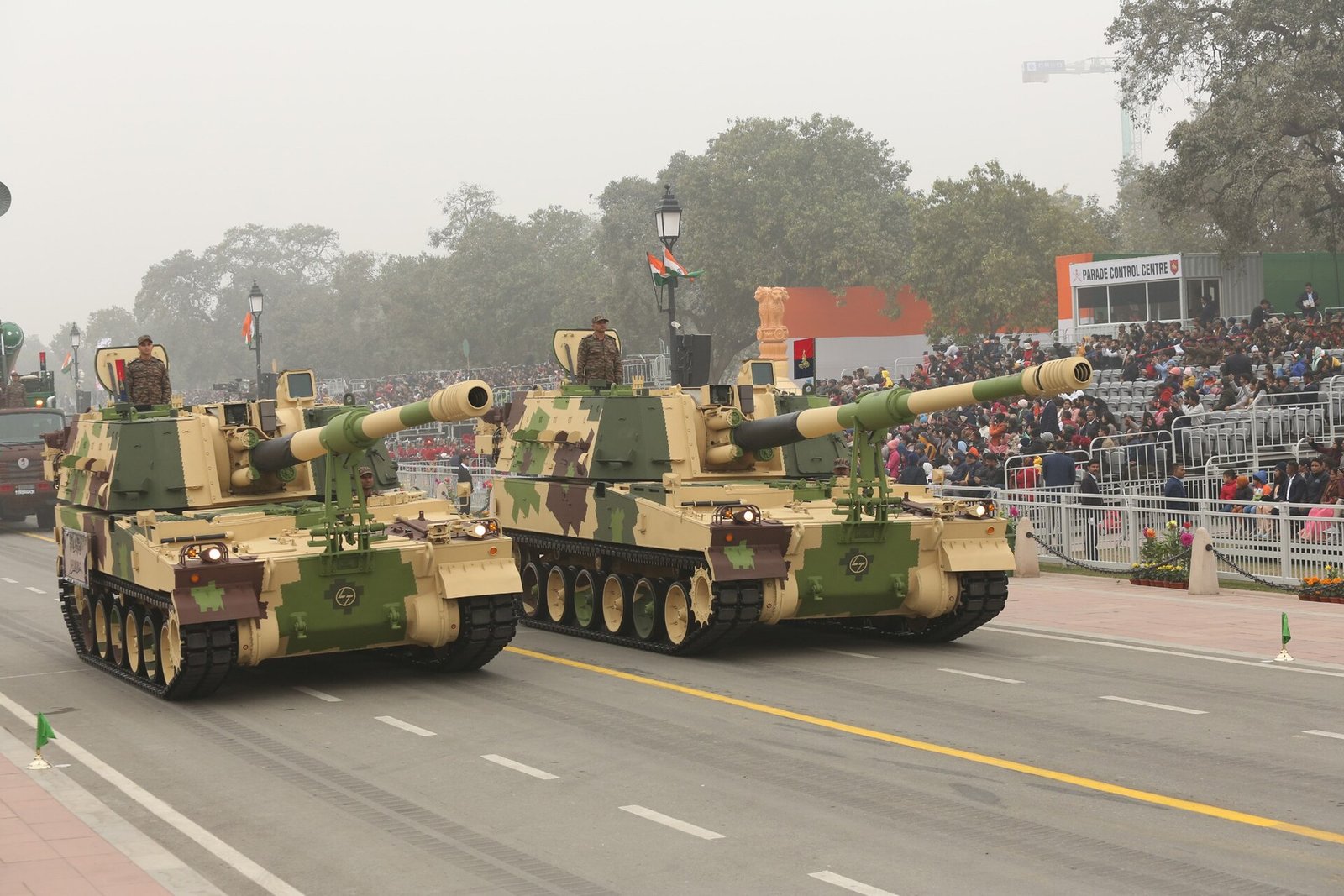
The Army accounts for the longest part of the list. According to the ministry, the council approved high-mobility vehicles, a self-propelled tracked gun system, a gunshot response system, light multi-role helicopters, a very short-range air defence system (VSHORADS), a platform-based counter-unmanned aerial system, long-range and surveillance drones, an integrated surveillance and strike system, and a long-range kamikaze drone system. The tracked guns are reported to be additional K9 Vajra-T artillery pieces.
The ministry said the guns are meant to give mechanised formations firepower that can keep pace with them, while the new vehicles are meant to improve logistics and movement in difficult terrain. VSHORADS is intended to tackle the newer generation of small aerial threats, and the counter-drone system is meant to improve the survivability of tanks on the battlefield. The gunshot response system, it said, would give troops real-time awareness of their surroundings.
Navy and Air Force
For the Navy, the council cleared an active off-board decoy system, which the ministry said would strengthen defence against modern anti-ship missiles, along with unspecified major naval platforms that will be designed and built in India.
The Air Force received approval for helicopters, air defence systems, weapons and a mobile X-band Doppler weather radar that can give detailed, local weather readings in forward areas. Special utility helicopters are meant to meet key air transport needs, and the light multi-role helicopters will be shared with the Army for reconnaissance, combat search and rescue, and disaster relief.
Why it matters
The approval is known as Acceptance of Necessity (AoN). Under India’s procurement rules it is only the first step: it confirms the forces need the equipment, after which tenders, trials, price negotiations and final contract approvals follow, a process that typically takes years. The amounts are estimates and can change before contracts are signed.
The size of Monday’s package is notable. In September, the council had cleared proposals worth about ₹1.1 lakh crore, including upgrades for fighter jets, transport aircraft and helicopters, new advanced light helicopters, CBRN reconnaissance vehicles for the Army and Arudhra radars for the Navy. The heavy tilt towards drones and counter-drone systems reflects how small unmanned weapons have reshaped recent conflicts.
The push for local manufacturing
The 82% domestic share fits the government’s drive to build up the Indian defence industry. Ministry data show annual defence production reached a record ₹1.78 lakh crore in 2025-26, up 15.6% from ₹1.54 lakh crore the year before. The government’s target is defence manufacturing worth ₹3 lakh crore and exports of ₹50,000 crore by 2029-30.
Speaking at a separate Navy innovation event in New Delhi on the same day, Singh called for what he described as a second phase of self-reliance in defence, focused on cutting-edge technology, research and resilient supply chains.