Photo: Saurabh Kumar / Wikimedia Commons, CC BY-SA 4.0
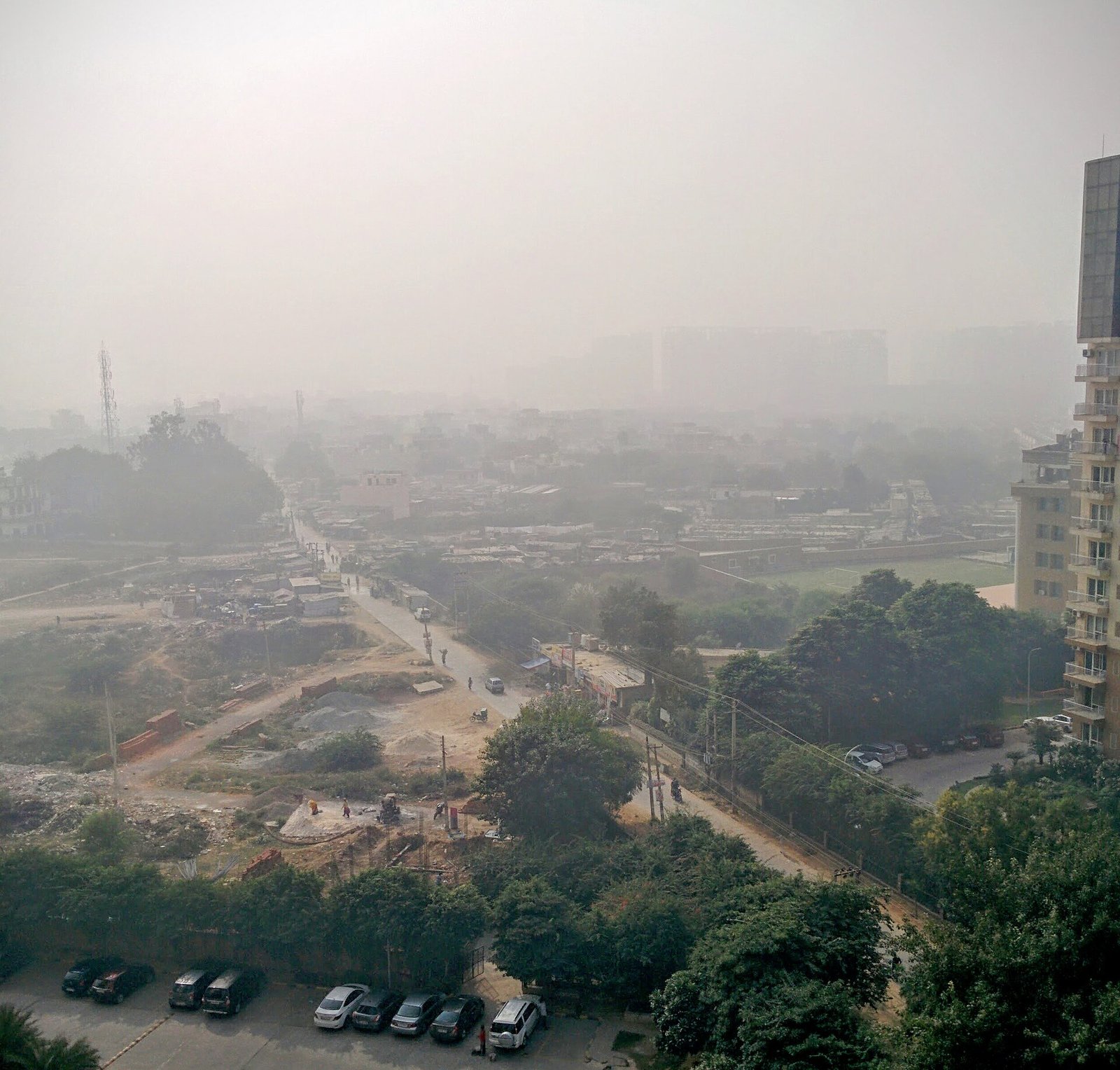
Dust-raising construction and demolition work will be halted across the entire National Capital Region from November 5 to 20, and offices in Delhi and five neighbouring districts will have to keep at least half their staff working from home, under an order issued late on Friday by the Commission for Air Quality Management (CAQM). Union Environment Minister Bhupender Yadav announced the move earlier in the day.
What the order covers
The curbs go further than the usual building-site restrictions. They also apply to linear public projects such as highways, roads, flyovers, overbridges, power transmission lines, pipelines and telecom works, which are normally exempt until pollution reaches the most severe stage of the Graded Response Action Plan (GRAP).
Some work can carry on. The commission has exempted projects linked to railways, metro services, airports, inter-state bus terminals, hospitals, water supply and sanitation, national security and defence, and projects of national importance.
On the work-from-home rule, government and private offices in Delhi, Ghaziabad, Gurugram, Faridabad, Sonipat and Gautam Buddha Nagar (Noida) may have no more than 50% of staff attending in person. Industrial units and essential services where remote working is not practical are exempt. The NCR state governments and the Delhi government have been told to enforce the order.
Why these two weeks
The window takes in Diwali on November 8 and the first half of November, when smoke from crop-residue burning in neighbouring states has historically had its biggest impact on Delhi’s air. In its order, the commission said local emissions, stubble and biomass burning and other episodic events combine in this period, while low wind speeds and a shallow boundary layer keep pollutants trapped near the ground.
The decision has been taken as a preventive step by CAQM, as it looked at past data and found conditions are typically adverse during this window.
Bhupender Yadav, Union Environment Minister
The order describes the measures as preventive and time-bound, and they have been announced while Delhi’s air is still in the satisfactory range after recent rain. In past winters, construction bans were usually imposed only after air quality had already worsened sharply under GRAP.
How it fits with Delhi’s own rules
The NCR-wide curbs come on top of Delhi’s permanent winter pollution framework, which takes effect on November 1 and runs to February 28 every year. It includes a ban on dust-generating construction from November 1 to January 31, tightening to a near-total halt between December 10 and January 20, along with 50% work from home in offices, entry curbs on non-Delhi vehicles below BS-VI standards, a valid pollution certificate for buying fuel, and double parking charges.
Yadav also ruled out any rollback of Delhi’s restrictions on older outstation vehicles entering the city.
New command centre to track violations
The announcement came during Yadav’s visit to CAQM’s new PAVAN Integrated Command and Control Centre at its Janpath office. The platform pulls together data on air quality, emissions, weather, satellite imagery, traffic, public complaints and compliance, drawing on 111 continuous monitoring stations, more than 2,300 industries and over 3,200 active construction sites across the region. Breaches of norms are meant to trigger alerts to the agencies responsible.
What happens next depends on enforcement. Road and flyover projects already under way in south and east Delhi fall within the categories restricted from November 5, while metro work, including Delhi Metro’s Phase IV lines, remains exempt. Violations under the GRAP framework attract environmental compensation.