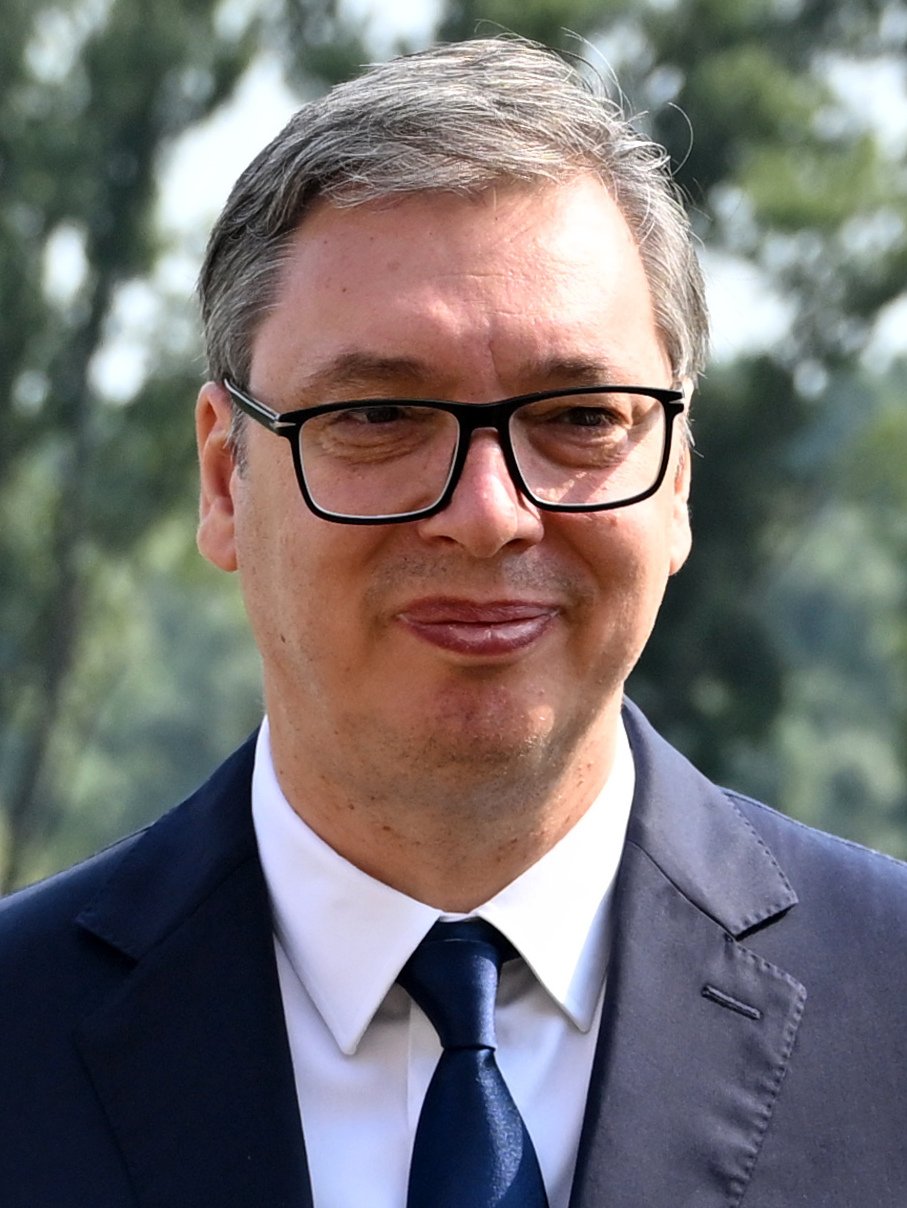
Photo: Oliver Bunic – European Commission / Wikimedia Commons, CC BY 4.0
Aleksandar Vučić, who has dominated Serbian politics for more than a decade, admitted late on Sunday (October 25) that his Serbian Progressive Party (SNS) had lost the country’s snap parliamentary election to a student-led anti-corruption movement. Speaking at the party’s headquarters in Belgrade before the final count was in, he said it was clear that his side had been beaten.
We still do not have final results… it is clear that we have lost these elections.
Aleksandar Vučić
Students projected to win a majority
Citing a sample of the votes, Vučić said the Student List was expected to take between 135 and 140 seats in the 250-member National Assembly, against about 105 for his own list. A party needs 126 seats to form a government on its own. Preliminary official results were due around midnight local time.
Turnout was the highest in decades. The State Election Commission said 64.9% of voters had cast their ballots by 6 pm, two hours before polls closed, the highest figure since the break-up of Yugoslavia in 1992. Analysts had expected a high turnout to help the students, who needed to bring out people who usually stay home. Long queues were also reported at polling stations abroad, from Ljubljana and Munich to Paris, Chicago and Los Angeles.
The movement’s lead candidate, Ilija Srdanović, said the result meant Serbia would become “a free state” and that the movement wanted to free the country from what he called tyranny. Crowds celebrated in central Belgrade with fireworks, chanting and honking cars, and the centre of Novi Sad was packed with supporters.
From a station canopy to the ballot box
The movement grew out of nearly two years of protests that began after the concrete canopy of the railway station in Novi Sad collapsed in November 2024, killing 16 people. Students blamed corruption and negligence, and their demands for accountability widened into a nationwide campaign against the government. Vučić and the SNS, in power since 2012, have consistently denied the corruption allegations.
The Student List, which has no obvious leaders, fielded candidates with little or no political experience, including doctors, teachers, actors, academics and sports figures. Several established opposition parties backed it instead of running on their own. Its programme promised to remove officials involved in crackdowns on protesters, stop party loyalists from running public companies and end political control of the public broadcaster.
Vučić, who served two terms as president and could not run for a third, stepped down as president in September to lead his party’s list with the aim of returning as prime minister, a post he left in 2017. He had campaigned on higher pensions and public-sector pay and more spending on healthcare.
Irregularities and what comes next
Polling day was tense. Riot police sealed off streets around the election commission in Belgrade, and prosecutors urged all sides to avoid violence. The independent watchdog CRTA said its observers saw pressure on voters or polling staff at almost a third of the 500 stations it monitored, while the monitoring group CeSID had logged about 260 reports of possible irregularities by late afternoon.
- About 6.5 million people were eligible to vote, with 18 lists competing for 250 seats.
- Final results will decide whether the Student List can govern alone or needs partners.
- Vučić’s government backed Serbia’s bid to join the European Union while refusing to impose sanctions on Russia over its invasion of Ukraine.