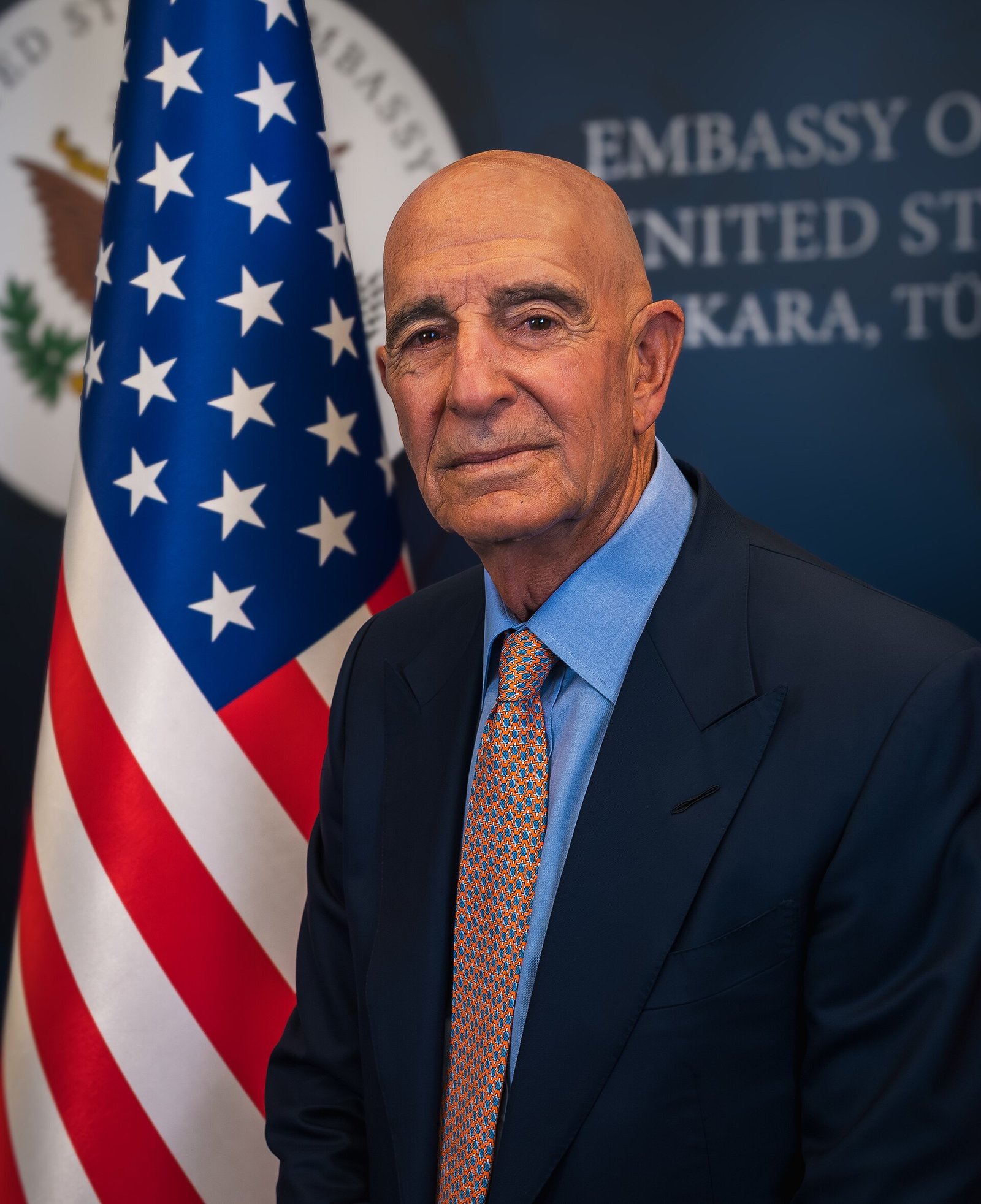
Photo: US State Department / Wikimedia Commons, public domain
The United States could carry out a strike on Iran as early as this weekend, US Ambassador to Turkey Tom Barrack said on Friday, October 23, only for President Donald Trump to distance himself from the remark hours later. Asked in an online interview with commentator Mario Nawfal whether a weekend strike was possible, Mr. Barrack replied, “Absolutely.”
A deal on the table, and a warning
Mr. Barrack, who also serves as Washington’s special envoy for Syria and has no direct role in Iran policy, said Mr. Trump remained “open and available and accessible to a deal” and that the two sides had been negotiating for months. He described the bargain under discussion as one involving the unfreezing of assets, relief from sanctions and an end to military engagement, calling issues such as uranium enrichment details still to be settled.
He also warned that continued threats against Gulf states and US allies would carry “a consequence”, but said that consequence would not be regime change. “The problem with regime change always is, what’s the day-two scenario?” he said, a position at odds with Israeli Prime Minister Benjamin Netanyahu, who has repeatedly vowed in recent days to bring down Iran’s clerical government. Mr. Netanyahu faces a general election on Tuesday, October 27.
Trump plays it down, but keeps options open
Speaking to reporters in Florida, Mr. Trump appeared to brush off the envoy’s prediction. “That’s my ambassador to Turkey. He’s a pretty powerful man, I guess,” he said. “If that’s the case, I don’t know anything about it.”
Earlier on Friday, however, the President had again floated the possibility of fresh military action, saying the US could “do another little Epic Fury” if Tehran did not agree to terms, and that the question was whether to “finish it off” or let Iran “wither”. On Thursday the White House had said the US would not resume attacks before the November 3 congressional elections, while keeping military options available.
Iran warns of hitting undersea cables
The exchange came as two senior Iranian security officials said Tehran had drawn up detailed plans to target undersea communications cables in the Gulf if the US and Israel attack again, and would try to block repairs to prolong the disruption. On Wednesday, a deputy political chief of the Revolutionary Guards, Yadollah Javani, said Iran could hit seven major internet cables running under the Strait of Hormuz if its infrastructure came under attack.
Industry analysts said the global effect could be limited because less than 1% of international bandwidth passes through the strait, though cuts could still slow internet, banking and cloud services in the Gulf. Iranian strikes damaged Amazon Web Services facilities in the UAE and Bahrain during the fighting in March.
Why it matters
Renewed US-Iran fighting would hit the Gulf directly, where governments and US technology firms have invested heavily in data centres and AI hubs. Israel has carried out two major bombing campaigns against Iran since last year, and diplomacy between Washington and Tehran has been deadlocked for months. US officials have said no decision has been made on whether to resume strikes after November 3, leaving Israel’s election and the US midterms as the next markers to watch.