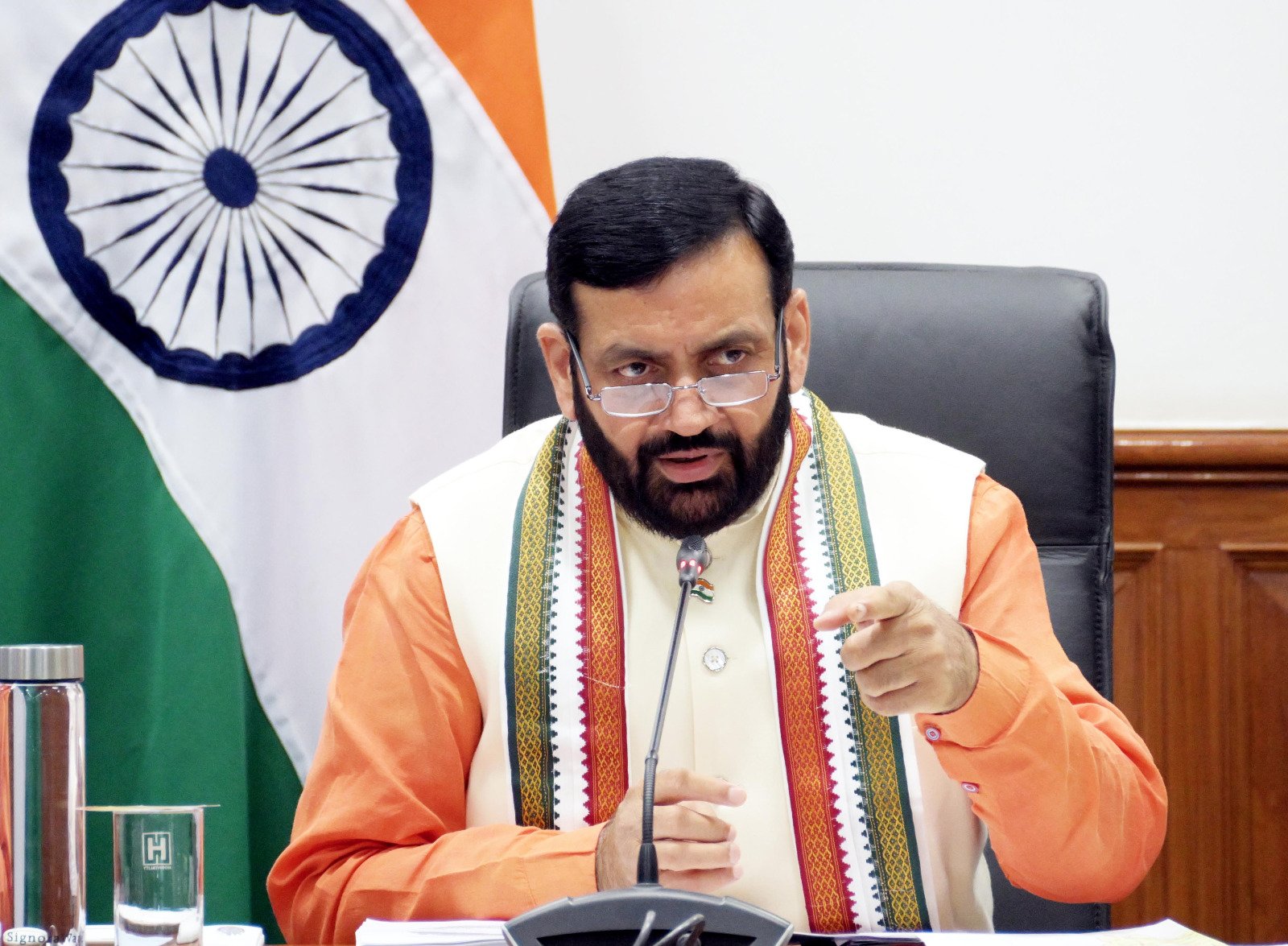
Photo: CMO Haryana / Wikimedia Commons, CC BY 4.0
Haryana’s electricity employees ended their strike on Friday evening (October 23), a day ahead of schedule, after Chief Minister Nayab Singh Saini and Power Minister Anil Vij agreed to move against the private power distribution licence that set off the protest. Union leaders announced at a joint press conference in Panchkula that staff would return to work at once, bringing relief to Gurugram, Faridabad, Nuh and other districts that had spent much of two days without electricity.
What the government promised
Saini said the state had used its powers under Section 108 of the Electricity Act, 2003, to direct the Haryana Electricity Regulatory Commission (HERC) to review its order and, in effect, cancel the provision allowing a private company to supply power in Gurugram and Nuh. Vij said the government would also file a review petition before the commission under Section 94 of the same law.
Our position is absolutely firm; there will be no privatisation of any kind.
Nayab Singh Saini, Haryana Chief Minister
The chief minister pointed out that HERC is an independent body that works under its own statute, and that the state is normally bound to implement its orders. Vij said the government had never invited private firms to seek parallel licences, but the Electricity Act lets eligible companies apply to the regulator directly. Section 108 allows a state government to give the regulator written policy directions on matters of public interest, which the commission must take into account.
Restoring power after two days of outages
Saini ordered officials to restore supply in every affected district immediately. The heads of the state transmission utility HVPNL and the two distribution companies, DHBVN and UHBVN, met superintending and executive engineers after the announcement, and the government asked for a district-wise status report by midnight. Emergency control rooms set up for the strike will stay open until Saturday.
The stoppage had left thousands of homes without both electricity and water, as pumps went down along with the grid. Nearly 1,800 manufacturing units were hit, and residents blocked roads in several towns to protest against the long outages. In Panchkula, police were posted at 19 substations to help keep services running.
How the dispute began
Around 40,000 staff of Haryana’s state-owned power companies walked out on Thursday in a three-day strike called by the Haryana Bijli Karamchari and Engineers Joint Sangharsh Morcha. They were protesting against HERC’s decision to grant Eleven Power Private Limited a parallel distribution licence for Gurugram and Nuh. The unions argued that letting a private firm run supply alongside the state discom would open the door to privatisation, hurting jobs and the price of electricity.
What happens next
The licence is not yet formally withdrawn: that now depends on how HERC responds to the government’s direction and the review petition. Talks between the government and the unions on their remaining demands will continue at a meeting in Chandigarh on November 3. For now, the focus in Gurugram and Faridabad is on how quickly feeders and water supply return to normal over the weekend.