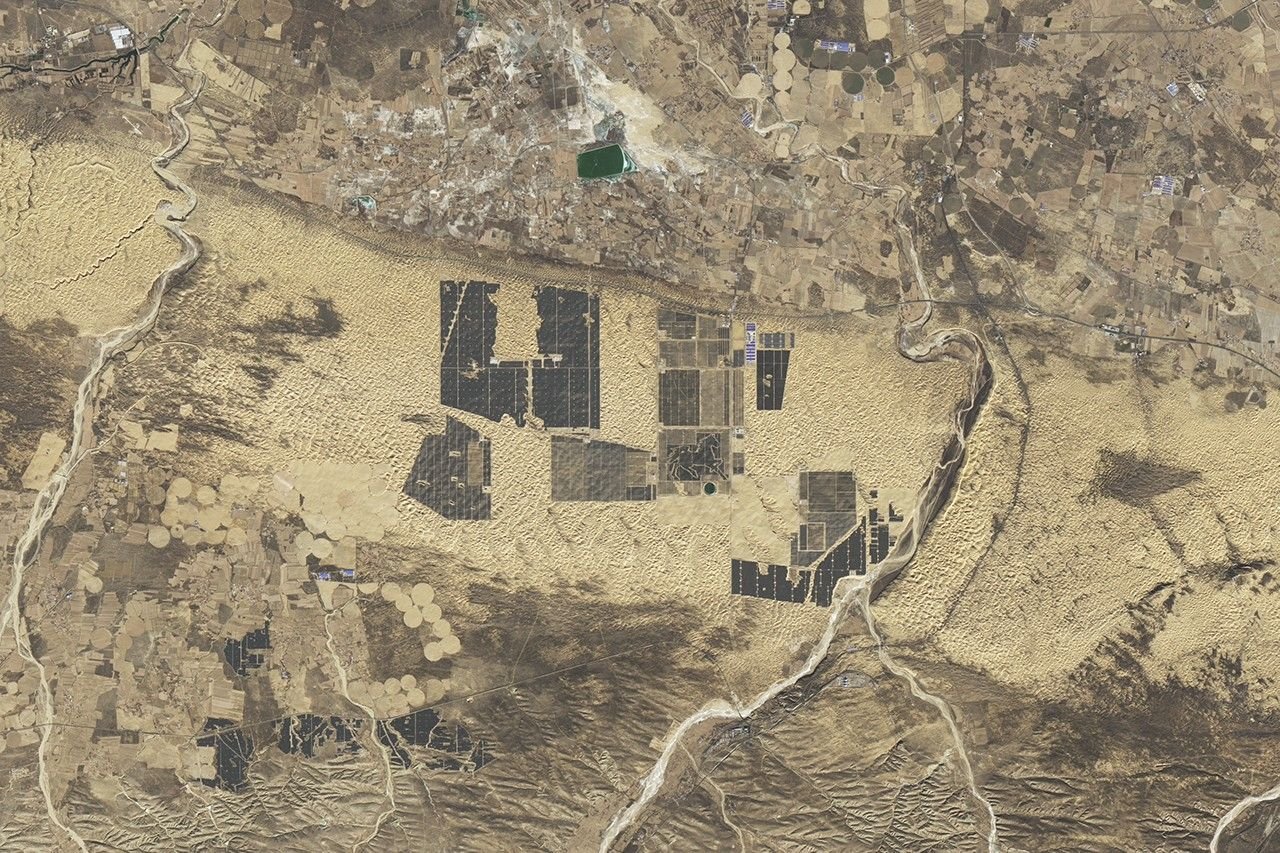
Photo: NASA Earth Observatory images by Michala Garrison, using Landsat data from th… / Wikimedia Commons, public domain
China on Friday proposed sweeping new controls on the export of more than 40 advanced technologies spanning solar manufacturing, artificial intelligence and biomedicine, in a draft plan that could tighten how know-how leaves the country even as finished solar products remain largely unrestricted.
The Ministry of Commerce and the Ministry of Science and Technology jointly issued Announcement No. 48, opening a public consultation on revisions to China’s Catalogue of Technologies Prohibited or Restricted from Export. Of the listed technologies, 14 would face a complete export ban and a further 26 would be restricted.
What would be banned or restricted
On the solar side, Beijing listed technologies tied to making next-generation cells for either a full ban or tighter limits. Perovskite and tandem solar-cell module manufacturing technologies are among those proposed for a complete prohibition. Restricted items include polysilicon engineering technologies used in solar cells where production lines have an annual capacity of at least 30,000 tonnes, along with other processes covering polysilicon, wafer and cell manufacturing — 12 photovoltaic technologies in all.
A commerce ministry spokesperson said photovoltaic technologies are increasingly used in aerospace, defence and unmanned systems, raising national-security stakes for technology exports. The statement stressed that only a limited set of technologies would be regulated and that other photovoltaic technologies would remain freely exportable. Finished solar panel shipments are not the main target of the draft.
In artificial intelligence, China proposed adding 23 key technologies covering foundation models, intelligent agents, computing clusters and information-processing tools. Technologies that could autonomously generate and mutate malicious code were singled out for a full ban, with officials warning they could be used against critical infrastructure, defence systems or government networks.
Biomedicine entries include platforms related to cell and gene therapy among the technologies proposed for prohibition. Overall, the consultation covers AI, biomedicine and photovoltaics.
Why it matters for India and global supply chains
While the draft does not curb most solar goods exports, controls on next-generation manufacturing know-how could affect countries — including India — that are trying to reduce dependence on Chinese equipment and move up the solar value chain. Technology licences, overseas plant know-how and core equipment that embody listed processes may face new hurdles even when panel sales continue.
Beijing framed the move as aligning with practice elsewhere. “Major economies around the world have implemented varying degrees of export controls in these areas,” the ministry spokesperson said, adding that China was acting to prevent loss of control or “inappropriate proliferation” while still supporting normal international cooperation.
Open source and what happens next
Officials said most AI technologies would remain freely exportable and that China remains committed to an open-source AI ecosystem. Technologies already in the public domain through open-source release or academic papers would generally be exempt. Open-source AI projects and overseas chip fabrication activities would be eligible for facilitation measures.
From the date of the announcement until the revised catalogue takes formal effect, exporters must register covered technology transfers before shipping, including exports already under way. Registration covers overseas ownership transfers, overseas licensing and changes of control involving listed technologies, via the commerce ministry’s technology-trade platform.
Public comments are being taken through November 15. The final scope of bans and restrictions may shift after the consultation. Trading partners and manufacturers watching solar capacity build-outs, AI model licensing and biotech collaborations will be studying the annexes closely for how far the temporary registration rules bite before the catalogue is updated.