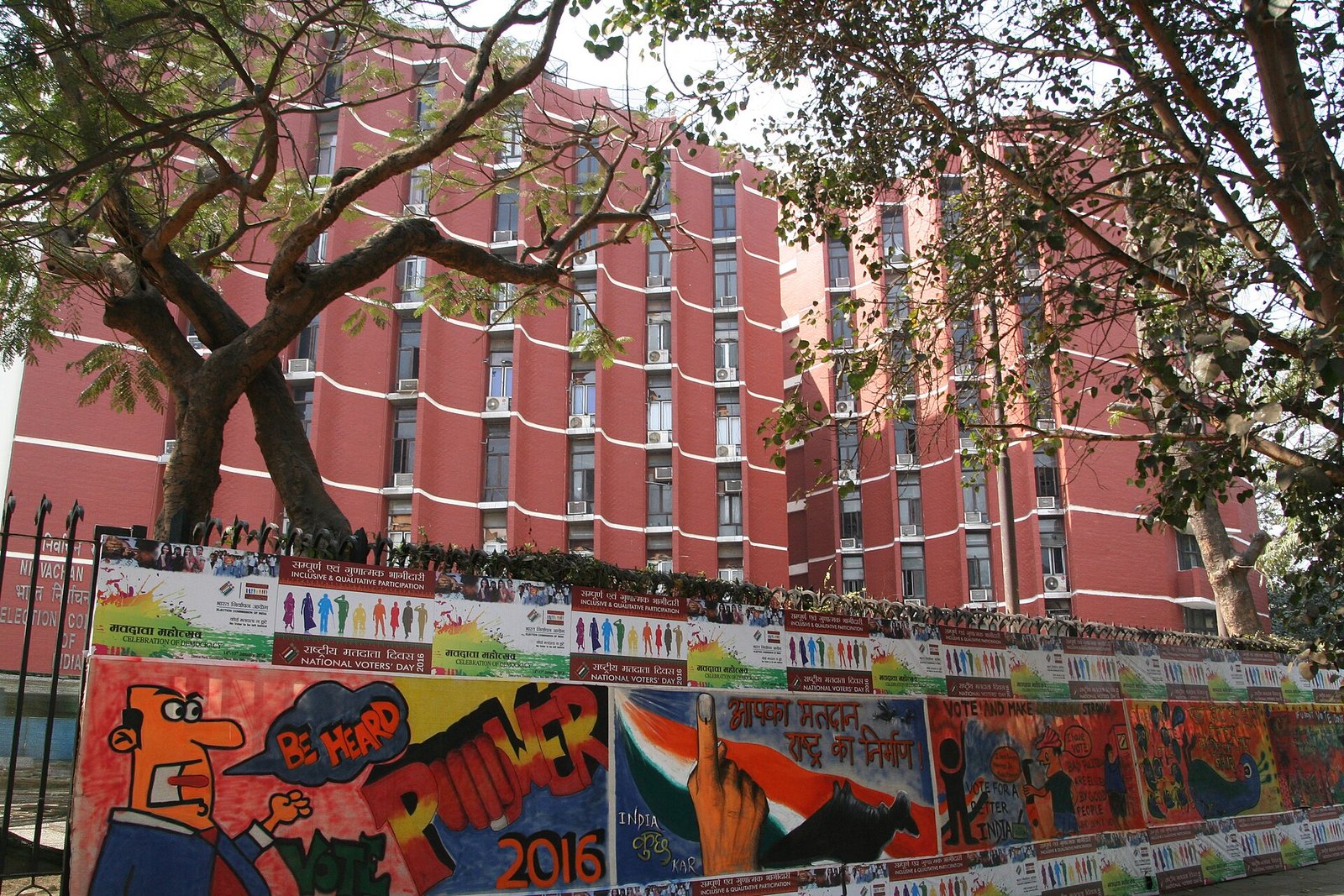
Photo: Ramesh Lalwani / Wikimedia Commons, CC BY 2.0
The Election Commission of India on Thursday (October 15) ordered a Special Summary Revision (SSR) of electoral rolls in 14 states and three Union Territories, with January 1, 2027 as the qualifying date. The exercise covers the states that go to Assembly polls early next year, and final voter lists are due on January 4.
The states and UTs are the Andaman and Nicobar Islands, Assam, Bihar, Chhattisgarh, Goa, Gujarat, Kerala, Lakshadweep, Madhya Pradesh, Manipur, Puducherry, Punjab, Rajasthan, Tamil Nadu, Uttar Pradesh, Uttarakhand and West Bengal. In its letter to their chief electoral officers, the commission said the rolls would be revised under Section 21 of the Representation of the People Act, 1950.
The timeline
- Polling stations to be rationalised and rearranged by November 2
- Draft rolls published on November 12
- Claims and objections accepted from November 12 to December 11
- All claims and objections to be settled by December 28
- Final rolls published on January 4, 2027
Officers will also take advance applications from people who turn 18 by the later qualifying dates of April 1, July 1 and October 1, 2027. The order builds on the commission’s September 29 instructions for a special drive to enrol left-out, young and first-time voters. In Uttar Pradesh, chief electoral officer Navdeep Rinwa said meetings with recognised parties would be held at the state and district levels to explain the rules.
Checks on bulk deletions, searchable rolls for parties
The letter points to a separate October 9 order that caps how many Form 7 applications, used to object to entries and seek deletions, one person can file, to discourage bulk filing. Electoral registration officers must personally cross-check any polling station where deletions exceed 2% of voters, and any case where one person has objected to more than five entries.
Officers have also been told to give every recognised political party, free of cost, a hard copy and a readable PDF of each polling station’s roll after the draft and final publication, along with lists of additions, deletions and changes. The digital copies will leave out voters’ photographs. Rolls are now shared as scanned images, which are hard to search. Parties have sought machine-readable lists for years, and the commission had opposed such demands, citing privacy and the risk of data mining.
Other norms are also set out: no polling station should have more than 1,200 voters without the commission’s approval, voters should not have to travel more than two kilometres, booths should be on the ground floor, and members of one household should not be split across sections or stations.
Why it matters
The SSR is an annual exercise that makes small updates to the existing rolls. It is separate from the Special Intensive Revision (SIR), which rebuilds the list from scratch and has drawn Opposition protests and a challenge in the Supreme Court, which sought the commission’s response earlier on Thursday. This is the first SSR since the round whose final rolls came out in January 2025.
The terms of the Manipur, Goa, Punjab and Uttarakhand Assemblies end in March 2027, and Uttar Pradesh’s on May 22. For 17 other states and UTs where the SIR is under way or has just ended, including Delhi, Maharashtra, Karnataka and Telangana, the SSR schedule will be announced later. In Himachal Pradesh, Jammu and Kashmir and Ladakh, where the SIR has not begun, the dates will depend on the weather. Chief secretaries have been told to keep election offices fully staffed, and no electoral registration officer’s post may stay vacant during the revision.