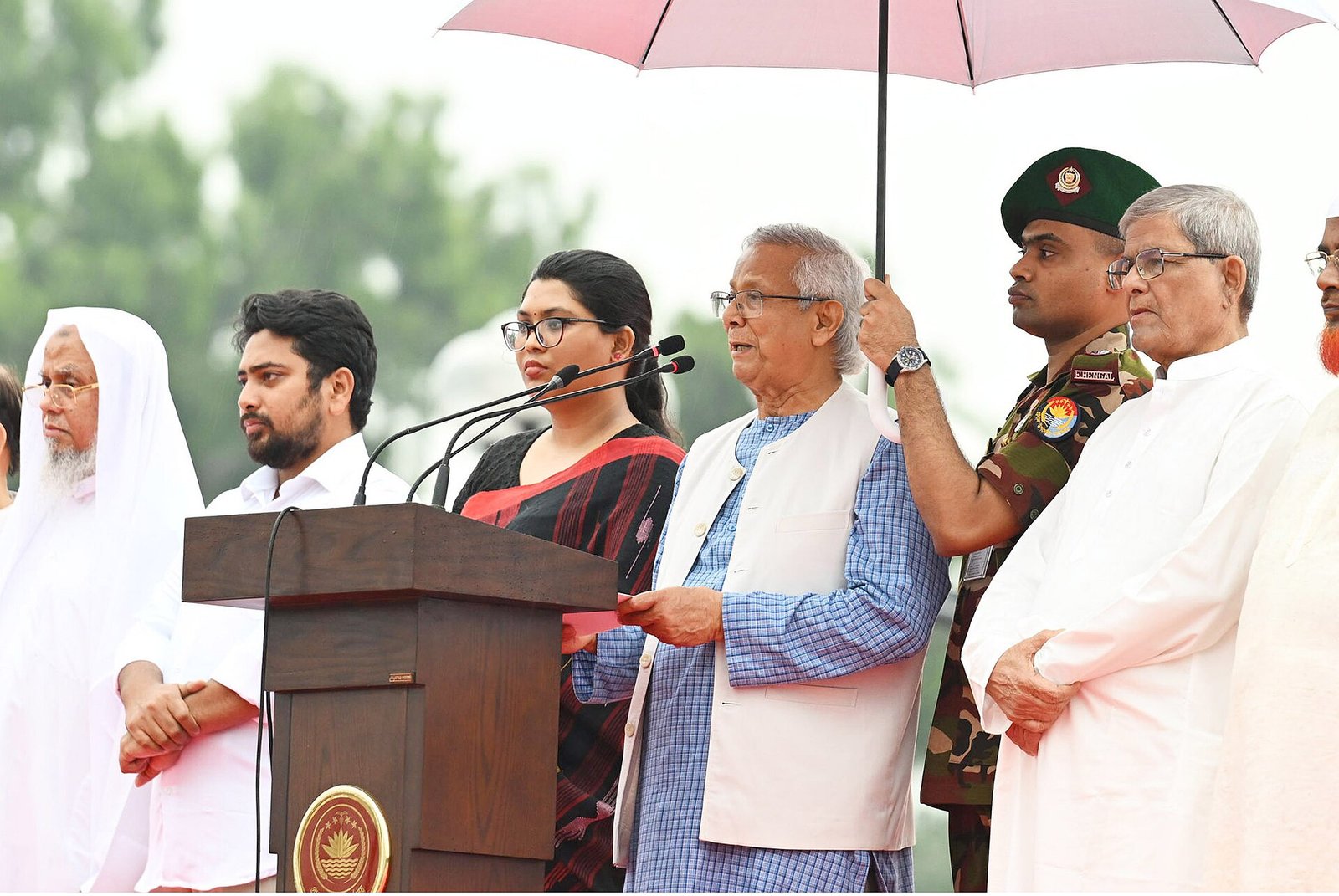
Photo: Press Information Department / Wikimedia Commons, public domain
Bangladesh’s government said on Tuesday, October 13, that it would take legal action after Muhammad Yunus, the Nobel laureate who led the country’s interim administration, was confronted and abused by a group of protesters at John F. Kennedy International Airport in New York.
What happened at the airport
The incident took place on Monday afternoon, local time, as Yunus was being taken out of the terminal in a wheelchair, accompanied by aides and security staff. A video that has spread widely on social media shows several men stepping in front of him and shouting slogans such as “You are a terrorist” and “Why you come here?” They also accused him of destroying democracy in Bangladesh. Yunus did not respond, and his escort turned the wheelchair around and moved him back inside the terminal as the group followed.
Bangladeshi media reports have said that office-bearers of US-based units of the Awami League, the party of former prime minister Sheikh Hasina, were among those in the group. The identities of everyone in the video have not been independently confirmed, and the accusations shouted at Yunus were made in the heat of the confrontation.
Dhaka calls it ‘Awami League terror’
Zahed Ur Rahman, the information and broadcasting adviser to Prime Minister Tarique Rahman, told a weekly government briefing at the Secretariat in Dhaka that the government was treating the matter seriously. He described the episode as “Awami League terror” and said specific legal and administrative steps would follow against those involved.
If anyone from the Awami League abroad attempts to take such steps, it will not go unchallenged.
Zahed Ur Rahman, information and broadcasting adviser to Bangladesh’s Prime Minister
He said the same legal route would be followed as in the case of actress Azmeri Haque Badhon, who was allegedly harassed in Italy last month. Zahed added that Yunus’s decisions as head of the interim government were open to legitimate criticism, but harassment was unacceptable. The government will also examine whether there was any lapse in the protocol and arrangements Yunus is entitled to as a former chief adviser.
Why it matters
The confrontation shows how deep Bangladesh’s political divide remains, and how it is now spilling into the diaspora. Yunus took charge of an interim government on August 8, 2024, days after Sheikh Hasina’s Awami League government fell amid mass protests and she left for India. The interim administration later banned the Awami League’s organisational activities, a ban that remains in place under the elected government that has since taken office.
Awami League supporters abroad accuse Yunus of presiding over a crackdown on their party, while the government and its allies say the party’s activists are trying to intimidate figures linked to the 2024 uprising. Beyond saying it would follow the process used in the Badhon case, the government has not yet detailed what form the legal action will take.