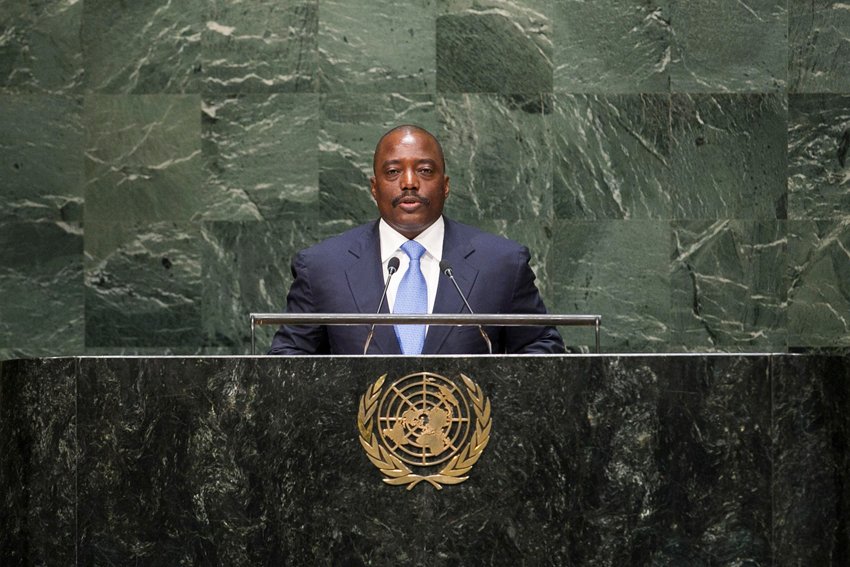
Photo: MONUSCO / Wikimedia Commons, CC BY-SA 2.0
Joseph Kabila, who ruled the Democratic Republic of Congo for 18 years, has been named head of a new armed coalition that aims to bring down the government of President Félix Tshisekedi. The group, called the Front for the Refoundation of the Nation (FRN), was announced on Monday, October 12, at a news conference at Kabila’s residence in Goma, the eastern city held by M23 rebels since January 2025.
Who is in the new front
The FRN brings Kabila together with the leadership of the AFC-M23 alliance, which seized large parts of the mineral-rich east last year. Corneille Nangaa, the former head of the Congo River Alliance, the political wing of M23, and M23 military chief Sultani Makenga are among his deputies. A coalition adviser said the aim was to unite “resistance forces” and end “tyranny” by any means, including force.
The move is the clearest sign yet that Kabila is directly involved in an armed movement. He had earlier denied any links with M23. There was no immediate response from the government in Kinshasa.
How it got here
Kabila, now 55, took power in 2001 at the age of 29 after his father, President Laurent Kabila, was assassinated, and stayed in office until January 2019, when Tshisekedi took over after a disputed election. After years largely out of public view, he has become an increasingly sharp critic of his successor.
Last year a military court sentenced him to death in absentia for treason, war crimes and crimes against humanity, ruling that he had worked with Rwanda and M23. Kabila calls the case politically motivated. The United States put sanctions on him this year over his alleged role in funding rebel groups. Kinshasa, Washington and UN experts accuse Rwanda of backing M23, which Rwanda denies.
Days before the launch, Kabila gave a national address accusing the government of ignoring his proposals for ending the eastern conflict, undermining constitutional rule, mismanaging the economy and arresting opponents and military officers. The government has not publicly answered those charges.
Why it matters
Eastern Congo is home to more than 100 armed groups fighting over ethnic grievances, political power and valuable minerals. The rebels already control Goma, Bukavu, the airports and key crossings into Rwanda and Uganda. Analysts quoted in international reports warned that a former army chief at the head of the rebellion could tempt more government soldiers to defect and lead to more fighting.
The announcement also lands in the middle of a political fight in Kinshasa. Tshisekedi’s second term ends in 2028, but in May he suggested elections might not be held because of the war, and parliament has since passed a bill that could open the door to a referendum on scrapping the two-term limit. Protests against the plan were met by security forces in the capital last month.
What happens next
Government and M23 representatives were expected to meet in Qatar in November for talks, and analysts fear the new coalition could derail that process. How Kinshasa responds, both on the battlefield and against Kabila’s remaining political allies, will shape whether the conflict widens in the coming weeks.