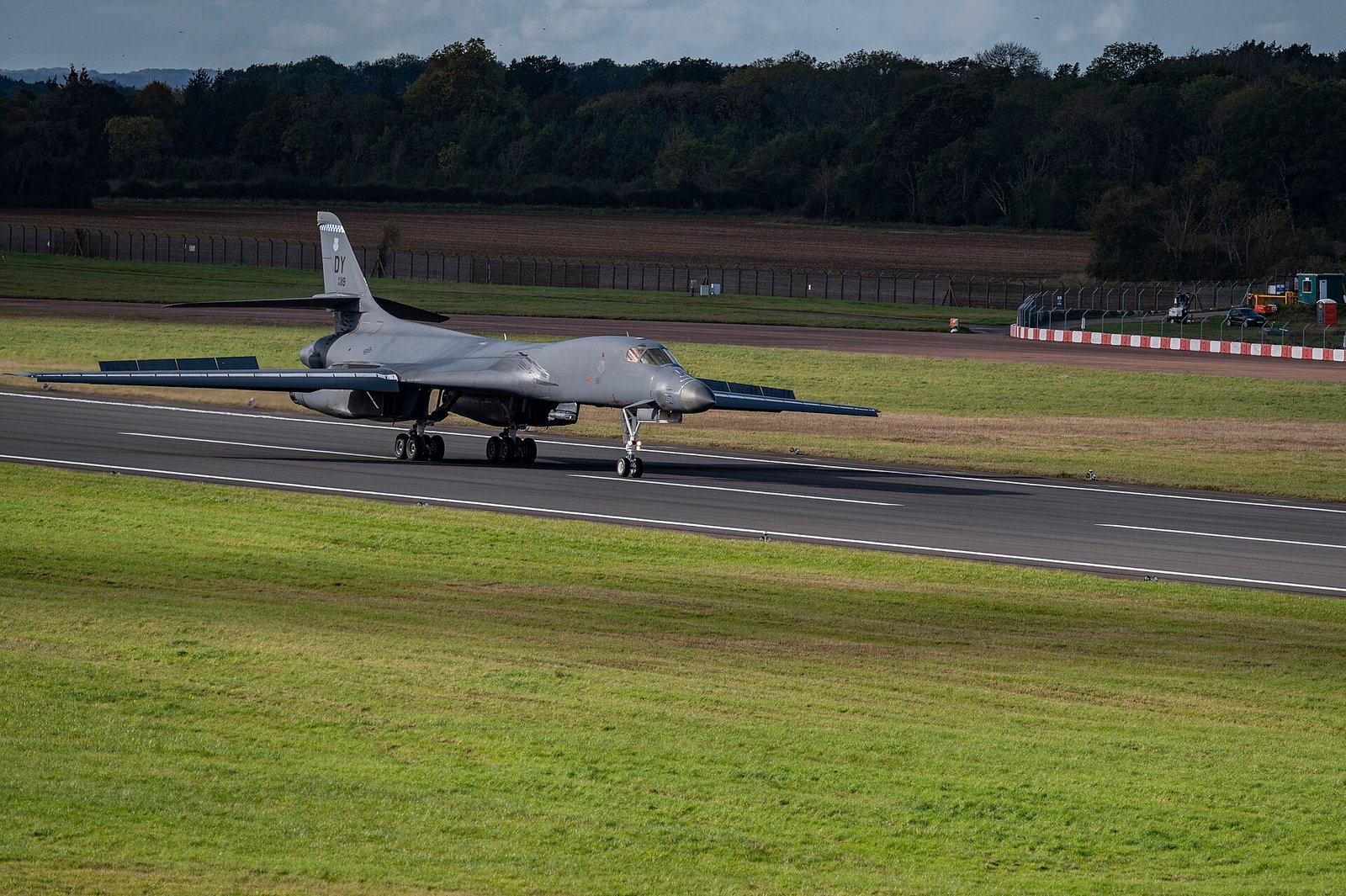
Photo: U.S. Air Force 307BW by Senior Airman Ryan Hayman / Wikimedia Commons, public domain
British Prime Minister Andy Burnham told the House of Commons on Monday, October 12, that a suspected plot aimed at RAF Fairford, an air base in southwest England used by US bombers in strikes on Iran, was “highly likely” to have been coordinated in Iran and “almost certainly” directed by the Islamic Revolutionary Guard Corps (IRGC).
It is the clearest blame London has assigned so far. In the days after the incident, Mr Burnham had only spoken of “strong indications” of an Iranian role.
We will not tolerate these threats on our soil. We will crack down on Iran’s use of criminal networks, using our full range of powers to target them and their funding streams.
Andy Burnham, UK Prime Minister
Ambassador summoned, two men sanctioned
Home Secretary Shabana Mahmood told MPs that Foreign Secretary Ed Miliband had summoned Iran’s ambassador and that Britain was sanctioning two people it accuses of carrying out espionage and attacks for Tehran in Europe and the United States. They were named as Ruhollah Bazghandi, whom Britain identified as a senior IRGC official, and Shahram Ali Reza Tamarzadeh Jakki, said to be a facilitator for the Zindashti criminal network, which is already under sanctions. Mr Burnham said further sanctions on Iran and the IRGC would follow.
Foreign ministers of 29 countries, including the US, Canada, France, Germany, Australia and New Zealand, issued a joint statement recognising Britain’s attribution and condemning what they called Iran’s use of lethal plotting, arson, sabotage, cyber-attacks and other hybrid activities against them and their partners.
What happened at Fairford
Shortly after midnight on September 27, five men from London were stopped in three vans near Whelford, a village beside the base, and arrested on suspicion of terrorism and explosives offences. Police said they found petrol but no viable explosive, and the men were released on bail a day later. Two more men, one of them a British-Iranian national, were later arrested and also bailed. No one has been charged.
About a week after the arrests, the Pentagon pulled its B-1 bombers out of Fairford. US President Donald Trump said only that “there were some threats”, while US officials were reported to suspect a planned drone attack. British sources have said Iran lacks the capability for a sophisticated drone strike of that kind, and it remains unclear what exactly investigators believe was planned.
Iran’s response and the wider picture
Tehran has rejected any link to the incident, calling the claims “unfounded and malicious speculations”.
The attribution adds to a string of security cases Britain has tied to Iran. In July, London used new powers against state-backed proxies to ban support for the IRGC and an associated group accused of attacks on Jewish, Israeli and Persian-language media targets. Last week, two Iranian nationals were charged with terror offences over an alleged plan to target the Jewish community in Manchester. Counter-terrorism police are continuing their investigation into Fairford, including possible foreign state involvement.